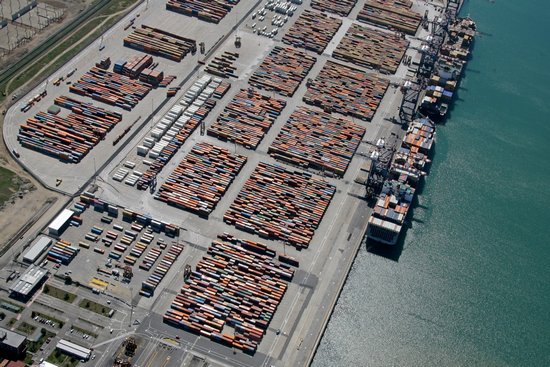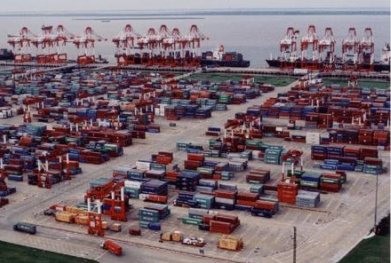





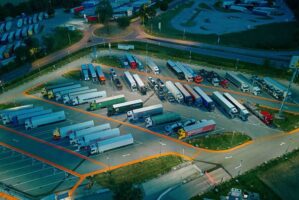
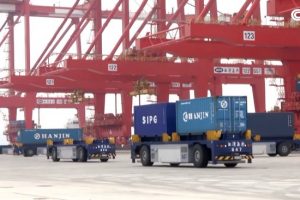
The Port of Shanghai handled 203,881 TEU on Saturday, 1 August 2026, exceeding the threshold of 200,000 TEU in a single day for the first time, up 8.86% on the previous record of 187,312 TEU set on 9 June. That June record had itself surpassed the figure reached on 30 October 2025, when the port handled 174,338 TEU in one day. On Saturday, a single operational shift also reached a record 71,728 TEU. Growth has not been confined to Shanghai: in the first quarter of 2026, Ningbo-Zhoushan, another major port in the Yangtze River Delta, handled 11.55 million TEU, up 14.7% on the first quarter of 2025.
The result came three weeks after Typhoon Bavi made landfall near Yuhuan, in Zhejiang, during the night of 11-12 July, with sustained winds of up to 144 kilometres per hour. Ahead of the storm, the ports of Ningbo-Zhoushan, Kaohsiung, Taipei and Shanghai had suspended operations as a precaution, resuming full activity on 13 July. Together, the four ports handle more than 30% of global container traffic. According to estimates by analytics firm Linerlytica, the shutdown left almost two million TEU of container ship capacity stranded in North Asian waters, with more than half of global port congestion concentrated in the region. During the backlog clearance phase, Shanghai maintained an average of 172,000 TEU a day, a pace that an analyst at the Shanghai International Shipping Research Center attributed to the port’s ability to co-ordinate the management of unexpected events.
The surge in volumes was also part of a seasonal peak that arrived earlier than the usual summer timetable. Since 24 July, the new US Section 301 tariffs of between 10% and 12.5% have been in force, replacing the temporary 10% regime applied from 24 February under Section 122. In the weeks before the new tariffs took effect, many shippers brought forward shipments to avoid the higher rates.
In the first six months of 2026, Shanghai handled 28.74 million TEU, up 6.2% year on year, with the Yangshan area rising to more than 15 million TEU, up 8.1%. The port ended 2025 at 55.06 million TEU, up 6.9%, a result that confirmed the Chinese port’s position as the world’s largest for the 16th consecutive year. The new 2026-2030 Five-Year Plan for the development of the international shipping centre sets a target of exceeding 58 million TEU a year by 2030.