






- The Salman Canal is a proposal-stage project for a roughly 950-kilometre artificial waterway connecting the Arabian Gulf to the Red Sea or the Gulf of Aden, bypassing the Strait of Hormuz. Linked to Vision 2030, it has returned to the spotlight as maritime tensions in the Gulf intensify.
- According to analyses circulated between 2024 and 2026, the canal alone would cost between 80 and 100 billion dollars, rising to as much as 250 billion dollars when associated infrastructure is included. The stated aim is to create an alternative energy and logistics corridor for crude oil, gas and container traffic.
- However, major challenges remain: environmental impacts on the Red Sea and Gulf of Aden, the need for agreements with Yemen, embodied emissions from construction sites and the controversial precedents associated with Neom. There have been no official announcements of construction starts or published tenders.
The Salman Canal, also known as the King Salman Canal, is a proposed mega infrastructure project involving the construction of an artificial canal approximately 950–960 kilometres long, linking the Arabian Gulf to the Red Sea or, in some variants, to the Gulf of Aden. The initiative is attributed to the vision of the Saudi leadership and would form part of Vision 2030, the national plan aimed at diversifying the economy beyond oil. It has resurfaced at a time when the conflict between the US-Israel and Iran has effectively closed the Strait of Hormuz.
The original concept envisaged a canal of around 950 kilometres running across Saudi territory, explicitly designed to avoid the Strait of Hormuz. Technical specifications point to an operational width of about 150 metres and a depth of around 25 metres, dimensions compatible with oil tankers and large container vessels. The estimated cost for the canal infrastructure alone ranges between 80 and 100 billion dollars, while broader assessments including ports, economic zones, rail and road networks put total investment at up to 250 billion dollars, equivalent to roughly 230 billion euros.
The proposed route would begin on Saudi Arabia’s eastern coast, near the industrial and port hubs of Dammam and Jubail, cross the Rub’ al-Khali desert and reach the Red Sea within Saudi territory or, in a more ambitious variant, the Gulf of Aden via Yemen. The latter option would require bilateral or multilateral agreements and the establishment of a joint Authority responsible for management, security and revenue sharing. The canal would thus provide an alternative corridor for crude oil and gas exports from Gulf Cooperation Council countries towards the Red Sea, the Suez Canal and European and global markets.
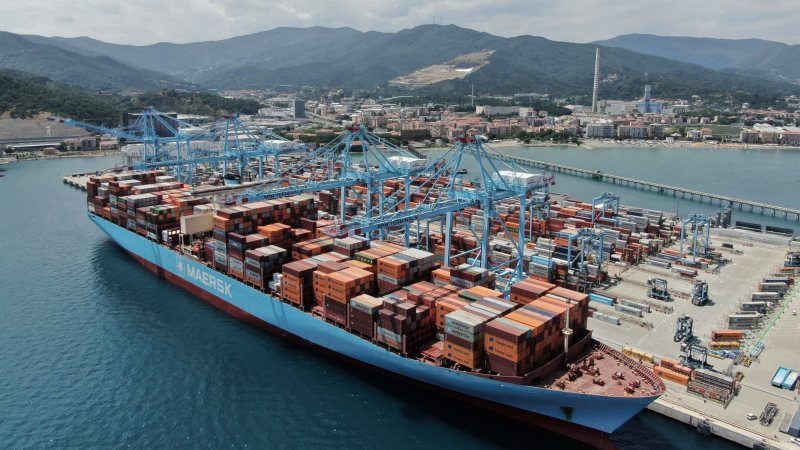
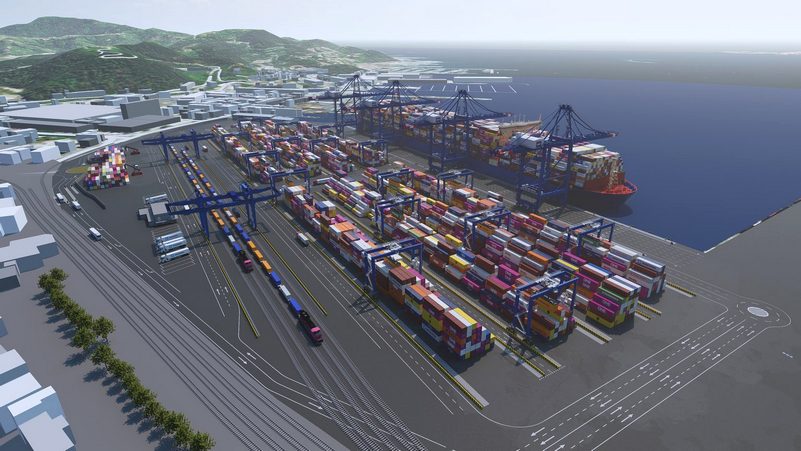
For shipping and logistics operators, the prospect of a second east–west axis within the Arabian Peninsula would rebalance traffic flows. Gulf port clusters would gain a new outlet, while inland ports, intermodal terminals and freight rail connections to Riyadh and other industrial hubs could develop along the route. In this scenario, the canal would be more than a hydraulic work: it would function as an integrated logistics corridor, with special economic zones and manufacturing settlements.
The initiative is often linked to the wider ecosystem of Saudi mega-projects, starting with Neom, which sits at the heart of the diversification strategy and includes The Line, the 170-kilometre linear city overlooking the Red Sea, although it has already been significantly scaled back. Economic rationales include the creation of new value chains in logistics, shipbuilding, industrial processing, irrigated agriculture and tourism. Some analyses suggest desalinated water could be used to support agri-food hubs in the desert, strengthening the country’s food security. Saudi Arabia already produces a significant share of its water through desalination, with environmental implications related to brine discharge and high energy consumption.
Environmental concerns represent one of the main critical issues surrounding the Salman Canal project. Critical studies on Neom highlight risks to marine and coastal ecosystems in the Red Sea, already under pressure from oil terminals and urbanisation. A 950-kilometre canal would entail excavation and earthmoving volumes comparable to or exceeding those of The Line. For the latter, embodied emissions of up to 1.8 billion tonnes of CO2 have been estimated for construction materials; a larger linear infrastructure would raise similar questions about climate impacts.
There are also concerns about potential expropriations and conflicts with local communities along the route. Moreover, any crossing into Yemen, a country marked by instability and conflict, would introduce additional risks for infrastructure security and operational continuity. Despite renewed attention on the project, there have so far been no official tender announcements, land lease contracts for operational areas or binding government timetables relating to the Salman Canal.
Antonio Illariuzzi