




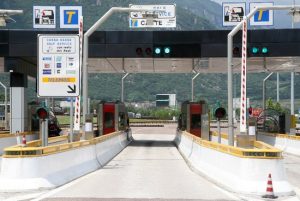
The Ministry of Transport has published directive 104/2025, which establishes the reductions in motorway tolls for 2025, intended for road haulage companies. The measure confirms a discount mechanism proportionate both to the volume of turnover generated by tolls and to the environmental class of the vehicles used, with a maximum cap set at 13%. The total allocation amounts to €8.1 million, provided under budget line 1330 of the Ministry. A portion of this sum, equal to €2.5 million, is earmarked primarily for road safety measures and enhanced inspections of industrial vehicles. Any residual amount will be channelled into the fund for tariff reductions.
Toll reductions are available to companies based in the European Union and the United Kingdom, or to those holding a Community licence, provided they carry out haulage of goods on behalf of third parties. Only vehicles in Euro V, Euro VI and higher environmental classes are eligible, provided they fall within toll classes B, 3, 4 and 5 (by axle and profile) or 2, 3 and 4 (by volumetric criteria).
The directive also confirms a 10% increase on the base reduction for companies generating at least 10% of their toll turnover during night-time hours. This covers journeys with motorway entry after 22:00 and before 02:00, or exit before 06:00. The benefit remains subject to the overall cap of 13%. The measure sets out the list of reductions by percentage according to environmental class and turnover.
- Turnover from €200,000 to €400,000: Euro VI or alternative traction 3.2464% - Euro V:1.9478%
- Turnover from €400,001 to €1,200,000: Euro VI or alternative traction 4.5449% - Euro V: 3.2464%
- Turnover from €1,200,001 to €2,500,000: Euro VI or alternative traction 5.8434% - Euro V: 4.5449%
- Turnover from €2,500,001 to €5,000,000: Euro VI or alternative traction 7.142% - Euro V: 5.8434%
- Turnover over €5,000,000: Euro VI or alternative traction 8.4405% - Euro V: 7.142%
The text clarifies that the removal of discounts for Euro V vehicles, announced in the past, has been postponed “to next year”. For 2025, therefore, such vehicles will still be eligible, albeit with lower rates than more modern and less polluting models. The Central Committee will retain the option of allocating part of the available funds to cover any disputes relating to reimbursements.