



Array ( [0] => 8 [1] => 41 )

Podcast K44

Cronaca

  • Camionista spara a un collega con pistola scacciacani

    Camionista spara a un collega con pistola scacciacani

    Un camionista di 42 anni è stato denunciato dalla Polizia Stradale di Modena per minaccia aggravata dopo aver esploso un colpo con una pistola scacciacani contro un collega lungo l'A1, al culmine di una lite tra autotrasportatori nei pressi di Modena Nord.

Transpotalk

Normativa

Mare

  • Il transpacifico continua a trainare il rialzo dei noli

    Il transpacifico continua a trainare il rialzo dei noli

    L'indice composito Drewry sui noli spot medi dei container sale del 4% a 4.526 dollari per feu nella settimana chiusa il 20 agosto, spinto dalle tratte dalla Cina verso gli Stati Uniti, mentre l'Asia-Europa continua ad arretrare: Shanghai-Genova cede il 2% e scende sotto i 5mila dollari.

Autotrasporto

  • Camion fermi allo Stretto di Messina sono un disagio cronico

    Camion fermi allo Stretto di Messina sono un disagio cronico

    La Lega Autisti Autotrasportatori Indipendenti Siciliani Nazionale denuncia attese fino a sei ore per l'imbarco a Tremestieri e al Porto Storico di Messina durante l'esodo estivo. Non è un caso isolato: il problema si trascina da anni, tra proteste, esposti e promesse rimaste in gran parte sulla carta.

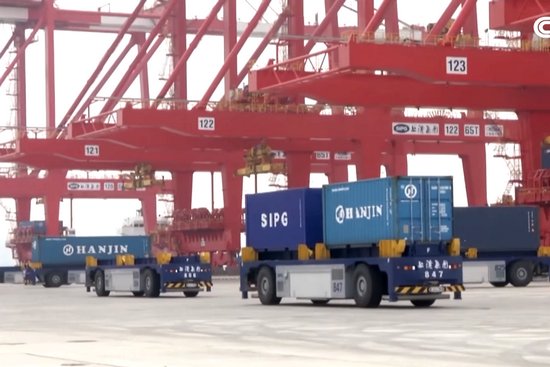
    Record-breaking orders and deliveries of containerships in 2024

    The year 2024 has marked a record high in orders for containerships and a significant expansion in global shipping capacity. During the first eleven months of the year, shipyards delivered 410 vessels, amounting to a total capacity of 2.5 million TEU. This milestone year for the container shipping industry has seen a surge in new vessel orders and unprecedented fleet growth. Driven by a mix of economic, technological, and logistical factors, this trend is reshaping the industry's landscape, presenting both opportunities and challenges for key market players.

    In the first eleven months alone, shipyards delivered 410 new containerships with a combined capacity of 2.5 million TEU, surpassing the previous annual record of 2.3 million TEU set in 2023. Despite this influx of new vessels, ship demolitions remained modest, with only 48 units scrapped in 2024, representing a 45% decrease compared to the previous year. The global fleet's total capacity is projected to reach 29.8 million TEU by the end of the year, a 7.09% increase from 2023.

    Total orders for 2024 have already doubled those of 2023, with 286 new ships and an additional 3.3 million TEU added to order books. Chinese shipyards have dominated this expansion, accounting for approximately 90% of new orders in terms of TEU capacity. Next-generation vessels, designed with advanced energy-saving technologies, make up over 80% of the capacity ordered this year.

    Several factors underpin this remarkable growth. The global post-pandemic economic recovery has boosted shipping volumes, driven primarily by consumer goods demand in North America and Europe. The rise of e-commerce has further underscored the critical role of maritime transport, while supply chain disruptions, often exacerbated by geopolitical tensions, have increased the need for more flexible logistical solutions.

    Logistical challenges along traditional maritime routes, such as the Suez Canal, have also played a key role. For instance, attacks by Houthi forces on vessels transiting the Red Sea have prompted shipping companies to reroute traffic around the Cape of Good Hope. This shift has resulted in longer average sailing distances and heightened vessel demand. Simultaneously, stringent environmental regulations are pushing shipowners to invest in modern fleets capable of operating on alternative fuels and reducing greenhouse gas emissions.

    Market analyses highlight the scale of this transformation. Clarkson Research estimates global containerised cargo volumes at 208.54 million TEU for 2024, reflecting a 3.7% increase from the previous year. Maritime Strategies International offers an even more optimistic forecast, predicting a 4.5% growth over the same period. However, despite the current strong demand, experts caution against potential overcapacity risks in the future should economic growth slow or logistical disruptions be resolved.

    A noteworthy trend has been the evolution of containership charter rates. While the surge in capacity has not yet exerted significant downward pressure, charter rates for post-Panamax vessels have doubled over the past year, reaching approximately $72,000 per day. This scenario underscores the intricate interplay between supply, demand, and market dynamics, requiring strategic management and long-term planning from industry operators.


    © TrasportoEuropa - Riproduzione riservata - Foto di repertorio
    Segnalazioni, informazioni, comunicati, nonché rettifiche o precisazioni sugli articoli pubblicati vanno inviate a: redazione@trasportoeuropa.it


      Puoi commentare questo articolo nella pagina Facebook di TrasportoEuropa

      bottone newsletter piccolo Vuoi rimanere aggiornato sulle ultime novità sul trasporto e la logistica e non perderti neanche una notizia di TrasportoEuropa? Iscriviti alla nostra Newsletter con l'elenco ed i link di tutti gli articoli pubblicati nei giorni precedenti l'invio. Gratuita e NO SPAM!


    CONTENUTI SPONSORIZZATI


Videocast K44

Aereo

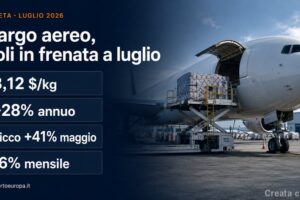
  • Rallenta la crescita a luglio 2026 dei noli aerei

    Rallenta la crescita a luglio 2026 dei noli aerei

    I noli spot del trasporto aereo delle merci sono saliti del 28% su base annua a luglio, a 3,12 dollari per kg, ma il ritmo di crescita rallenta per il secondo mese consecutivo. Secondo Xeneta il mercato affronta una seconda metà del 2026 più debole, con pochi segnali di stagione …

Ferrovia

Persone

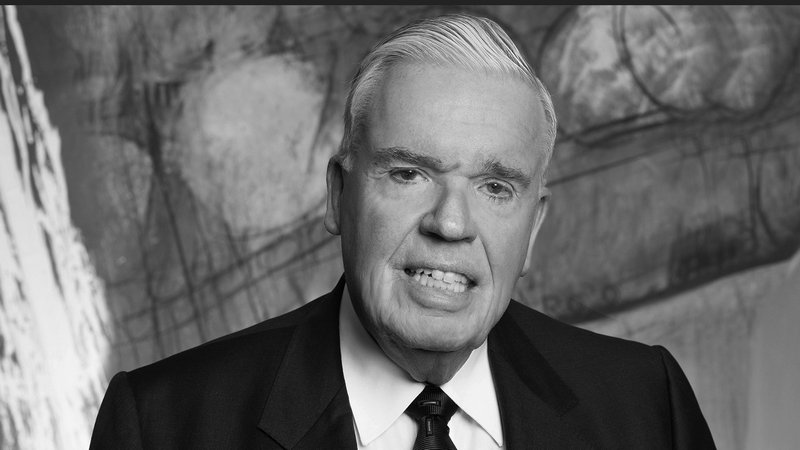
  • Morto il re della logistica Klaus-Michael Kühne

    Morto il re della logistica Klaus-Michael Kühne

    Il 24 agosto 2026 è morto a 89 anni Klaus-Michael Kühne, uno degli uomini più potenti della logistica europea. Senza figli, aveva destinato l'intero patrimonio imprenditoriale alla Kühne Foundation, che attraverso Kühne Holding controlla il 60,1% di Kühne+Nagel, il 30% di Hapag-Lloyd e oltre il 20% di Lufthansa.
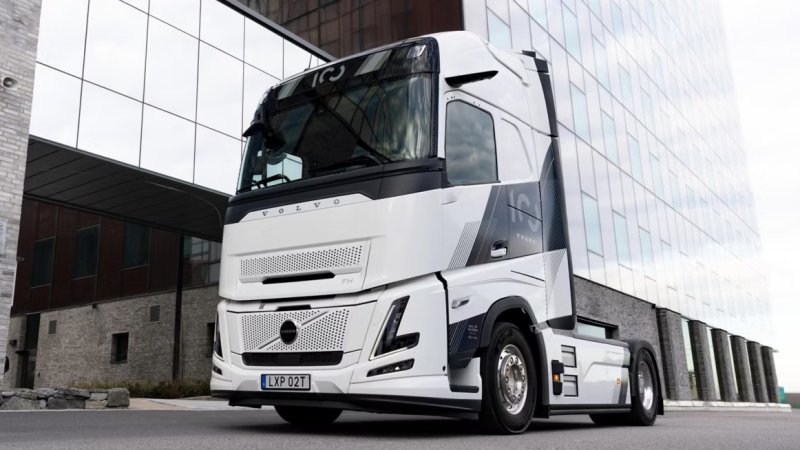
Un Volvo FH speciale per i cent’anni della Casa svedese

TECNICA

Un Volvo FH speciale per i cent’anni della Casa svedese
previous arrow
next arrow
Morto il re della logistica Klaus-Michael Kühne

LOGISTICA

Morto il re della logistica Klaus-Michael Kühne
previous arrow
next arrow
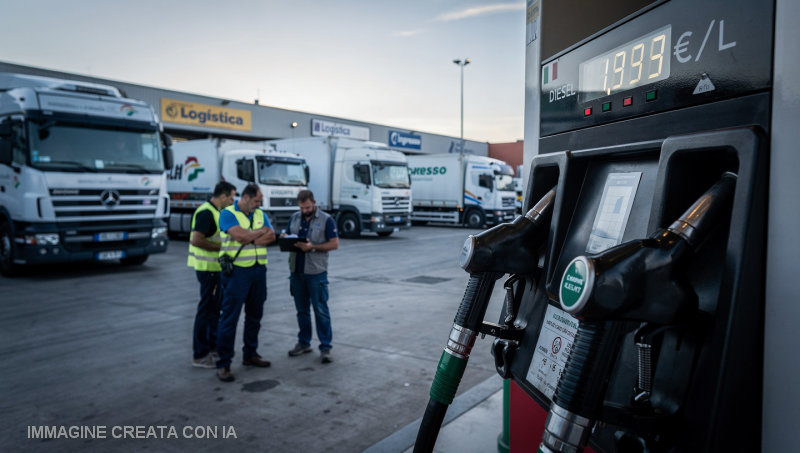
Perché il gasolio corre mentre il greggio frena

ENERGIE

Perché il gasolio corre mentre il greggio frena
previous arrow
next arrow
Un agente IA di Trimble dedicato alla logistica

SERVIZI

Un agente IA di Trimble dedicato alla logistica
previous arrow
next arrow