






Maersk most punctual carrier
According to Xeneta’s annual report on the reliability of maritime services, Maersk is the world’s most punctual container carrier, with 56% of arrivals on time and an average delay of -2 days. The analysis, conducted on more than 200 operators and over 25,000 port pairs, ranks Hapag Lloyd second with 52% punctuality and an average delay of -3 days, followed by Zim Integrated Shipping Services with 36% and -4.6 days. Cosco Shipping Lines records 35% on-time arrivals and an average delay of -3.4 days, while Cma Cgm stands at 33% and -3.6 days. Wan Hai follows with 31% and -3.4 days, Pacific International Lines with 27% and -4.2 days, Yang Ming Lines with 27% and -4.7 days, Ocean Network Express with 26% and -5.6 days, Evergreen with 25% and -3.9 days, Mediterranean Shipping Company with 25% and -4.7 days, and Hmm with 15% and -8.5 days. Xeneta notes that the Gemini cooperation between Maersk and Hapag Lloyd achieved 81% punctuality, outperforming the individual results of both carriers, while the Ocean Alliance services between Cosco Shipping Lines and Cma Cgm reached 26%. The report also highlights the lower ranking of Mediterranean Shipping Company, placed eleventh, compared with the third position of its transatlantic partner Zim Integrated Shipping Services. On the Far East–Europe routes, the approach described as “cautious” by Maersk and Hapag Lloyd delivered above-average results, with Maersk at 58% punctuality and -1.7 days of delay and Hapag Lloyd at 51% and -4.3 days. In this segment, Wan Hai reached 39% and -2.8 days, Cosco Shipping Lines 33% and -3.8 days, while Cma Cgm stood at 16% and -4.8 days. Mediterranean Shipping Company recorded 16% on-time arrivals and -5.9 days, Ocean Network Express 10% and -11 days, and Hmm 5% with -15.2 days. Xeneta finally points out that the impact of the Red Sea crisis is affecting performance via Suez, where Zim Integrated Shipping Services totals 25% of on-time voyages compared with its average figures, while the return to full operations on routes through the Suez Canal remains uncertain.
Intermodal transport for Ukraine
R2L–Roadraillink has announced the launch of a joint intermodal rail service for the transport of non-craneable semi-trailers between Ukraine and the European Union, in collaboration with Ukrainian Railways Cargo Poland and East-West Intermodal Logistics. The first train of the project departed from the Sknyliv-Lisky terminal in Lviv and arrived at the East-West Gate terminal in Fényeslitke, Hungary, a hub on the Hungary–Ukraine corridor with capacity of up to 1 million TEU per year. At the Ewg terminal, the semi-trailers are transhipped and reorganised for onward delivery to various European destinations. R2L provides the intermodal solution and commercial network in the EU, while Ukrainian Railways Cargo Poland acts as rail partner linked to Ukrzaliznytsia for the Polish and wider European market. East-West Intermodal Logistics provides the infrastructure in Fényeslitke, already integrated into the continental rail network, also through agreements signed in 2023.
Hydrogen trucks in the EU
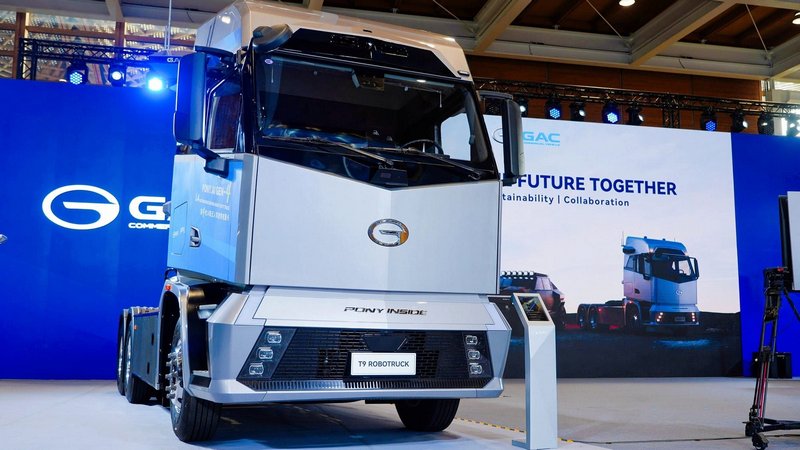
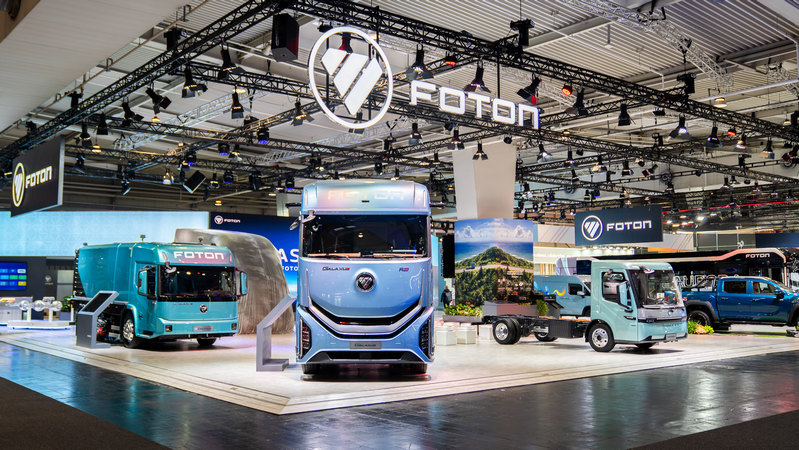
The H2Accelerate Trucks project is entering the commercial launch phase for hydrogen-powered trucks in the European Union, marking the shift from small-scale trials to initial market deployment. The consortium meeting, hosted in Brussels at the headquarters of Iru (International Road Transport Union), brought together truck manufacturers, hydrogen suppliers, transport operators and research partners to coordinate the rollout of the first vehicles by the end of the year. Alongside Volvo Trucks, three new manufacturers are participating: Scania, Hyliko and Hyundai Hydrogen Mobility. Backed by nearly €30 million, the project foresees the deployment of 125 fuel cell trucks powered by renewable hydrogen. Distribution will be supported by a dedicated network of refuelling stations, expanding in major industrial hubs and along the core Ten-T corridors, with the aim of testing cross-border freight operations. Iru states that the initiative integrates vehicles, infrastructure and operational trials to provide operators with concrete elements for evaluating their decarbonisation strategies.
Railport launches rail service in Turkey
Railport, a private intermodal terminal located in Kartepe, Turkey, has completed its first rail operation dedicated to the transport of finished vehicles, expanding its activities beyond the container segment. The inaugural train carried 216 imported finished vehicles for Ford Otosan, which arrived at the terminal and were duly unloaded. The operation was carried out entirely by rail with the involvement of several operators in the logistics chain. Mars Logistics acted as logistics service provider, Koçzer led strategic procurement and process management, while Körfez Ulaştırma handled the continuous execution of rail services. Transwaggon Group supplied the wagons used for transport. The terminal covers around 22,000 square metres and offers storage capacity for 1,563 vehicles, with dedicated ramps for rail import and export operations. Railport, a joint venture between Arkas Holding and Duisport, started operations in November 2025 with its first container train, positioning itself as the country’s first private intermodal terminal. Located around 150 kilometres south-east of Istanbul along the Iron Silk Road corridor, the site has been developed since September 2023 through cooperation between the two partners.
Msc Air Cargo flies between Malpensa and Shanghai
Msc Air Cargo will launch a new service between Milan Malpensa and Shanghai Pudong on 3 March, operated with a Boeing 777-200F. The flight strengthens its presence on key Asia–Europe corridors and reinforces its long-term commitment to the Chinese airport, considered strategic for specialised and time-sensitive cargo. Pudong is set to become the reference hub for the Asia Pacific area within the carrier’s network. At the end of 2025, Msc Air Cargo signed a memorandum of understanding with Shanghai Airport Authority Logistics Development, a subsidiary of Shanghai Airport Authority, the state-owned company managing Pudong and Hongqiao airports, to support the development of the airport as a central node in its regional network. In the same period, the carrier also signed a memorandum of understanding with Sf Express to extend their existing cooperation, with particular focus on air cargo shipments.
Silk Way receives fourth B777F
Silk Way West Airlines has taken delivery of its fourth Boeing 777 Freighter out of six ordered, as part of a two-phase fleet renewal plan that will expand its fleet to 20 wide-body aircraft by 2030. The aircraft arrived in Baku on a direct flight from Seattle and has been integrated into the long-haul fleet upgrade programme. With this delivery, the dedicated cargo fleet rises to 12 aircraft, while the gradual phase-out of Boeing 747-400F aircraft continues, with two units already withdrawn from service. The first phase of the plan will be completed in 2027 with the arrival of the remaining two 777Fs on order. From 2028, the second phase will begin, including the delivery of four Airbus A350 Freighters and four Boeing 777-8 Freighters, with completion of the programme by 2030.
Bertelsmann expands logistics in India
Bertelsmann is strengthening its presence in the Indian logistics market by acquiring a majority stake in the transport brokerage platform Lets Transport. The group has been a shareholder in the company since 2018 through its subsidiary Bertelsmann India Investment. Lets Transport operates as a digital marketplace, connecting more than 250,000 truck drivers, mainly independent operators, with leading companies and facilitating the allocation of transport assignments. The aim is to build a leading logistics operator in India over the coming years, in a context marked by infrastructure growth and e-commerce expansion. In 2025, Lets Transport recorded revenue growth of around 40%, employs nearly 500 staff and operates through 25 branches in major Indian cities. The company will continue to be operationally led by its founding team, while Pankaj Makkar, managing director of Bii, will assume the role of chairman of the board.