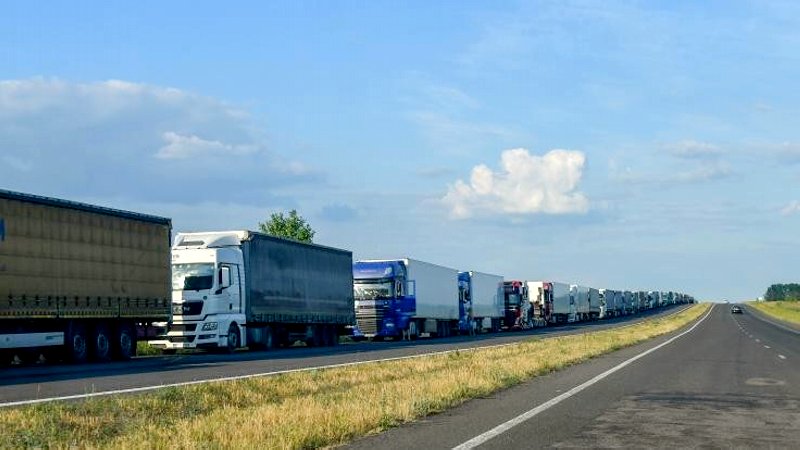







Getting out of the truck after a day of driving in the summer heat and taking a dip in the pool. It is what many drivers are dreaming of during these sweltering weeks and it is now possible in Spain at the new rest area for industrial vehicles opened in July 2026 by Grupo Arnedo in El Villar de Arnedo, in the La Rioja region. The parking facility, called EcoParking Seguro Arnedo, can accommodate up to 383 articulated lorries and forms part of the Ecociudad del Transporte developed by the Spanish group. In addition to the fenced, video-surveilled parking area, the facility includes a service building with 82 hotel rooms, a restaurant, café, laundry, showers, relaxation areas, free Wi-Fi and an outdoor swimming pool. The site is located on the N-232 national road, close to the AP-68 motorway, a strategically important section for the freight corridor between Bilbao and Zaragoza.
To build it, the Spanish group invested €18.45 million, of which around €7.86 million comes from European Union co-financing under the TEN-T programmes. In terms of services and security, the parking facility aims to obtain “platinum” certification, the highest standard provided for under EU Regulation 2022/1012 for Secure and Safe Truck Parking Areas (SSTPA), the secure and protected rest areas for industrial vehicles regulated at European level. This regulation requires compliance with detailed requirements on physical security, access management, lighting, data protection and the provision of minimum services for drivers. The site is also presented as “eco” by the promoting group, with a photovoltaic system to support daily operations and charging points for electric vehicles.
The project comes at a stage of progressive implementation of European policies on secure rest areas, launched after a 2019 study by the European Commission estimated a shortfall of around 100,000 overnight truck parking spaces across the continent. In Spain, the Ministry of Transport manages data on parking facilities that have started SSTPA certification procedures, but the number of sites that have formally begun the process remains limited.
P.R.