




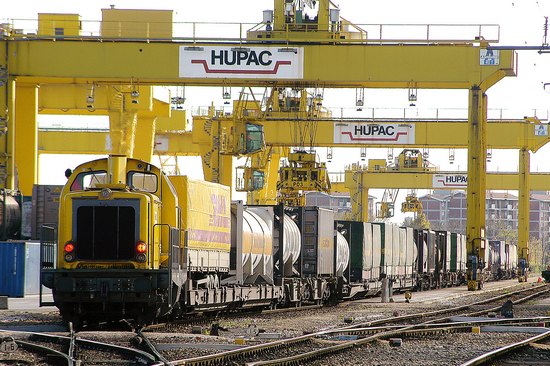
Hupac released its 2025 financial information on 29 April 2026. The year closed with a profit of CHF3.5 million, down from CHF9.4 million the previous year, but still positive in an operating environment affected by works on the European rail network. The Chiasso-based group increased transport volumes by 4.3%. In 2025, Hupac carried around 975,000 road consignments, equal to 1,853,000 TEU, in road-rail combined transport and inland maritime traffic. The company said growth was mainly supported by transalpine traffic via Switzerland, where volumes rose by 4.5% to around 560,000 consignments, with part of the increase also attributed to the acquisition of new traffic on the Belgium-Italy axis.
Transalpine traffic via France and Austria also increased, rising by 26.9% to around 25,000 consignments. This is a high percentage increase, although the company said these flows remain limited in absolute terms. Non-transalpine traffic was also positive, rising by 2.9% to almost 390,000 consignments, confirming more regular but less intense growth than on the Alpine axes. The positive volume trend, however, came against a difficult infrastructure backdrop. Hupac said that in 2025, too, the high level of construction work, including temporary full closures of some lines, reduced available capacity on the rail network. This affected service predictability and the ability to develop combined transport consistently, especially along international north-south corridors.
This led to a 3.1% increase in group turnover, which reached CHF646 million. The rise was lower in percentage terms than the growth in volumes because of the negative impact of the exchange rate. In addition, the cost of services provided grew faster than revenue, reducing the gross profit margin by 0.6 percentage points to 21.6%. The EBIT margin stood at 1.9%. The company added that it had adopted measures to safeguard results in order to keep the group profitable despite rising costs and operational difficulties. In practice, Hupac carried higher volumes, but converted only part of this growth into profitability because of exchange rates, costs and infrastructure constraints.
A central part of the company’s strategy is the Radicalshift2rail project, through which Hupac aims to respond to delays caused by rail works. This model concentrates flows on a small number of high-capacity terminals and connects them with high-frequency shuttle trains, with four to six departures per day in each direction. The first connections between Köln Nord and Busto Arsizio and between Ludwigshafen and Busto Arsizio began with the timetable change at the end of 2025. These two routes have weekly frequencies of between 25 and 30 train pairs each, with scope for increases in the event of additional demand. After one quarter of operation, Hupac reported improvements in punctuality, service resilience and the productivity of the operational resources involved. Further high-frequency services are planned with the timetable change at the end of 2026.
The new structure requires closer cooperation with railway undertakings and infrastructure managers. According to Hupac, major works and diverted traffic must be managed through multi-year planning, coordinated between countries and companies, to ensure greater reliability for scheduled volumes. For combined transport operators, this is a decisive issue because competitiveness with road transport depends on service regularity and the availability of usable capacity.
At the beginning of 2026, Hupac also strengthened its Shuttle Net network with the new Duisburg-Novara connection and with a 50% increase in the Basel-Busto Arsizio service. These routes made it possible to shift part of the volumes previously handled by the Autostrada Viaggiante (Rolling Highway), which ceased operations at the end of 2025, to unaccompanied combined transport. This is an important step for modal shift in Switzerland.
Despite the overall increase in transalpine traffic, with around 540,000 consignments, 24,000 more than the previous year, Hupac highlighted a reversal after three decades of growth in the shift from road to rail. Since 2022, transalpine combined transport volumes have fallen by 11%, while road transport has increased by 4%. The end of the Rolling Highway at the end of 2025 could prolong this trend unless effective countermeasures are adopted. In this respect, the company identified political support as an important stabilising factor. In spring 2026, the Swiss Parliament decided to extend operating contributions for transalpine combined transport beyond 2030 and, according to Hupac, this decision provides planning certainty and enables operators in the intermodal chain to schedule the investments needed to relaunch combined transport.
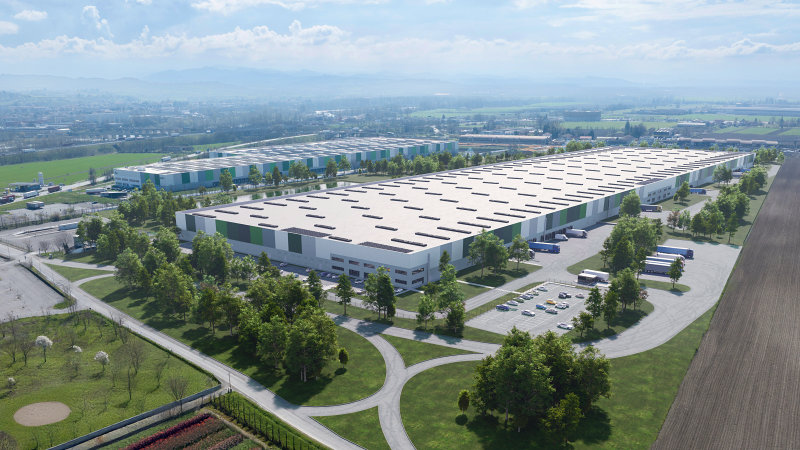
Investment in terminals is another pillar of the company’s strategy. The Piacenza terminal came into operation in 2025, while the opening of Milano Smistamento is planned for 2027. Both facilities are designed to increase available capacity and support high-frequency services, which are considered essential for long-term growth. The network is also expanding westwards. At the beginning of 2026, Hupac put the Barcelona Combiconnect terminal into operation, linking the Iberian Peninsula to the European intermodal network. The company considers the transport market to and from Spain to be still dominated by road and therefore to offer scope for the development of combined transport.
For 2026, Hupac maintains a cautious assessment and points to geopolitical uncertainty and the effects of the conflict in the Middle East, which could affect the global economy in the coming months. The group does not provide precise forecasts, but highlights the concrete risk of a marked economic slowdown. Conditions for combined transport will nevertheless remain challenging over the next two years. An improvement is expected from 2029, with the completion of major works on the Rhine Valley route in Germany and northern Italy and on the Rhine-Alpine corridor. In the meantime, Hupac is focusing on more resilient services, greater use of the corridor on the left bank of the Rhine, closer partnerships, the digital transformation of the intermodal chain and the expansion of terminal capacity.
Antonio Illariuzzi