





Array ( [0] => 8 [1] => 40 )

Podcast K44

Cronaca

  • Casello A14 di Riccione chiuso per autocisterna in fiamme

    Casello A14 di Riccione chiuso per autocisterna in fiamme

    Un'autocisterna carica di carburante si è ribaltata e ha preso fuoco nei pressi del casello A14 di Riccione nel primo pomeriggio del 18 giugno 2026, causando due feriti ma nessuna vittima accertata. Vigili del Fuoco da Rimini, Forlì e Pesaro sono intervenuti per spegnere l'incendio e gestire il traffico bloccato …

Transpotalk

Normativa

Mare

  • Noli container ai massimi da settembre 2024

    Noli container ai massimi da settembre 2024

    Il World Container Index di Drewry sui noli medi spot del trasporto marittimo di container sale del 5% nell’ultima settimana completa di giugno 2026, spinto dal transpacifico in piena tensione. Asia-Europa resta stabile ma con capacità limitata, mentre la tregua Usa-Iran allenta i rischi sullo Stretto di Hormuz senza eliminarli …

Autotrasporto

  • Caldo estremo, gli obblighi dell’azienda nell’autotrasporto

    Caldo estremo, gli obblighi dell’azienda nell’autotrasporto

    Le ondate di calore che colpiscono l'Europa riportano al centro il tema della sicurezza degli autisti in cabina: il quadro normativo UE sui riposi si intreccia con gli obblighi datoriali su valutazione dei rischi, dotazioni dei veicoli e organizzazione dei turni nelle condizioni climatiche estreme.

    Fraud worth €166m in logistics for large-scale retail in Italy

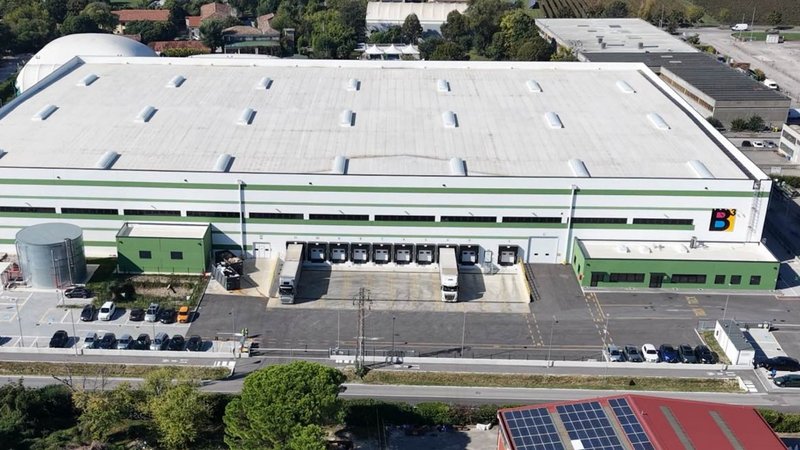
    The Aversa Nord logistics hub, in the industrial area of the province of Caserta (Italy), is an important node for the distribution of food products and fast-moving consumer goods in central and southern Italy. Every day, hundreds of workers handle goods on behalf of one of the leading operators in large-scale retail. In the case under investigation, on paper those workers were employed by cooperatives that changed name at regular intervals. In practice, however, their workplace, duties, shifts and operational reporting lines were those of employees. This is the hypothesis behind the investigation that led, in April 2026, to the preventive seizure of assets worth more than €30m, as part of criminal proceedings coordinated by the Procura della Repubblica di Napoli Nord (Public Prosecutor’s Office of Naples North) and delegated to the Nucleo di polizia economico-finanziaria della Guardia di finanza di Napoli (Economic and Financial Police Unit of the Guardia di Finanza in Naples).

    The case follows others that have been launched or concluded across Italy in the logistics sector. Prosecutors have placed 29 individuals and legal entities under investigation for issuing and using invoices for non-existent transactions. The inquiries, conducted with the support of the Settore Contrasto Illeciti dell’Agenzia delle Entrate (Illegal Practices Prevention Unit of the Italian Revenue Agency) and covering the tax years from 2019 to 2025, uncovered what investigators say was a carefully constructed tax fraud in the large-scale retail segment: invoices totalling more than €166m, described by investigators as non-existent both legally and subjectively.

    The mechanism operated on several levels. At the top of the chain was the contracting company, the substantial beneficiary of the entire system, which manages a distribution centre at Aversa Nord. For logistics and goods-handling services carried out at its own facility, this company, whose name investigators have not disclosed, formally used two consortia. These, in turn, relied on 18 cooperative companies, set up and used as labour pools. The cooperatives formally hired the workers, who nevertheless carried out their activities directly on the contracting company’s premises, under its direction and control. What appeared to be a complex system of service contracts was, according to the reconstruction by the Procura (Public Prosecutor’s Office), an illegal supply of labour, structured to evade both employment rules and tax obligations.

    The consortia at the centre of the formal chain had no real operational capacity: few capital goods, limited vehicle fleets and activities almost exclusively directed towards the contracting company from the time they were established. The cooperatives had a similar profile: registered offices that were effectively non-existent or unsuitable, no utilities or independent organisational structure, nominee directors, and the same professionals handling tax and corporate compliance for several cooperatives. In many cases, the companies were not present at the addresses they had declared.

    The element that investigators say most directly reveals the true nature of the relationship is the management of the workers. The contracting company directly organised shifts, working hours and duties through advanced IT systems capable of issuing instructions to workers and monitoring operations in real time. In effect, it was exercising the typical powers of an employer. According to the Procura (Public Prosecutor’s Office), the contracts were simulated: they were used to conceal an unlawful labour supply arrangement, with invoices classified as non-existent legally, because they related to fictitious contracts, and subjectively, because they were issued by parties other than the actual suppliers of the labour.

    The economic advantage of the operation was built on a specific tax lever. From the time they were established, the cooperatives allegedly systematically failed to pay VAT. The sums collected as tax were instead used almost entirely to pay wages and other personnel costs. In this way, VAT became a tool to fund labour costs, reducing the prices charged to the consortia and the contracting company below any level that a compliant operator could achieve. Meanwhile, the contracting company deducted the VAT shown on the invoices received from the consortia, obtaining an undue tax saving. The tax authorities collected nothing from either side.

    The result was a systematic competitive advantage: the ability to manage hundreds of workers without hiring them directly, avoiding the costs and constraints of employment contracts, with a level of organisational flexibility that no legal model could have offered at the same prices. Compared with logistics operators that comply with tax and contractual rules, the system produced structural dumping on labour costs.

    Completing the picture, investigators found the use of accounting devices within the cooperatives designed to conceal losses and present a false economic position: fictitious revenues entered in the accounts and debts to the Treasury understated. The management of all the companies involved appeared to be centralised and attributable to a single coordinating structure, with stable support from the same professionals for accounting and tax compliance. When a cooperative accumulated tax debts that could no longer be managed, it was replaced by a new one, to which the workers were transferred en bloc. Operational continuity was maintained; legal and contribution continuity was not.

    For workers, this meant permanent insecurity. Formally employed by entities with no real business autonomy, exposed to the risk of gaps in social security contributions and difficulties in enforcing rights to pay and severance, they changed employer on paper without anything changing in the substance of their daily relationship with the contracting company. The rotation of cooperatives, their “expendability”, according to the reconstruction by investigators, was an integral part of the system, not a side-effect.

    One significant element emerged during the investigation: the contracting company chose to regularise its position for the tax years from 2019 to 2024, filing supplementary tax returns and paying taxes totalling €14,413,269.45, in addition to interest and penalties of €6,229,864.91. This voluntary disclosure led to a reduction in the preventive seizure order executed against the other parties involved, which fell to €14,564,502.67. However, the system challenged by investigators remains intact in its entirety, and the proceedings are still at the preliminary investigation stage. The liability of the suspects can be definitively established only by a final conviction.


    © TrasportoEuropa - Riproduzione riservata - Foto di repertorio
    Segnalazioni, informazioni, comunicati, nonché rettifiche o precisazioni sugli articoli pubblicati vanno inviate a: redazione@trasportoeuropa.it


      Puoi commentare questo articolo nella pagina Facebook di TrasportoEuropa

      bottone newsletter piccolo Vuoi rimanere aggiornato sulle ultime novità sul trasporto e la logistica e non perderti neanche una notizia di TrasportoEuropa? Iscriviti alla nostra Newsletter con l'elenco ed i link di tutti gli articoli pubblicati nei giorni precedenti l'invio. Gratuita e NO SPAM!


    CONTENUTI SPONSORIZZATI


Videocast K44

Aereo

  • Lufthansa Cargo avvia il nuovo hub merci a Francoforte

    Lufthansa Cargo avvia il nuovo hub merci a Francoforte

    Lufthansa Cargo avvia la prima fase del progetto LCCevo nell’aeroporto di Francoforte da 600 milioni di euro, che entro il 2030 trasformerà il Lufthansa Cargo Center nello scalo aereo merci più moderno d'Europa. In parallelo la compagnia lancia nuovi servizi digitali su WeChat per il mercato cinese.

Ferrovia

  • Ciberattacco a Trenitalia sui dati dei clienti

    Ciberattacco a Trenitalia sui dati dei clienti

    Trenitalia ha inviato il 26 giugno 2026 ai clienti una comunicazione che segnala un incidente di sicurezza informatica con accesso non autorizzato a dati personali legati ai titoli di viaggio. Esclusi dati di pagamento e credenziali di accesso; coinvolti anagrafica, contatti e informazioni di viaggio.

Persone

Schmitz Cargobull aggiorna il semirimorchio per container

TECNICA

Schmitz Cargobull aggiorna il semirimorchio per container
Renault Trucks estende l’autonomia dei suoi camion elettrici

TECNICA

Renault Trucks estende l’autonomia dei suoi camion elettrici
Alleanza Octopus-Catl su scambio batterie per camion elettrici

TECNICA

Alleanza Octopus-Catl su scambio batterie per camion elettrici
Il camion europeo si prepara alla crescita della Difesa

TECNICA

Il camion europeo si prepara alla crescita della Difesa
Still aggiorna quattro gamme di sollevatori e transpallet

TECNICA

Still aggiorna quattro gamme di sollevatori e transpallet
previous arrow
next arrow
La crisi dei chip e delle memorie colpisce la logistica

LOGISTICA

La crisi dei chip e delle memorie colpisce la logistica
La Cassazione conferma la qualifica di spedizioniere-vettore

LOGISTICA

La Cassazione conferma la qualifica di spedizioniere-vettore
L’interporto di Trieste chiude il 2025 con utili record

LOGISTICA

L’interporto di Trieste chiude il 2025 con utili record
El Niño 2026 minaccia anche la logistica

LOGISTICA

El Niño 2026 minaccia anche la logistica
Liguria ospite d’onore al China International Supply Chain Expo 2026

LOGISTICA

Liguria ospite d’onore al China International Supply Chain Expo 2026
previous arrow
next arrow
Gasolio agricolo sui camion, cinque arresti in Puglia

ENERGIE

Gasolio agricolo sui camion, cinque arresti in Puglia
Il Gnl cresce in Italia ma rallenta nell’autotrasporto

ENERGIE

Il Gnl cresce in Italia ma rallenta nell’autotrasporto
Fiap avverte che una causa sul cartello carburante è prematura

ENERGIE

Fiap avverte che una causa sul cartello carburante è prematura
Bruxelles approva il regime italiano da 23 miliardi per le rinnovabili

ENERGIE

Bruxelles approva il regime italiano da 23 miliardi per le rinnovabili
Operazione Red Gold contro frode nei carburanti in Abruzzo

ENERGIE

Operazione Red Gold contro frode nei carburanti in Abruzzo
previous arrow
next arrow
La logistica è tra le attività più colpite dai ciberattacchi nel 2025

SERVIZI

La logistica è tra le attività più colpite dai ciberattacchi nel 2025
Il rischio Dogana non è più solo amministrativo

SERVIZI

Il rischio Dogana non è più solo amministrativo
Sicurezza certificata da Tapa nella borsa carichi Trans.eu

SERVIZI

Sicurezza certificata da Tapa nella borsa carichi Trans.eu
Due attentati a Sicily by Car con fuoco e kalashnikov

SERVIZI

Due attentati a Sicily by Car con fuoco e kalashnikov
L’innovazione di Geotab punta su sicurezza e Pmi

SERVIZI

L’innovazione di Geotab punta su sicurezza e Pmi
Gaston Schul cresce nelle spedizioni genovesi con Parodi Forwarding

SERVIZI

Gaston Schul cresce nelle spedizioni genovesi con Parodi Forwarding
L’Italia è molto esposta nel cibercrimine nel trasporto e logistica

SERVIZI

L’Italia è molto esposta nel cibercrimine nel trasporto e logistica
Carta DKV per ricaricare il camion elettrico

SERVIZI

Carta DKV per ricaricare il camion elettrico
Video | Dkv al Transpotec oltre la carta carburante

SERVIZI

Video | Dkv al Transpotec oltre la carta carburante
Zucchetti presenta una logistica digitale integrata software e robot

SERVIZI

Zucchetti presenta una logistica digitale integrata software e robot
Golia360 punta sulla digitalizzazione per gli autisti

SERVIZI

Golia360 punta sulla digitalizzazione per gli autisti
Come la logistica può guadagnare dalle multe Antitrust

SERVIZI

Come la logistica può guadagnare dalle multe Antitrust
Tra Genova e Barcellona l’asse della formazione per la logistica

SERVIZI

Tra Genova e Barcellona l’asse della formazione per la logistica
Transporeon introduce la ricerca con l’intelligenza artificiale

SERVIZI

Transporeon introduce la ricerca con l’intelligenza artificiale
Nasce Synlog Alliance consorzio dati per la logistica

SERVIZI

Nasce Synlog Alliance consorzio dati per la logistica
previous arrow
next arrow