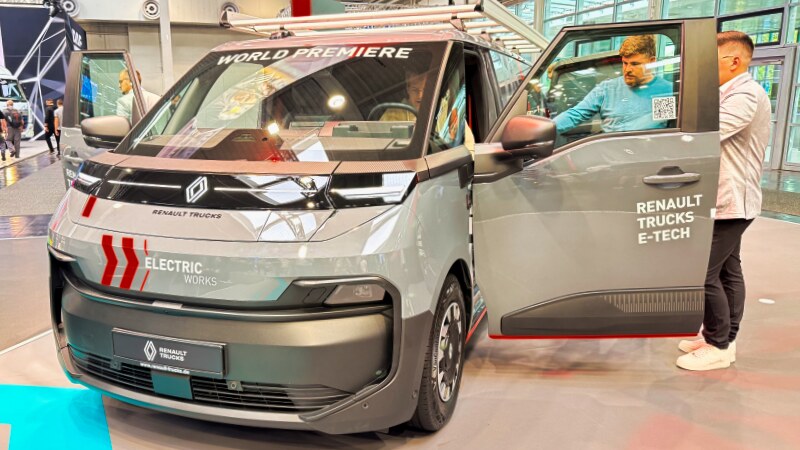






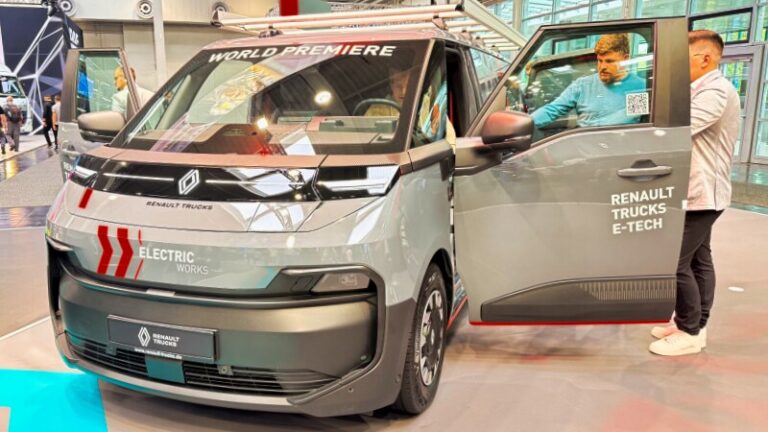
Renault is bringing electric power to the Trafic with an 800-volt architecture combined with fast DC charging, unveiled by the French manufacturer at IAA 2026 in the light commercial vehicle segment. The new Trafic Van E-Tech Electric is based on the RGEV Medium Van platform and is the first model in the new generation of commercial vehicles planned under the futuREady strategic programme, which calls for five new models by 2028. The battery has a capacity of 81 kWh and provides a range of up to 470 kilometres, a figure still subject to homologation, rising to around 690 kilometres in urban use according to the manufacturer. Twenty minutes of charging can add up to 280 kilometres of range, increasing to 380 kilometres on the urban cycle.
As for the bodywork, the SCx aerodynamic coefficient has improved by 6% thanks to aerodynamic development, while powertrain efficiency exceeds 90%. Over a 200,000-kilometre life cycle, using the average European energy mix, Renault calculates emissions of 33 tonnes of CO2 equivalent compared with around 63 tonnes for a diesel van in the same category, a reduction of more than 45%. Renault also estimates that total cost of ownership can be up to 10% lower than for a combustion-engined model.
Another distinctive feature of the new Renault is its electronic architecture. The Trafic is the first Renault Group vehicle and, according to the manufacturer, the first commercial vehicle in Europe to use a genuine Software-Defined Vehicle architecture, which the company calls Software-Defined Van. The 80 electronic control units found in conventional architectures are replaced by two computers coordinated by Car OS, an Android-based operating system developed in collaboration with Google. Functions, energy management, safety and personalisation can therefore be improved through software updates throughout the van’s operating life. Data collection and analysis also support predictive maintenance systems.
For everyday use, the Trafic offers up to 5.8 cubic metres of load volume, a payload of 1,300 kilograms and towing capacity of up to two tonnes. The load compartment can accommodate three Euro pallets and has a loading sill 53 centimetres high. Its maximum height of 1.89 metres allows access to standard underground car parks, while the 10.3-metre turning circle is comparable with that of a Renault Clio. For comfort, Renault highlights the ergonomics of the driving position, the multilink rear axle and the quiet operation of the electric powertrain.
The project also takes vehicle conversions into account, with a flat floor, 1.30 metres between the wheel arches and a 1,300 kg payload also guaranteed on the chassis version. The Vehicle-to-Load function allows electrical equipment to be powered directly from the vehicle, while in future the ePTO power take-off will support more demanding conversions, including refrigeration units and ambulance equipment. The conversion offer is structured across three levels: Converted by Renault, for modifications carried out at the French plants; Qstomize, the Group company specialising in conversions; and a European network of around 300 certified bodybuilders.
Renault Uptimize will arrive in 2027, using connected-vehicle data and artificial intelligence to move from reactive to predictive maintenance. Renault says the aim is to reduce vehicle downtime after an accident by up to 50%, intervening before a problem develops into prolonged operational disruption. The Trafic, which has sold more than 2.8 million units since 1980, is developed and built in Europe at Renault’s Sandouville plant. It will initially be available as a panel van, followed in 2027 by chassis cab and crew cab versions.
Massimiliano Barberis