





Railways are widely regarded, both in the collective imagination and according to statistics, as one of the safest modes of transport. For this reason, news of accidents attracts significant attention, especially when lives are lost, as in the tragedy that occurred in Spain on 18 January 2026. According to Eurostat data, European trains are safe, although the 1,500 incidents classified as significant in 2024, with 750 fatalities, can hardly be considered negligible.
A closer look at the figures shows that, excluding suicides, 98 per cent of deaths are caused by people crossing the tracks in restricted areas or by accidents at level crossings, the latter due not to technical failures but to imprudence. The picture does not change when focusing solely on Italy. According to Ansfisa, the Agenzia nazionale per la sicurezza delle ferrovie e delle infrastrutture stradali e autostradali (National Agency for the Safety of Railways and Road and Motorway Infrastructure), in 2024 all fatal accidents involved individuals struck by trains along the lines or at level crossings. No deaths were linked to train collisions or derailments.
Zero risk does not exist, however, and the serious Spanish accident demonstrates this. Yet even in this case, a recurring cause emerges that appears to link the most serious rail disasters of recent years: shortcomings and serious errors in maintenance. This is the conclusion of the report by the Comisión de Investigación de Accidentes Ferroviarios (CIAF), the independent Spanish body responsible for investigating railway accidents.
On 18 January 2026, two high-speed trains collided on the Madrid–Seville line after the first of the two convoys, operated by Iryo, in which Italy’s FS International holds a stake, derailed, resulting in a heavy toll of more than 40 dead and numerous injured. In this case, a broken rail has been identified as the main cause of the accident. But how could this have happened? It has emerged that six months earlier the track had been completely renewed, with rails, sleepers and ballast replaced, and the two long rail sections regularly jointed and welded. However, in winter temperatures iron can contract and a rail can crack, not necessarily at the weld point.
Progressive stresses, possibly compounded by the fact that at that point the ballast had not been properly tamped, led to the rail breaking and even tearing out the fastenings that secure it to the sleepers. The resulting hunting oscillations then completely overturned it. Evidently, in the period immediately preceding the tragedy, no inspection of the line was carried out using the diagnostic equipment that is now widely available. There is a common thread linking this accident to others in the past, including in Italy, which have often been traced back to technical anomalies caused by lapses in maintenance. Unlike the more distant past, when railway accidents almost always occurred because a stop signal was inadvertently disregarded, technology now plays a decisive role in ensuring safety. What remains uncertain is the quality of maintenance. This was the case in February 2020 in Livraga, in the province of Lodi, where the derailment of a Frecciarossa 1000 was caused by a defect in the installation of a turnout, resulting in the deaths of the two drivers and injuries to several passengers. Maintenance shortcomings and omissions in inspections were also behind the accident in Pioltello in January 2018, when a regional train derailed due to the failure of a joint in a state of severe deterioration, combined with generally poor track conditions.
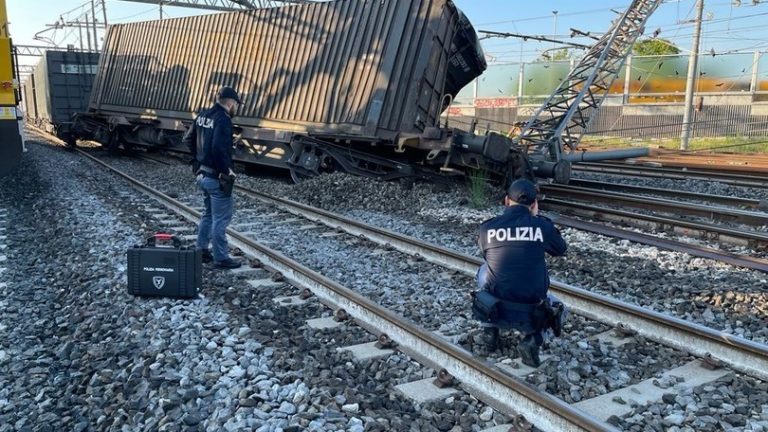
It is equally significant to examine the causes of the freight train collision that occurred in the Milan rail hub in September 2024. The sequence of events was reconstructed by the Ufficio per le investigazioni ferroviarie e marittime del Ministero dei Trasporti (Digifema), which referred to the “absence, on the section of infrastructure concerned, of the prescribed mechanical devices capable of detecting track circuit occupation, that is to say, of sensing the presence of the wheels of the stationary freight train on the tracks near the point of collision”.
Digifema stated, without ambiguity, that “this absence was in turn traced back to maintenance works carried out previously and not properly completed”. The lack of connection “resulted in the failure of the equipment, which was unable to detect the occupation of part of the track circuit on the diverging route beyond the clearance point”. For this reason, the central control systems were effectively misled and authorised the freight train to proceed, when in fact it encountered the rear of the other convoy.
Although absolute safety does not exist and no technical manual speaks of zero risk, the necessary countermeasures are feasible and are provided by technology itself, which now makes it possible to inspect and verify all parameters, provided that diagnostic tools – and in the near future also autonomous systems – are widely deployed after every intervention on the line.
Piermario Curti Sacchi