



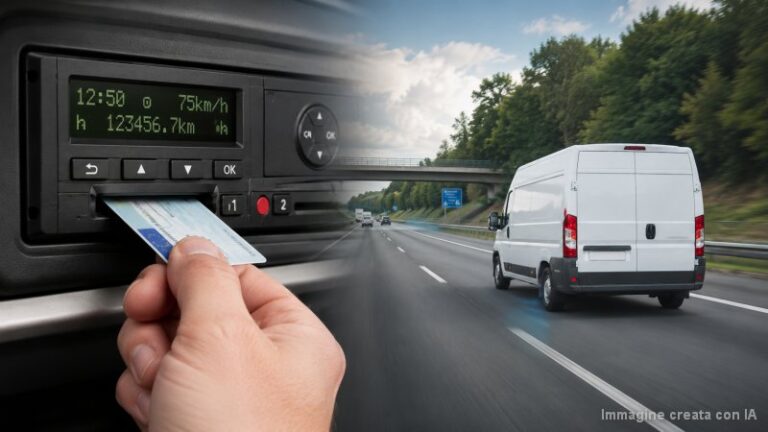
International road haulage companies that, from 1 July 2026, are required to use tachographs on commercial vehicles with a gross weight of between 2.5 and 3.5 tonnes are facing cost increases ranging from 35% to 80%. This was reported by the Bundesverband der Kurier-Express-Post-Dienste (Federal Association of Courier, Express and Postal Services), Bdkep, based on feedback from its members. In the first few weeks after the requirement was introduced, rate increases were even steeper, reaching 100-200% or more in some cases, although these rises were temporary. Operators also face the cost of technically adapting vehicles, ranging from €3,500 to €4,700 per vehicle. The association also reports a period of capacity shortages in cross-border express transport using this type of vehicle, caused by delays in fitting tachographs. According to Bdkep, fleet operators and shippers have had to deal with operational uncertainty, while couriers operating solely in the domestic market, which are not subject to the new requirement, have enjoyed a temporary competitive advantage.
Faced with higher costs, Bdkep identifies three adaptation strategies among operators. The first is to move below the 2.5-tonne threshold and therefore outside the scope of the new requirement. The association cites the Piaggio Porter NP6, approved with a gross vehicle weight of 2,490kg, a stated payload of around 900kg and capacity for up to five Euro pallets. The second strategy is to move in the opposite direction, towards a weight category above 3.5 tonnes, typically 7.5 tonnes, where compliance costs can be spread across greater load capacity, provided vehicles achieve sufficient utilisation. The third strategy is to withdraw from international transport, particularly among operators that previously regarded it as a complementary activity.
Two external surveys cited by Bdkep, but not conducted directly by the association, provide further indications. An IRU/Arilog survey carried out in mid-May 2026 found that 27.7% of the companies concerned were fully prepared, while 46.5% were not ready and 88% of vehicles still needed to have tachographs installed. All Arilog members surveyed expected rate increases, while 75% anticipated a significant rise in the cost per kilometre. A second survey, conducted by Kienzle Automotive in June 2026 among 116 customers, found that 78% of companies considered themselves well or very well prepared. However, more than a third had not yet completed retrofitting and 15.6% had not taken any action, while 62.5% cited compliance costs as the main obstacle. Bdkep itself warns that the Kienzle sample is not representative of Germany's entire vehicle fleet.
Pietro Rossoni