







For several years, Scandinavian countries have been taking a strict line on road haulage offences, such as illegal cabotage and driver exploitation. They are doing so not only by increasing investigations and penalties, but also by ensuring that convictions lead to punishment. The most recent case concerns Vladas Stončius jr., former chief executive and chair of Vlantana Norge, who on 18 August 2026 was sentenced in Norway at first instance, with the possibility of appeal, to eight months in prison by the Romerike and Glåmdal District Court. His co-defendant Ovidijus Grigalavicius was sentenced to 120 days. The reason was that they had paid drivers below the rates required under Norwegian rules.
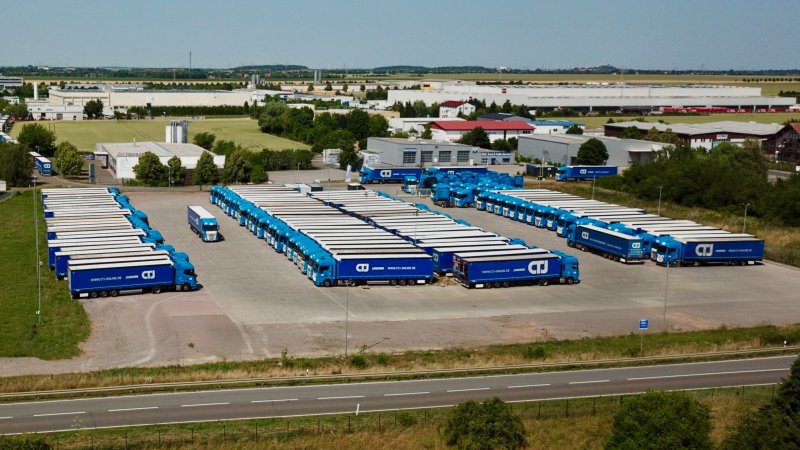
The charges concern about 200 drivers, mostly Lithuanian. They worked for the road haulage company Vlantana Norge, which began operating in Norway in 2012 and within a few years had gained a significant share of the domestic road transport market, before going bankrupt in 2020 after pay irregularities had already emerged. The conviction is based on the gap between declared working hours and the hours actually worked. The drivers were formally listed as employed at 50 per cent, or as working days of about four and a half hours, while prosecutors alleged that they worked up to 12 hours. The timesheets drawn up on that basis showed hourly pay that only appeared to comply with the mandatory minimum rate, because it was calculated on a fraction of the hours actually worked.
The judges applied several pieces of legislation: Arbeidsmiljøloven (Working Environment Act) and the legislation on the general application of minimum wage provisions in collective agreements, together with the Penal Code. On that basis, the court found it proven that Stončius jr. was aware that the drivers worked "regularly so many hours that they received an hourly wage below the generally applicable minimum wage". This subjective element made it possible to classify the case as "wage theft" rather than as an interpretative dispute over the applicable rate. The length of the proceedings affected the sentence, as the panel of judges considered a 13-month prison term appropriate, then reduced it by five months for both defendants because of the duration of the trial process.
The criminal conviction comes on top of civil litigation that has lasted for years and had already established the former chair’s personal financial liability. In 2021, 52 former drivers obtained a favourable ruling, upheld on appeal in 2023: NOK13.4 million, about €1.24 million, in compensation, plus interest, with legal costs set at NOK6.7 million, about €620,000. This conviction adds further civil awards of a different scale and with a narrower scope. Stončius jr. must pay about NOK1.75 million, about €162,000, a sum covering wage arrears, interest, legal costs and additional damages, together with a share of arrears and interest awarded to 29 drivers that exceeds NOK650,000, about €60,000.
In the reasoning behind the ruling, the judges also cited an unfair competitive advantage, explaining that a road haulier with labour costs below the legal level can offer prices that compliant operators cannot match. Norges Lastebileier-Forbund (Norwegian Road Haulage Association) took the same line. Its president, Tore Velten, described the ruling as "an important victory for responsible transport", while director general Knut Gravråk referred to a serious infringement with tangible consequences for competitive conditions.
Vlantana Norge is not the same as the current Lithuanian Vlantana. Its chief executive, Sabina Chochrina, said her company has no direct links with Vlantana Norge, adding that the latter was reportedly controlled by one of its shareholders.
Pietro Rossoni