






Putting old tensions aside, Belarus and Poland are taking a pragmatic view of the benefits offered by cross-border cooperation built around transport infrastructure. The most significant example comes from Belarus, which has completed work to adapt and upgrade the Brest container terminal. Located on the border with Poland, the facility plays a key role as an entry point into Europe for rail freight traffic from China. Investments in the Brest-3 terminal began in early 2024 and were completed after just over two years of work.
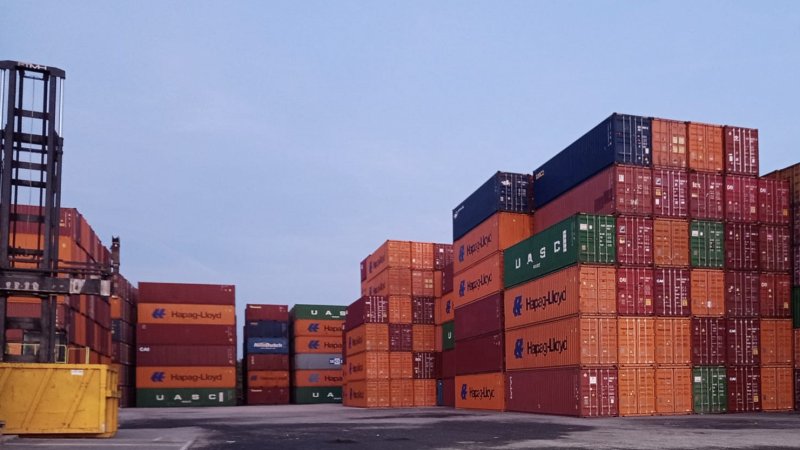
The intermodal platform covers an area of 15 hectares, just over two of which are used as a container terminal, and has 1.2 kilometres of rail infrastructure. The loading area is 220 metres long and enables the transfer of around 20 wagons using both European standard gauge and Russian broad gauge. This is a crucial feature, as the transition between the two gauges takes place at the Polish-Belarusian border, and the Brest-3 terminal can handle this requirement efficiently, facilitating interchange. The storage area can accommodate up to 1,000 containers. The stopover allows all logistics operations to be carried out, including cargo handling and, of course, road-rail interchange. As well as upgrading the access road network and the railway yard, the improvement works were specifically designed to enhance the platform’s multifunctional role. As early as 2019, Belarus had upgraded the Brest-Nord container terminal, located next to Brest-3, with an investment of just under €10 million. The container area was expanded to five hectares and the loading zone was also extended.
While Belarus has reached the ribbon-cutting stage, in Poland the construction of a new intermodal terminal in Ropczyce, a rail and infrastructure hub in the south-east of the country, is entering the execution phase. The facility is intended to increase transport capacity to and from Ukraine. The project is being developed by Polish operator PCC Intermodal and involves an estimated investment of €85 million. An agreement with the European Union, which has granted almost €30 million in funding, was signed recently. The new intermodal facility will be completed by 2029, helping to shift a larger volume of freight from road to rail. Its main aim is to play a more proactive role within the TEN-T network. The Ropczyce terminal is expected to increase capacity on the Baltic-Adriatic corridor and support intermodal logistics in the Baltic-Black Sea-Aegean region.
Bulgaria has also launched a plan to upgrade existing intermodal terminals, although the total funding available, €10 million, is not particularly high. However, in 2025 the Bulgarian authorities had already launched a similar initiative worth almost €18 million. For both calls aimed at terminal operators, the funds are being provided by Europe through the Connecting Europe Facility Transport 2021-2027 programme. In addition to this plan, Bulgaria is investing in rail infrastructure for freight transport, including a new €60 million terminal, €50 million of which comes from European funds, located in Ruse, on the border with Romania and home to Bulgaria’s main river port. Other port-related intermodal facilities, such as those in Varna and Burgas, are also being upgraded.
Piermario Curti Sacchi