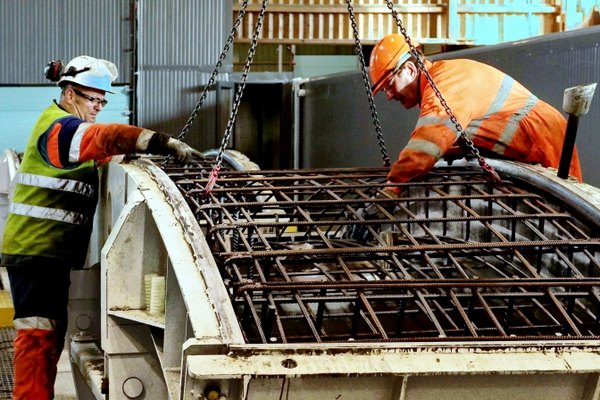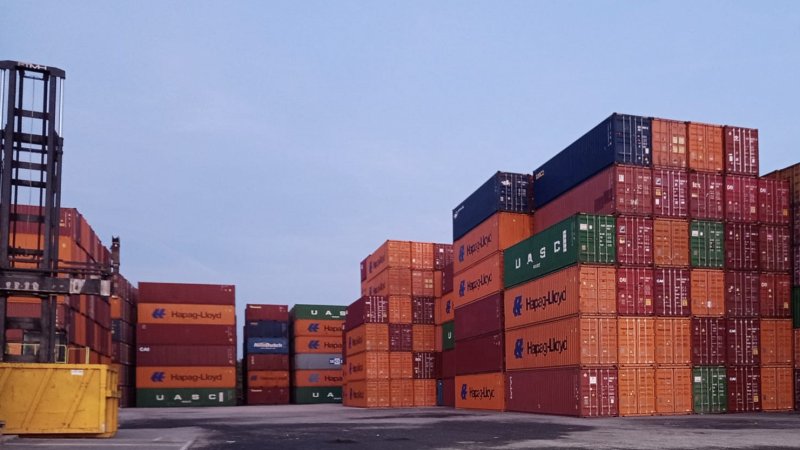





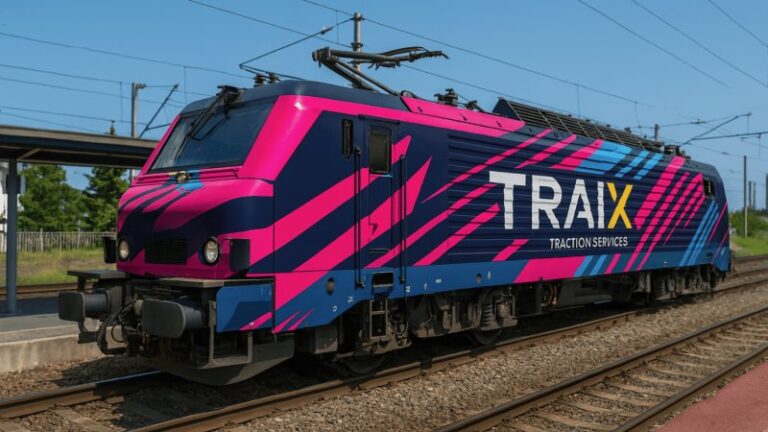
The French intermodal group Modal Group has set up a rail company of its own, called Traix, after obtaining a railway licence and single safety certificate in June 2026 to operate across France’s entire network. The group, which is active in combined transport through Delta Rail, is therefore taking direct control of traction for its trains, which until now has also been handled by third-party operators, including DB Cargo France. The initial locomotive fleet consists of five units, with a target of increasing this to 15 by the end of 2026. Traix’s operations will expand gradually, starting with the Dunkirk-Lyon service, due to launch on 3 September with a frequency of three round trips a week.
Under the group’s new structure, Delta Rail is the intermodal operator that sells the service to customers and organises routes, while Traix becomes the entity authorised to operate the trains and manage drivers, locomotives and traffic. Rail capacity is complemented by terminals and handling, already provided by other group companies, including Terminaux Multimodaux. The aim is therefore to offer an integrated service covering the entire chain, from terminal operations to traction.
After developing its French network, which includes Dunkirk, Lyon, Marseille-Fos, Metz and Île-de-France, Modal Group is planning international expansion towards Germany, Benelux and Italy. The main route for Italy links the port of Dunkirk to Piacenza via Lyon. On this corridor, Delta Rail launched the Lyon-Piacenza service in March 2026 with three round trips a week dedicated to semi-trailers, swap bodies and containers. The group’s industrial plan envisages increasing weekly rotations on the Dunkirk-Chalon-sur-Saône-Lyon-Piacenza axis from three to five by 2027.
The decision to bring rail traction in-house is part of a trend that in France has seen similar moves by T3M-Combirail, within the Open Modal group, and Novatrans-Gca Traction, within Groupe Saint-André. These are also intermodal transport companies that are taking on the role of rail carrier. The trend is also explained by the rising share of road-rail combined transport, which according to the Autorité de Régulation des Transports (Transport Regulatory Authority) accounted for 40 percent of French rail freight in 2023. Rail freight itself represents about 10 percent of total freight transport, behind road at 88 percent and inland waterways at 2 percent.
Antonio Illariuzzi