









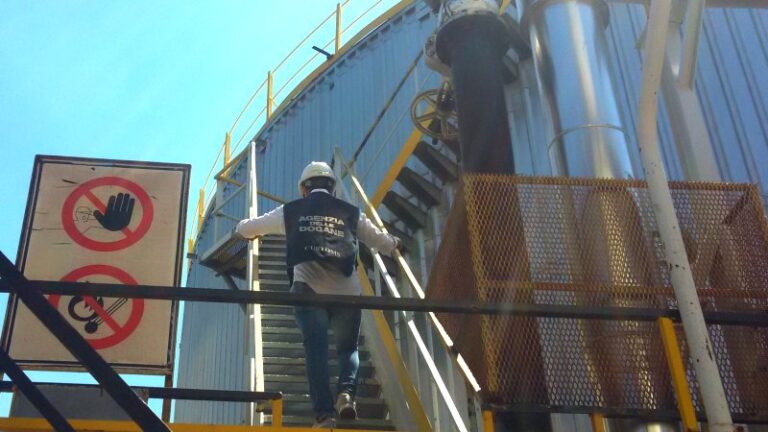
A judge for preliminary investigations at the Genoa Court has ordered three suspects to report to the judicial police and authorised the precautionary seizure of assets worth just over €15 million from each of three companies, with a view to confiscation. The measures were requested by the Public Prosecutor's Office as part of Operation Improver, an investigation conducted by the Agenzia delle Dogane (Italian Customs Agency) and announced on 15 October 2026. The investigation, which lasted more than a year, centres on imports of fuel additives that allegedly allowed the companies to evade more than €15 million in excise duty, VAT and direct taxes. Investigators monitored eight telephone numbers, cross-checked data from more than 300,000 banking transactions, carried out surveillance and followed suspects across several regions of northern Italy, searched six homes and four offices, and seized 16 electronic devices. The agency also involved the tax authorities of eight EU member states through mutual assistance arrangements on VAT.
One of the three suspects is a registered chartered accountant who acted as the tax representative in Italy for the group's two foreign companies. Investigators believe he was responsible for the day-to-day management of the entire operation. According to the reconstruction by the Italian Customs Agency, the group allegedly operated as a criminal organisation, with its decision-making centre in the Tigullio area of Liguria. It comprised three companies: one based in Italy and two with nominal registered offices in the United Kingdom and Switzerland, the latter having two tax representatives in Italy. The two foreign companies allegedly existed only on paper, with no operational structure in their countries of registration. They were effectively managed from Italy, where all management decisions, including minor operational matters, were taken, banking relationships were maintained and accounting records were kept. The operation was primarily aimed at evading excise duty and VAT and, to a lesser extent, at customs smuggling involving the improper use of VAT exemption allowances.
Between 2021 and 2025, investigators documented purchases of chemical products worth €15.1 million, amounting to approximately 9,300 tonnes. More than half the volume consisted of a single compound, 2-ethylhexyl nitrate (2-EHN). The products were mainly purchased from other EU member states for use as fuels. According to investigators, the fraud relied on switching transport documents during delivery. For the international leg, the product was purchased from EU manufacturers or imported and transported to Italy under a CMR consignment note or customs declaration identifying it solely by its chemical name, as a freely circulating substance not subject to excise duty. The declared delivery address was the group's headquarters in Rapallo, at an accountant's office. This was an administrative address unsuitable for receiving road tankers carrying hazardous chemicals, and investigators believe the goods never passed through it.
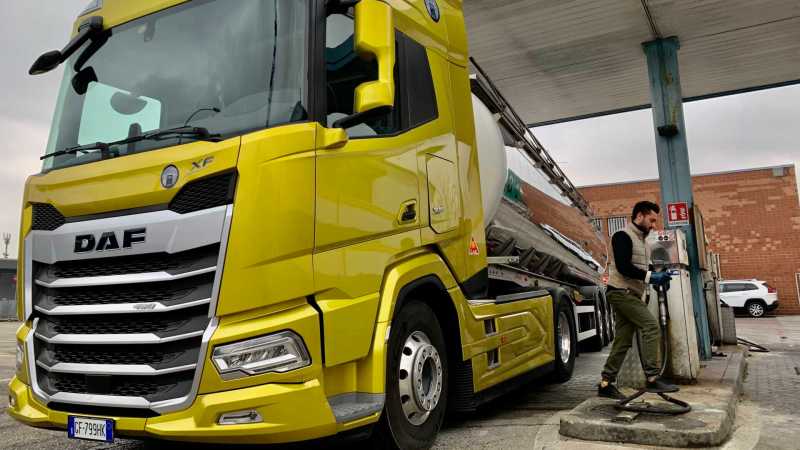
For domestic transport, the lorries travelled directly to their final destinations, mainly storage depots, using domestic transport documents prepared in advance by the customers. These identified the Italian company as the sender and described the product under the commercial name "cetane improver", an additive used to increase the cetane number of diesel. Because the product was intended for use as a fuel, it was subject to excise duty.
Investigators estimate that the evaded excise duty amounted to approximately €6.7 million, with a further €8.1 million in VAT. Another strand of the investigation concerns direct taxes and IRAP, Italy's regional tax on productive activities, on income earned by the Italian company and the two foreign-registered companies allegedly managed from Italy. Customs smuggling involving approximately €217,000 is attributed solely to the Italian company. Prosecutors allege that it falsely claimed habitual exporter status and attached false declarations of intent to its import customs declarations, allowing it to use a VAT exemption allowance to which it was not entitled and avoid paying VAT on imports. The suspected offences include criminal association, repeated aggravated customs smuggling, making false statements in a public document, fraudulent tax declarations using deceptive practices and invoices for fictitious transactions, and evasion of the assessment and payment of excise duty on energy products. All the alleged offences carry the aggravating factor of their transnational nature.