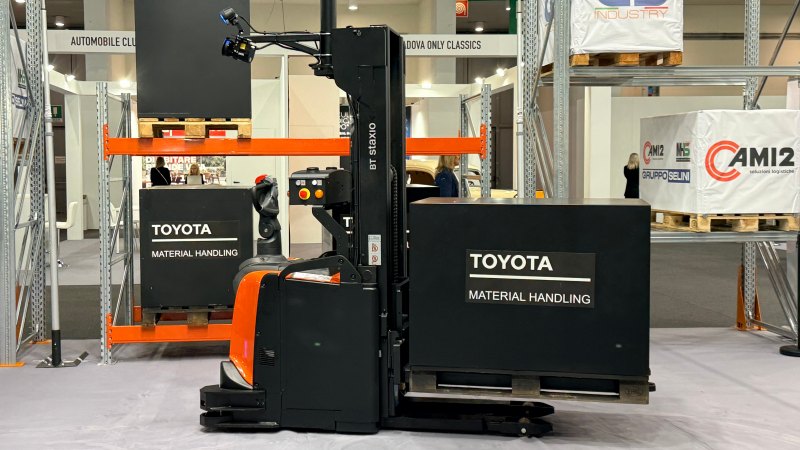





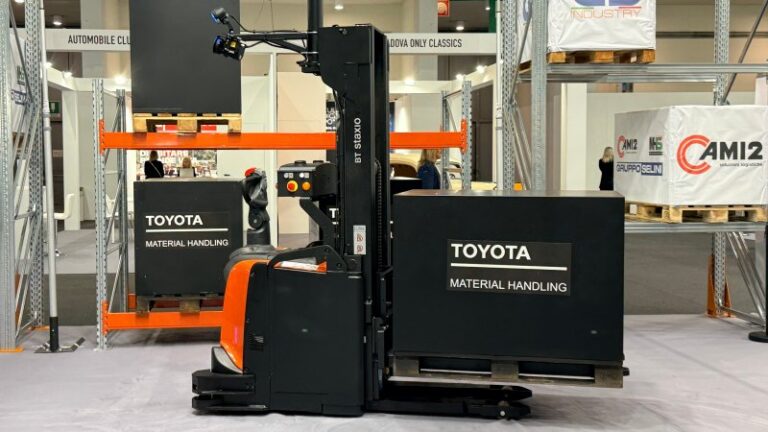
Toyota Material Handling is presenting the new Autopilot range at GreenLogisticExpo in Padua. The range consists of automated forklifts designed to handle repetitive tasks in warehouses and industrial plants. Electrification and automation work together to enable the vehicles to transport pallets, supply production lines and manage storage operations, reducing the need for direct operator intervention. Lithium-ion batteries also allow energy management to be automated: depending on their configuration, the forklifts can travel independently to charging stations during breaks between operations.
The range includes several models, each designed for specific material handling requirements. The Lae250 low-platform transporter, with a capacity of up to 2,500 kg, is intended for horizontal pallet transport over medium and long distances. The Sae160 automated stacker can lift 1,600 kg to a height of 4.7 metres and is designed for low- and medium-level storage. For higher racking systems, the Rae160-250 automated reach trucks handle loads of up to 2,500 kg and reach lifting heights of 11 metres. The Sai125CB counterbalanced stacker, with a capacity of 1,250 kg and a maximum lifting height of 5.4 metres, is designed to handle different types of pallets and roll containers.
For its lithium-ion batteries, Toyota claims energy efficiency improvements of up to 30% compared with the reference solutions identified by the manufacturer, reducing energy consumption and associated emissions. Automatic charging and opportunity charging, carried out between missions, allow battery recharging to be incorporated into operational planning. The charging strategy is determined by fleet size, the intensity of material flows and the layout of the facility, with the aim of minimising interruptions and maintaining vehicle availability.
Autopilot navigation uses either reflectors or systems that detect the surrounding environment. The two methods can also be combined to suit warehouse characteristics and reduce the need for dedicated infrastructure. Toyota Material Handling's T-One software coordinates the vehicles, managing missions, traffic and material flows. The platform can operate independently or communicate with warehouse and production management systems, including WMS and PLCs. It can also be integrated with conveyors, automatic doors and other equipment. Scanners and sensors detect obstacles and enable vehicles to respond to conditions along their routes. This allows the forklifts to operate in areas shared with workers, subject to the safety requirements established for the facility.
Massimiliano Barberis