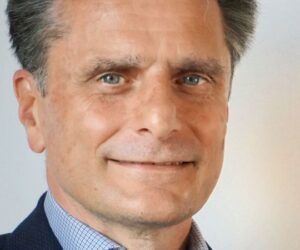





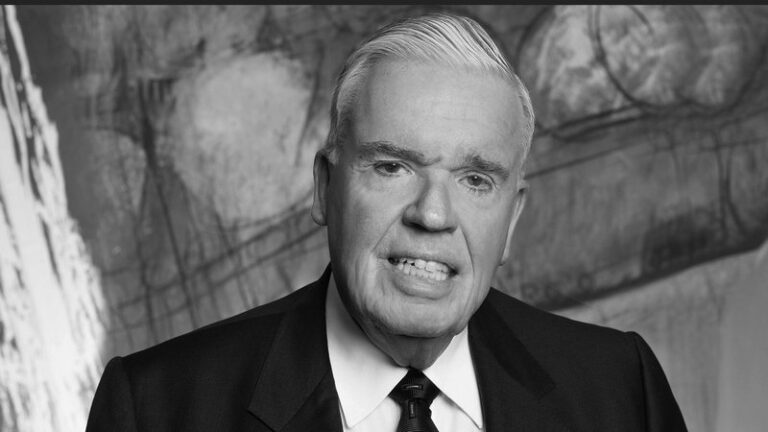
This is not the opening of a succession, but the start of its execution. Klaus-Michael Kühne died during the night between 23 and 24 August at his home in Schindellegi, in the canton of Schwyz, at the age of 89, and was regarded as one of the most powerful figures in European logistics. He had no children and had long since put in place the structure intended to receive his vast business fortune. The entrepreneur decided that all his holdings would be transferred to the Kühne Foundation, the philanthropic foundation he established in 1976 together with his parents.
The scope of the transfer is defined precisely in company documents. As at 31 December 2025, Kühne Holding held 55.4% of the voting rights in Kühne+Nagel International, while the foundation held a further 4.7%, for a total of 60.1% of a share capital made up of 120,753,783 registered shares. The holding company, the vehicle for all the investments, is set to move progressively into the foundation’s sphere, a mechanism confirmed by Kühne himself in an interview in February 2023 and reiterated by the foundation, which states that the founder’s entire estate is destined for it.
Kühne did not, however, appoint a business successor, saying the decision would be taken within the bodies of the holding company and the foundation. For the chairmanship of the foundation board, made up of 11 members, the choice had already been made public some time ago: Basel lawyer Thomas Staehelin, vice-chairman since 1998 and the entrepreneur’s long-standing trustee. That appointment, however, also has a limited horizon, as Staehelin is 78. Among the names mentioned as a possible successor is Thomas Buberl, chief executive of Axa and a board member since 2023. The board also includes Christine Kühne, the entrepreneur’s widow, Karl Gernandt, Jörg Wolle and former Bundesbank (German federal bank) president Jens Weidmann. The formal transfer to the chairmanship will in any case require an official announcement from the foundation. The holding company already has its own management: Dominik de Daniel, chief executive since April 2024, while Gernandt has retained the chairmanship.
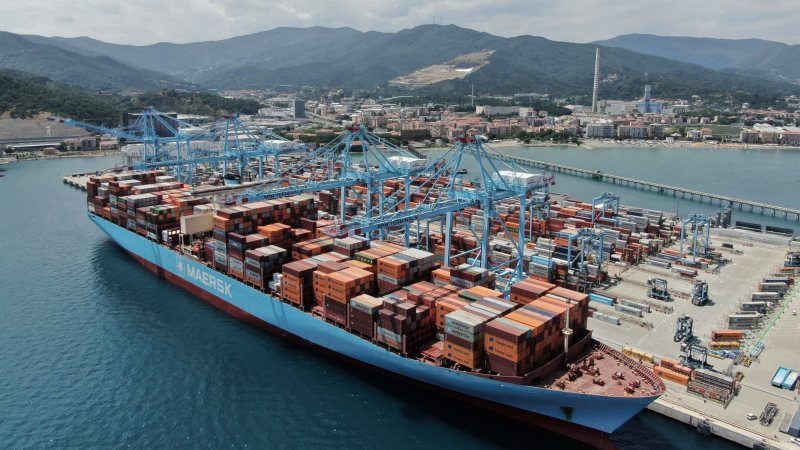
In maritime transport, the group’s most important asset is Hapag-Lloyd. As at 31 March 2026, Kühne Holding, through its subsidiary Kühne Maritime, held 30% of the Hamburg-based company’s share capital, equivalent to 52,728,088 shares out of 175,760,293, making it the largest shareholder. The annual general meeting on 20 May 2026 approved a dividend of €3 per share for the 2025 financial year, or around €158m for the Kühne stake, compared with about €432m the previous year, when the dividend was €8.20. The shipping company closed 2025 with a profit of €924m, after €2.4bn in 2024.
The rest of the portfolio has expanded far beyond the original core business. In Lufthansa, the holding company increased its stake to just over 20% through an operation carried out in May 2026, up from 15.01%, and Gernandt sits on the airline’s supervisory board. In Brenntag, the global distributor of chemicals, its stake exceeds 20%, making it the largest shareholder. Around €1bn has flowed into mobility operator Flix, while the holding company acquired 87% of the capital of pharmaceutical manufacturer Aenova, with a commitment to buy the remaining stake by 2027. The portfolio is completed by holdings in Ottobock, real estate and hospitality assets.
Kühne+Nagel is facing the founder’s death at a time of margin contraction. In 2025 the group generated net turnover of CHF24.476bn, or about €26.2bn, with operating profit falling from CHF1.654bn to CHF1.242bn and group profit declining from CHF1.230bn to CHF925m. Its two main platforms remain sea freight, with 4.325m TEU handled and net turnover of CHF8.817bn, and air freight, with 2.238m tonnes moved: in both segments the company claims the world’s leading position in forwarding. At the end of 2025 the group operated in 93 countries, with 1,366 sites and 85,407 employees.
The foundation set to receive Klaus-Michael Kühne’s estate operates through around 20 companies and controlled entities, with 10 offices in nine countries and activities in 42 countries. For 2026 it has earmarked CHF65m of its own funds, or about €70m, within an overall budget of around CHF135m, including co-financing. The allocation assigns 47% to logistics in the broad sense - training, universities, research and supply chain projects - and a further 11% to humanitarian logistics, for a combined share of 58%. Medicine follows with 20%, climate with 15%, culture with 7% and administrative costs with 5%. Operational programmes include the Kühne Logistics University in Hamburg, with partnerships at 18 Asian and African universities and about 2,300 graduates a year, Help Logistics, active in 33 countries on aid supply chains, the Kühne Climate Center and the Davos Medical Campus.
Klaus-Michael Kühne was born in Hamburg on 2 June 1937, the son of Alfred and grandson of August Kühne, who in 1890 founded the shipping house in Bremen with Friedrich Nagel, then focused on raw materials and port traffic. After banking training, he joined the family business in 1958, became a general partner in 1963 and in 1966 took over operational management of Kühne & Nagel Speditions-AG. From 1975 he was chief executive of Kühne+Nagel International and from 1992 to 2011 chairman of the board of directors, later becoming honorary chairman. Control of the business passed to his father on August’s death in 1932 and to Kühne himself on Alfred’s death in 1981.
His management followed two strategies. The first was the decision to build a direct presence in Asian markets through operating subsidiaries and local expertise rather than agent networks, ahead of the shift in supply chains towards the Far East. The second was the recovery of ownership control: in 1981 the British conglomerate Lonrho had acquired 50% of the group, providing financial support after losses linked to the attempt to build its own fleet, and Kühne bought that stake back during the 1980s and 1990s, before taking the company public in 1994. The model was then consolidated through the purchase of capacity from shipping lines, airlines and carriers, demand aggregation, customs and document management, warehouses and distribution, without ever turning the group into a shipowner or air carrier.
The move into liner shipping came in 2008, when through Kühne Maritime he joined the Albert Ballin consortium that acquired Hapag-Lloyd’s shares from Tui. The holding rose to around 14% after the merger with the Arab shipping company Uasc in 2017, passed the 25% blocking minority threshold in June 2019 and reached 30% in April 2023.
Outside logistics, Kühne was a patron and financier of German cultural and sporting initiatives, from the Elbphilharmonie in Hamburg - of which the foundation was one of the first supporters - to the Salzburg Festival, from the Lucerne Festival Orchestra to Hamburger Sport-Verein and the Elbtower real estate project. On the history of his family during National Socialism, the subject in recent years of research and controversy in Germany, he maintained a silence that was never broken. Married to Christine Kühne since 1989, he had lived in Switzerland for decades.
A.M.B.