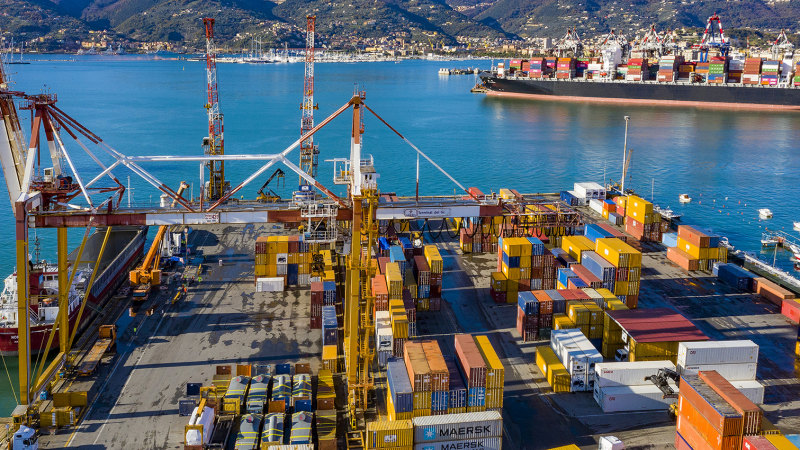







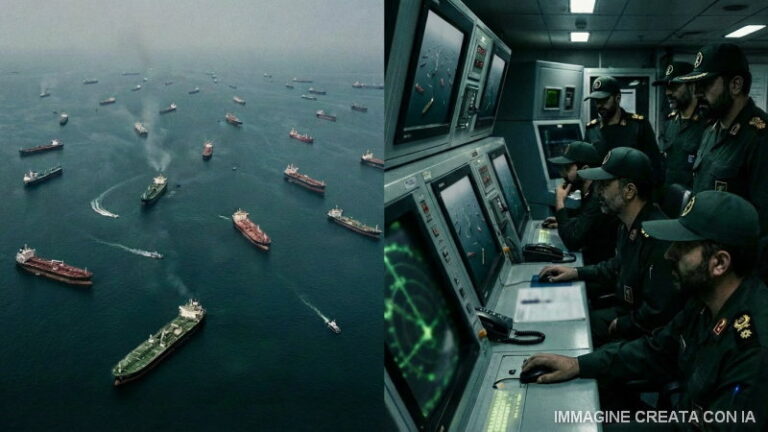
The Persian Gulf area continues to be shrouded in an information fog because, in the absence of authoritative and independent sources, reports are coming from the parties to the conflict. During the third weekend of May 2026, the Iranian Revolutionary Guards said they had seized two container ships operated by MSC - Epaminondas and MSC Francesca - as they crossed or approached the Strait of Hormuz. The attack, allegedly carried out by patrol boats of the IRGC Navy, is also said to have involved a third ship, Euphoria, and took place within a narrow time window, causing damage to the command structures of both vessels but with no consequences for their crews. The episode forms part of a broader context of rising tension in the Persian Gulf, already marked by the US seizure of the Iranian vessel Touska, and is affecting the operational decisions of major shipping carriers.
Epaminondas is a container ship of about 6,700 TEU, built in 1998 and flying the Liberian flag, controlled by the Greek shipowning group Technomar Shipping, owned by magnate George Youroukos, and used as a tonnage provider for MSC. According to reconstructions by Lloyd’s List and security company Vanguard, the vessel was heading east through the strait when it was approached by an IRGC unit. The master reported that Epaminondas had received regular authorisation to transit and that there had been no prior contact or warning by VHF radio before the Iranian side opened fire. The shots hit the bridge area, causing significant damage to the command structures. Technomar confirmed that the damage is extensive but not enough to endanger the safety of the vessel or cause spills at sea.
Analysis of AIS data shows that, after the attack, Epaminondas gradually slowed until it stopped, remaining adrift near the Iranian coast, just off the Bandar Abbas area, with no significant movements for several hours. The Greek Ministry of Foreign Affairs and the Ministry of Shipping issued statements stressing that there were no injuries, no environmental damage and that the vessel was "stationary but under the command of its own captain" near the Iranian coast. This version, however, conflicts with the IRGC’s formal claim, which explicitly refers to a seizure, and with several reports indicating that armed personnel boarded at least one of the two vessels.
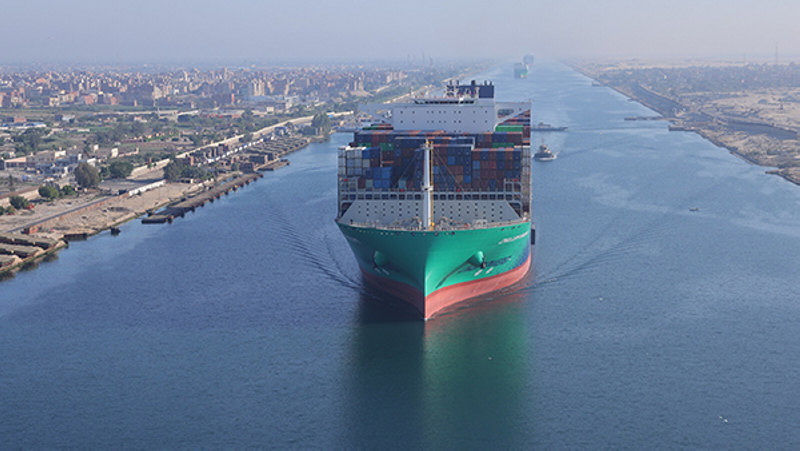
MSC Francesca is a larger container ship, of around 11,300 TEU, 363 metres long and 46 metres wide, built in 2008 and registered under the Panamanian flag. It is directly owned by MSC and deployed on routes between the US West Coast, Asia and the Gulf. This vessel is also said to have been hit within the same time window, with damage described inconsistently by the various sources: some analyses refer to "heavy bridge damage", while others point to structural damage to the hull and the crew accommodation areas, although official descriptions remain more cautious. According to AIS tracking and maritime sources, MSC Francesca also reduced speed until it stopped in open water near the position of Epaminondas, close to the Iranian coast.
One factor complicating the real-time reconstruction is the switching off of the AIS transponder. In the days before the incident, maritime intelligence firms such as Linerlytica had documented the tendency of several MSC vessels to deactivate the automatic identification system near the strait, with the aim of reducing the risk of being detected by hostile actors, reactivating it only once they had left the Gulf. In the case of MSC Francesca, analyst Lars Jensen reported that the transponder was switched off in the afternoon of the day of the attack, a factor that makes it difficult to establish with certainty whether and when the vessel was later taken into the port of Bandar Abbas or kept at anchor in the waters off the coast. In the following hours, open-source AIS platforms showed the vessel’s position as "adrift or at anchor" in the Persian Gulf sector facing Bandar Abbas, which is consistent with the hypothesis of Iranian control but not sufficient, on its own, to confirm a berth alongside the quay.
Tehran’s official narrative is based on allegations that have no independent confirmation in the available traffic documents. According to the Tasnim news agency, which is aligned with the Iranian apparatus, the IRGC seized Epaminondas because it was "used by the US military" and for "repeated violations" of maritime regulations. The same source claims that the ships had "threatened maritime security, sailed without the necessary permits and interfered with navigation systems", a reference that could explicitly allude to the practice of deliberately switching off AIS. These allegations fit into Iran’s established strategy of presenting seizures as a "legal" response to violations by others, in contrast with the Western interpretation, which sees them as retaliatory actions for the seizure of the Touska and for pressure on Tehran’s oil exports.
MSC has cooperated with UKMTO (UK Maritime Trade Operations) and the flag authorities to monitor developments, while also adopting measures to reduce the exposure of its vessels in the region. The incident had an immediate effect on the choices of other operators as well: Maersk suspended some overland corridors between ports in the United Arab Emirates, Qatar and Oman and terminals in Saudi Arabia, Kuwait and Bahrain, effectively reducing Persian Gulf land-route options.
Several disputed points remain open. From a technical perspective, the damage to Epaminondas is described as "extensive" by security sources but in more general terms by the shipowner; for MSC Francesca, the descriptions are even less precise, in the absence of independent technical reports. From a legal perspective, Greece says Epaminondas is not "hijacked" but merely stationary under the command of its captain, while the IRGC explicitly refers to the seizure of two vessels. From a geographical perspective, there is no public confirmation that either ship has berthed at Bandar Abbas, nor are there declassified satellite images proving it.
The episode confirms several structural trends in maritime risk in the Strait of Hormuz. The practice of deactivating AIS transponders in high-risk areas, designed to reduce traceability by hostile actors, is partly turning against shipowners themselves, giving the Iranian authorities a pretext to claim "interference with navigation systems" and reducing the transparency of commercial traffic. The suspension or reduction of overland services and the need to divert flows onto longer routes, for example via the Cape of Good Hope, mean longer transit times, higher operating costs and greater volatility in supply chains, against a backdrop already burdened by the Red Sea crisis. For shipowners and shippers, the combination of targeted seizures, the threat of further attacks and regulatory uncertainty makes the use of extraordinary measures more likely: temporary flag changes, revised rotations and higher insurance risk premiums on routes crossing the strait.
Antonio Illariuzzi