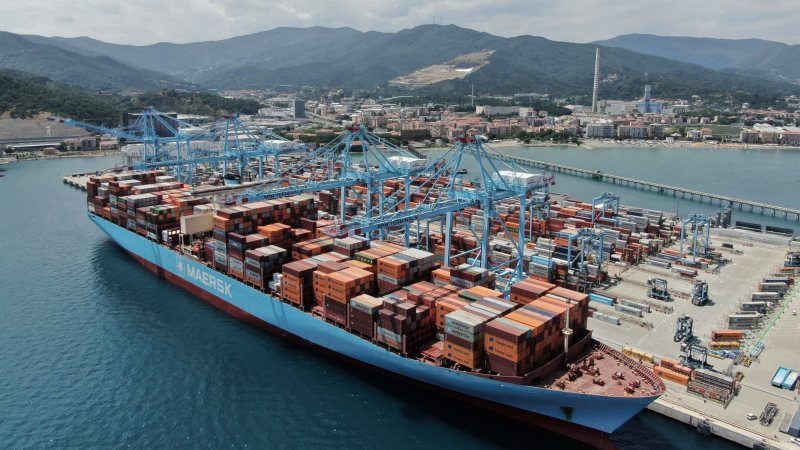







The Middle Corridor could become a major economic opportunity for Europe too, if only it recognised its advantages and cost-effectiveness instead of seeing it merely as an alternative transit route for China. Europe’s view of the Middle Corridor is rather narrow, according to an analysis by logistics consultant Irina Birman reported by specialist portal RailFreight.com. European countries, together with their institutions and EU companies, are showing limited large-scale engagement with the Middle Corridor, apart from a few exceptions such as MSC and Maersk, which have understood its potential. Europe, by contrast, risks missing this opportunity if it does not develop this relationship with greater commitment and awareness.
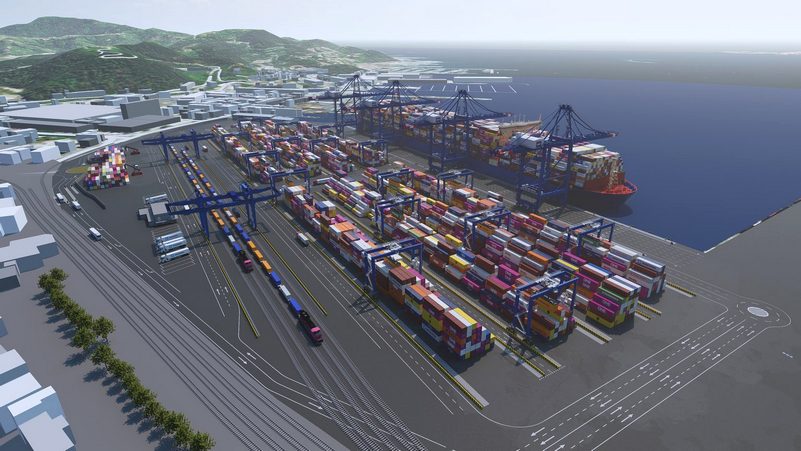
The Middle Corridor, or Trans-Caspian International Transport Route, is a 4,000-kilometre multimodal trade route linking China to Europe through Central Asia, the Caspian Sea, Azerbaijan, Georgia and Turkey. This corridor can offer a faster alternative to northern routes and extends across railways and maritime links, with the aim of stimulating trade, connectivity and infrastructure development, not least because it crosses a geographical area home to almost 100 million people.
It is reductive to regard the Middle Corridor solely as a point-to-point link between Europe and China, as it can connect the economies and markets of Kazakhstan, Uzbekistan, Azerbaijan and Georgia, which represent trading partners with vast untapped potential for the European Union. These countries have now grasped the opportunities that can arise from being part of this corridor and are actively working to create terminals and logistics centres, where international cooperation plays a key role. Uzbekistan, for example, which has no access to the sea, benefits from synergy with Georgia, which can connect its Black Sea ports to the wider network. Even more significant is the fact that some Central Asian countries are investing in Europe, such as Kazakhstan’s railways, which, together with Chinese partners, are developing an intermodal terminal near the Hungarian capital Budapest.
This activism should not obscure the need to strengthen and modernise infrastructure that is still missing or insufficient and remains an obstacle in some areas. Many sections of the Middle Corridor are being upgraded or have already been improved, but there is still considerable room for progress. The corridor also still faces several bureaucratic and customs bottlenecks that need to be overcome through better cross-border coordination. According to the analysis reported by RailFreight.com, however, the route is moving in the right direction: transit times have fallen, connections using Caspian Sea routes have increased and economic investment from China has grown.
By contrast, Europe appears to be taking a passive approach. It continues to remain a mere spectator, risking the loss of the opportunity to position itself as a leading player in the Central Asian market rather than viewing it only as a transit area. But perhaps none of this should come as too much of a surprise, as the European Union is not a single political and economic entity, as was evident in the difficulty of formulating a shared plan such as the one known as NextGenerationEU.
Piermario Curti Sacchi