





Spain has decided to turn the contractual price revision clause for road freight transport from a negotiable provision into an enforceable legal right. The agreement, reached between the Ministerio de Transportes y Movilidad Sostenible (Ministry of Transport and Sustainable Mobility) and the Comité Nacional del Transporte por Carretera (National Committee for Road Transport), will be incorporated into a new Real Decreto-ley (Royal Decree-law) that supplements and strengthens Rd-ley 7/2026 on professional diesel support. The measure sits within the broader “Plan integral de respuesta a la crisis en Oriente Medio” (Comprehensive plan to respond to the Middle East crisis), approved by the Council of Ministers with a €5 billion package combining energy tax cuts, social measures and support for sectors most exposed to rising energy costs caused by the war in Iran and the disruption of oil traffic through the Strait of Hormuz.
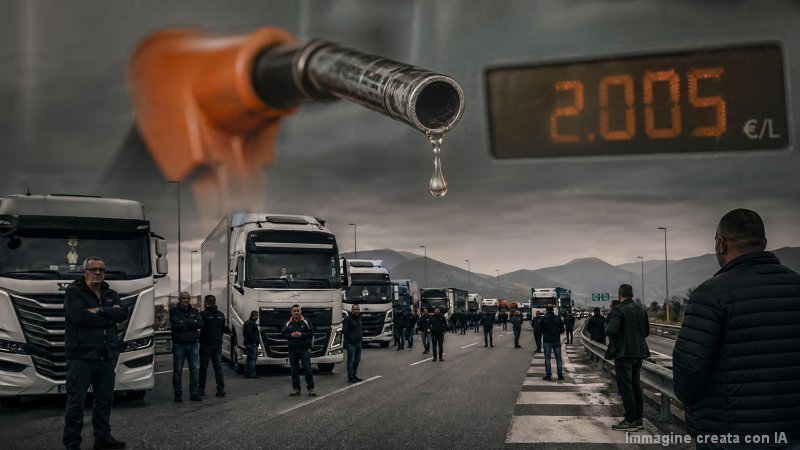
The core of the agreement is a change to the price revision formula for transport based on fuel costs. Three elements stand out: the link to diesel prices excluding taxes, the increased weight of fuel in the cost structure, and the automatic nature of adjustments. According to the Cntc, the new formula will be “linked to the price of fuel before taxes”, meaning without VAT and without Impuesto especial de hidrocarburos (hydrocarbons excise duty). At the same time, the share of fuel in the formula rises from 30% to 40%. While modest in numerical terms, this is significant in substance, as it makes freight rates more sensitive to diesel price fluctuations and recognises fuel as a central component of transport costs.
To ensure the adjustment does not remain ineffective in contracts, the government will amend Article 38 of Ley 15/2009 (Law on the contract for the carriage of goods by land), clarifying that the revision formula is automatic and mandatory. The move is intended to eliminate practices whereby shippers opposed adjustments or imposed clauses that effectively neutralised the revision mechanism, shifting the full risk of fuel price volatility onto carriers.
The ministry had already issued interpretative guidance, now set to be consolidated “with the force of law” in the new decree. The clarifications cover four areas. Reference diesel prices for contracts must always be calculated net of taxes. In calculating transport price revisions, rebates and extraordinary temporary aid under Rd-ley 7/2026—specifically the €0.20 per litre support for professional diesel—must not be taken into account: these are additional support for carriers and not factors that reduce the base price. The rebate under Rd-ley 7/2026 applies not only to conventional diesel but also to HVO and biodiesel, avoiding penalising operators using alternative fuels. On taxation, the Ministerio de Hacienda (Ministry of Finance) has confirmed the continuation of the régimen de módulos (simplified tax scheme) compared with 2025, a crucial element for thousands of self-employed hauliers.
These technical points have a direct impact on value distribution along the supply chain. Anchoring the revision to the “clean” diesel price and excluding public aid from the calculation prevents the state from effectively financing discounts for shippers, thereby stabilising carriers’ minimum margins. The political objective is twofold: to prevent the collapse of haulage companies and owner-drivers, and to ensure public resources compensate actual costs borne by carriers rather than benefiting clients.
To make the new framework effective, the agreement introduces invoice transparency requirements and paves the way for a specific sanctions regime. Invoices must separately state the “adjustment for variation in fuel price” provided for under Rd-ley 3/2022, removing the possibility of contractually disguising or diluting the adjustment within other price items. The government and the Cntc will also assess the creation of a dedicated enforcement regime to penalise non-compliance with revision obligations and the new rules, including cases where public aid is used to suppress freight rates instead of compensating carriers’ costs. This turns price revision from a negotiable clause into an enforceable right, with potential implications for inspections and commercial disputes along the supply chain.
The agreement does not end with the new decree. Both parties commit to maintaining a “permanent negotiation table” to monitor issues still subject to European Commission approval or the adoption of a temporary state aid framework. The government has already notified the Rd-ley 7/2026 aid scheme in order to exceed the “de minimis” threshold and has held an initial technical meeting with Commission services, submitting written clarifications on the issues raised. The aim is to ensure that aid measures—including the €0.20 per litre for professional diesel—are compatible with EU state aid rules and can be extended or adjusted in line with the duration of the energy crisis.
The wider package that includes the road transport measures provides for reductions in taxation on diesel, unleaded petrol and other energy products, as well as temporary cuts in VAT and excise duties on electricity and gas. Title V of the decree introduces an extraordinary and temporary aid of €0.20 per litre of general-use diesel for transport companies entitled to partial reimbursement of the Impuesto sobre hidrocarburos (hydrocarbons tax) on professional diesel, with the support extended to companies that do not benefit from this reimbursement.
For maritime transport, subsidies linked to miles sailed and gross tonnage are introduced to maintain connectivity on certain cabotage and inter-island routes. In return, beneficiary companies are subject to social conditions: until 30 June 2026 they may not justify layoffs or business closures on economic or force majeure grounds linked to the conflict in Iran, nor avoid obligations related to sustainable mobility plans.
Michele Latorre