





Array ( [0] => 8 [1] => 39 )

Podcast K44

Cronaca

Normativa

Mare

  • Noli container calano anche a metà febbraio 2026

    Noli container calano anche a metà febbraio 2026

    Il World Container Index Drewry del 19 febbraio 2026 segna la sesta settimana consecutiva di ribasso dei noli del trasporto marittimo di container con un -31% su base annua. In anticipo rispetto al Capodanno Cinese, i vettori aumentano i viaggi cancellati per contenere l’eccesso di capacità.

Autotrasporto

  • Waberer’s riceverà 925 veicoli industriali nel 2026

    Waberer’s riceverà 925 veicoli industriali nel 2026

    Il gruppo ungherese Waberer’s investirà nel 2026 circa 57 milioni di euro per sostituire 925 veicoli tra trasporto internazionale e logistica domestica, riducendo l’età media della flotta e rafforzando la strategia Esg. Nel 2025 ricavi stabili ma forte crescita di redditività, trainata dalle assicurazioni.

    Errors and shortcomings in maintenance at the root of rail disasters

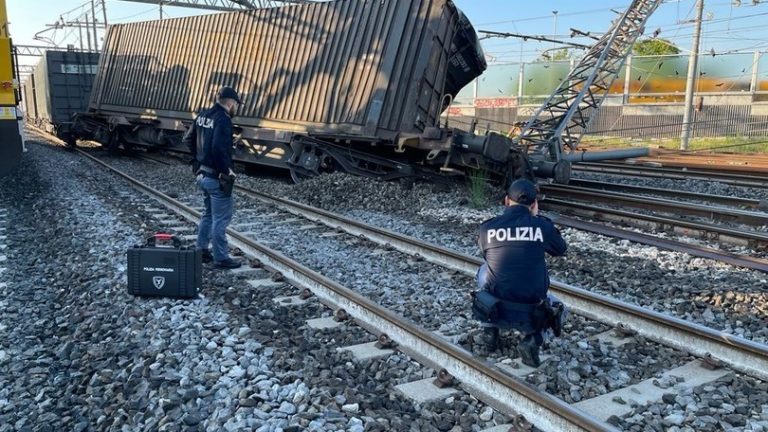
    Fonte: Polizia di Stato

    Railways are widely regarded, both in the collective imagination and according to statistics, as one of the safest modes of transport. For this reason, news of accidents attracts significant attention, especially when lives are lost, as in the tragedy that occurred in Spain on 18 January 2026. According to Eurostat data, European trains are safe, although the 1,500 incidents classified as significant in 2024, with 750 fatalities, can hardly be considered negligible.

    A closer look at the figures shows that, excluding suicides, 98 per cent of deaths are caused by people crossing the tracks in restricted areas or by accidents at level crossings, the latter due not to technical failures but to imprudence. The picture does not change when focusing solely on Italy. According to Ansfisa, the Agenzia nazionale per la sicurezza delle ferrovie e delle infrastrutture stradali e autostradali (National Agency for the Safety of Railways and Road and Motorway Infrastructure), in 2024 all fatal accidents involved individuals struck by trains along the lines or at level crossings. No deaths were linked to train collisions or derailments.

    Zero risk does not exist, however, and the serious Spanish accident demonstrates this. Yet even in this case, a recurring cause emerges that appears to link the most serious rail disasters of recent years: shortcomings and serious errors in maintenance. This is the conclusion of the report by the Comisión de Investigación de Accidentes Ferroviarios (CIAF), the independent Spanish body responsible for investigating railway accidents.

    On 18 January 2026, two high-speed trains collided on the Madrid–Seville line after the first of the two convoys, operated by Iryo, in which Italy’s FS International holds a stake, derailed, resulting in a heavy toll of more than 40 dead and numerous injured. In this case, a broken rail has been identified as the main cause of the accident. But how could this have happened? It has emerged that six months earlier the track had been completely renewed, with rails, sleepers and ballast replaced, and the two long rail sections regularly jointed and welded. However, in winter temperatures iron can contract and a rail can crack, not necessarily at the weld point.

    On high-speed lines, as in this case, there are no track circuits, meaning there is no flow of current between the rails that could detect anomalies or a loss of contact. Progressive stresses, possibly compounded by the fact that at that point the ballast had not been properly tamped, led to the rail breaking and even tearing out the fastenings that secure it to the sleepers. The resulting hunting oscillations then completely overturned it. Evidently, in the period immediately preceding the tragedy, no inspection of the line was carried out using the diagnostic equipment that is now widely available.

    There is a common thread linking this accident to others in the past, including in Italy, which have often been traced back to technical anomalies caused by lapses in maintenance. Unlike the more distant past, when railway accidents almost always occurred because a stop signal was inadvertently disregarded, technology now plays a decisive role in ensuring safety. What remains uncertain is the quality of maintenance. This was the case in February 2020 in Livraga, in the province of Lodi, where the derailment of a Frecciarossa 1000 was caused by a defect in the installation of a turnout, resulting in the deaths of the two drivers and injuries to several passengers. Maintenance shortcomings and omissions in inspections were also behind the accident in Pioltello in January 2018, when a regional train derailed due to the failure of a joint in a state of severe deterioration, combined with generally poor track conditions.

    It is equally significant to examine the causes of the freight train collision that occurred in the Milan rail hub in September 2024. The sequence of events was reconstructed by the Ufficio per le investigazioni ferroviarie e marittime del Ministero dei Trasporti (Digifema), which referred to the “absence, on the section of infrastructure concerned, of the prescribed mechanical devices capable of detecting track circuit occupation, that is to say, of sensing the presence of the wheels of the stationary freight train on the tracks near the point of collision”.

    Digifema stated, without ambiguity, that “this absence was in turn traced back to maintenance works carried out previously and not properly completed”. The lack of connection “resulted in the failure of the equipment, which was unable to detect the occupation of part of the track circuit on the diverging route beyond the clearance point”. For this reason, the central control systems were effectively misled and authorised the freight train to proceed, when in fact it encountered the rear of the other convoy.

    Although absolute safety does not exist and no technical manual speaks of zero risk, the necessary countermeasures are feasible and are provided by technology itself, which now makes it possible to inspect and verify all parameters, provided that diagnostic tools – and in the near future also autonomous systems – are widely deployed after every intervention on the line.

    Piermario Curti Sacchi

    © TrasportoEuropa - Riproduzione riservata - Foto di repertorio
    Segnalazioni, informazioni, comunicati, nonché rettifiche o precisazioni sugli articoli pubblicati vanno inviate a: redazione@trasportoeuropa.it


      Puoi commentare questo articolo nella pagina Facebook di TrasportoEuropa

      bottone newsletter piccolo Vuoi rimanere aggiornato sulle ultime novità sul trasporto e la logistica e non perderti neanche una notizia di TrasportoEuropa? Iscriviti alla nostra Newsletter con l'elenco ed i link di tutti gli articoli pubblicati nei giorni precedenti l'invio. Gratuita e NO SPAM!


    CONTENUTI SPONSORIZZATI


Videocast K44

Aereo

  • Alaska Airlines avvia un volo da Roma a Seattle

    Alaska Airlines avvia un volo da Roma a Seattle

    Da aprile 2026 voli giornalieri con Boeing 787 9 collegheranno Roma Fiumicino a Seattle. Global Gsa Group gestirà la capacità cargo in Italia, puntando su merci ad alto valore e sull’accesso a oltre cento destinazioni tra Stati Uniti, Asia Pacifico e America Latina.

Ferrovia

  • Nuovo ciberattacco contro Deutsche Bahn a febbraio 2026

    Nuovo ciberattacco contro Deutsche Bahn a febbraio 2026

    Il 17 e 18 febbraio 2026 un ciberattacco DDoS ha colpito i sistemi digitali centrali della Deutsche Bahn, causando blocchi a sito e app di vendita biglietti. Nessun impatto sulla sicurezza della circolazione, ma riemerge il tema della resilienza delle infrastrutture critiche.
Persone

  • Una dirigente di Ups alla guida di Hupac

    Una dirigente di Ups alla guida di Hupac

    Il 1° luglio 2026 Britta Weber sostituirà a Michail Stahlhut come Ceo di Hupac. Prima donna alla guida del gruppo, arriva da Ups Healthcare con oltre vent’anni di esperienza internazionale nella logistica e nella gestione della catena di fornitura.
Viberti presenta Evo, semirimorchio centinato competitivo

TECNICA

Viberti presenta Evo, semirimorchio centinato competitivo
Camion ad accesso laterale integrale per la distribuzione

TECNICA

Camion ad accesso laterale integrale per la distribuzione
Nuovo semirimorchio Schmitz, con uno sguardo all’America

TECNICA

Nuovo semirimorchio Schmitz, con uno sguardo all’America
Traton e PlusAI rafforzano l’alleanza sul camion autonomo

TECNICA

Traton e PlusAI rafforzano l’alleanza sul camion autonomo
Catl avvia produzione in serie di batterie a sodio per furgoni elettrici

TECNICA

Catl avvia produzione in serie di batterie a sodio per furgoni elettrici
previous arrow
next arrow
Assologistica firma con Manageritalia il rinnovo per dirigenti logistica

LOGISTICA

Assologistica firma con Manageritalia il rinnovo per dirigenti logistica
Le tre transizioni della logistica italiana secondo CDP

LOGISTICA

Le tre transizioni della logistica italiana secondo CDP
Vgp apre un polo logistico di 22mila metri quadrati a Legnano

LOGISTICA

Vgp apre un polo logistico di 22mila metri quadrati a Legnano
Dachser usa i camion cinesi BYD in Spagna

LOGISTICA

Dachser usa i camion cinesi BYD in Spagna
Assoluzioni in Appello sui presidi alla logistica Penny

LOGISTICA

Assoluzioni in Appello sui presidi alla logistica Penny
previous arrow
next arrow
Il 2026 sarà l’anno delle batterie al sodio per i veicoli elettrici

ENERGIE

Il 2026 sarà l’anno delle batterie al sodio per i veicoli elettrici
Sequestrati 260 milioni per maxi frode Iva nei carburanti

ENERGIE

Sequestrati 260 milioni per maxi frode Iva nei carburanti
Petrolio in rialzo dopo le sanzioni Usa alla Russia

ENERGIE

Petrolio in rialzo dopo le sanzioni Usa alla Russia
Antitrust multa sei compagnie petrolifere italiane con 936 milioni

ENERGIE

Antitrust multa sei compagnie petrolifere italiane con 936 milioni
A Trieste i lavori per produrre idrogeno verde

ENERGIE

A Trieste i lavori per produrre idrogeno verde
previous arrow
next arrow
Padrosa realizzerà un parcheggio per camion ad Alessandria

SERVIZI

Padrosa realizzerà un parcheggio per camion ad Alessandria
Leviahub e Pionira accelerano sull’adozione dell’eCmr

SERVIZI

Leviahub e Pionira accelerano sull’adozione dell’eCmr
Trans.eu avvia il pagamento sicuro per l’autotrasporto europeo

SERVIZI

Trans.eu avvia il pagamento sicuro per l’autotrasporto europeo
Sanilog rinnova nel 2026 il piano sanitario per lavoratori della logistica

SERVIZI

Sanilog rinnova nel 2026 il piano sanitario per lavoratori della logistica
L’IA si sta sempre più integrando nel trasporto

SERVIZI

L’IA si sta sempre più integrando nel trasporto
Scania amplia la rete di assistenza nel Lazio

SERVIZI

Scania amplia la rete di assistenza nel Lazio
Nuovi contributi per cibersicurezza alle Pmi e autonomi

SERVIZI

Nuovi contributi per cibersicurezza alle Pmi e autonomi
Dkv Mobility presenta un nuovo software per gestione trasporti

SERVIZI

Dkv Mobility presenta un nuovo software per gestione trasporti
Forto nomina Matteo Caiti Country Manager Italia

SERVIZI

Forto nomina Matteo Caiti Country Manager Italia
Nuove tecnologie Geotab per il trasporto refrigerato

SERVIZI

Nuove tecnologie Geotab per il trasporto refrigerato
Sanzione antitrust di 5 milioni sul noleggio veicoli per Ald

SERVIZI

Sanzione antitrust di 5 milioni sul noleggio veicoli per Ald
Circle Group potenzia software per porti e interporti

SERVIZI

Circle Group potenzia software per porti e interporti
Scania realizza una struttura per i camion a Milano

SERVIZI

Scania realizza una struttura per i camion a Milano
Transporeon introduce nuove soluzioni TMS con l’intelligenza artificiale

SERVIZI

Transporeon introduce nuove soluzioni TMS con l’intelligenza artificiale
Pietro Lanza è direttore generale di SB Italia

SERVIZI

Pietro Lanza è direttore generale di SB Italia
previous arrow
next arrow