






On 29 October 2025, rail freight and intermodal transport companies and associations sent an open letter to Germany’s transport minister, Patrick Schnieder, and Deutsche Bahn’s CEO, Evelyn Palla. Signed by Erfa, Fermerci, Hupac, Kombiverkehr, Sgkv, TX Logistik and Uirr, the document calls on policymakers and rail management to act swiftly to prevent a rapid decline of combined road–rail transport in Germany and Europe.
The letter states that intermodal transport has for years been the main driver of growth in rail freight, with annual increases between 3 and 7%. However, according to the signatories, the progressive deterioration of rail infrastructure has led to declining performance and collapsing reliability, further worsened by train cancellations, diversions and delays. On top of these issues come major corridor renovation works, which entail long-term closures and costly diversions, threatening the economic viability of rail freight.
Companies point out that the planned diversions – often involving shorter trains, unsuitable line profiles and longer routes – make it difficult to maintain the competitiveness of rail transport. This situation is already driving significant volumes of freight back to the road. Adding to the pressure are rising rail network charges: since 2023, access fees have increased by 19%, with a further rise of between 25% and 35% expected in 2026. The signatories also denounce penalties for short-notice cancellations, even when caused by network disruptions, and rising wagon parking charges.
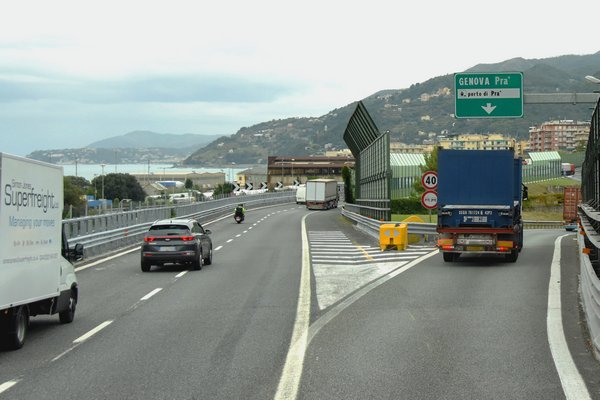
The letter stresses that while rail costs are increasing, road transport costs remain stable or even falling, eroding rail’s competitiveness. The result, it warns, is a shift of freight traffic back to the road – a trend that is already visible and could soon become irreversible. In the Rhine Valley and across Switzerland, combined transport has fallen by 7.6% while road freight has risen by 7.2%, equivalent to around 86,000 additional lorries. For the coming years, the sector expects a 20–30% reduction in rail capacity, resulting in hundreds of thousands of extra road journeys. On the main Alpine corridors through Austria and Switzerland alone, around 500,000 additional truck shipments are anticipated.
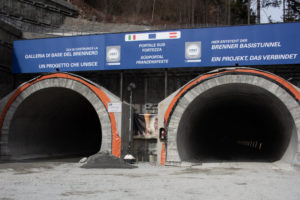
The signatories warn that a return to road transport would nullify decades of public investment in combined transport terminals and jeopardise major European projects such as the Gotthard and Brenner base tunnels. These infrastructures, the letter notes, were built on the assumption that Germany would maintain an adequate level of rail efficiency, essential for Europe’s competitiveness.
Industry organisations are therefore calling for a series of urgent measures. Among these are freezing rail access charges for 2026, ensuring at least 90% of current capacity during renovation works, upgrading diversion routes to the same standards as main lines, allocating train paths based on market needs, providing compensation for difficult operating conditions, and suspending cancellation penalties until acceptable network quality is restored.
In conclusion, the companies emphasise that industrial supply security, Germany’s competitiveness and the achievement of climate targets are all at stake. The associations reaffirm their willingness to cooperate with public authorities to find solutions that reconcile network maintenance needs with the continuity of combined transport, described as the backbone of sustainable and environmentally responsible logistics.