







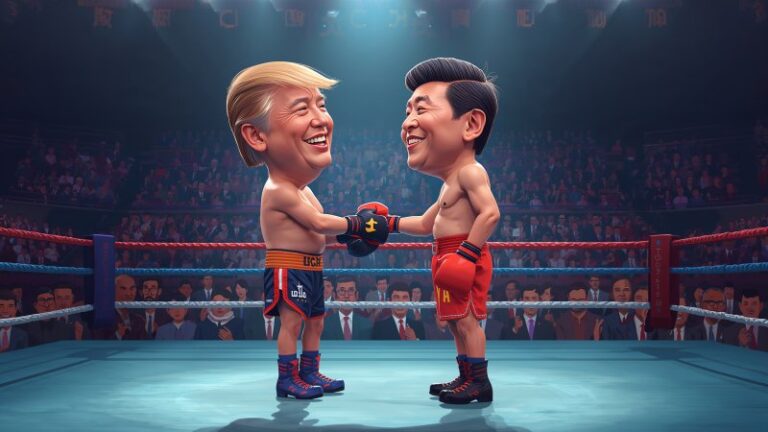
China’s firm response to US tariffs and port duties – notably through restrictions on rare earth exports and soybean imports – has paved the way for an accord that effectively softens Trump’s aggressive trade stance. The meeting between the US president and his Chinese counterpart in Busan produced a one-year trade truce (barring reversals) that suspends port tariffs and export control measures.
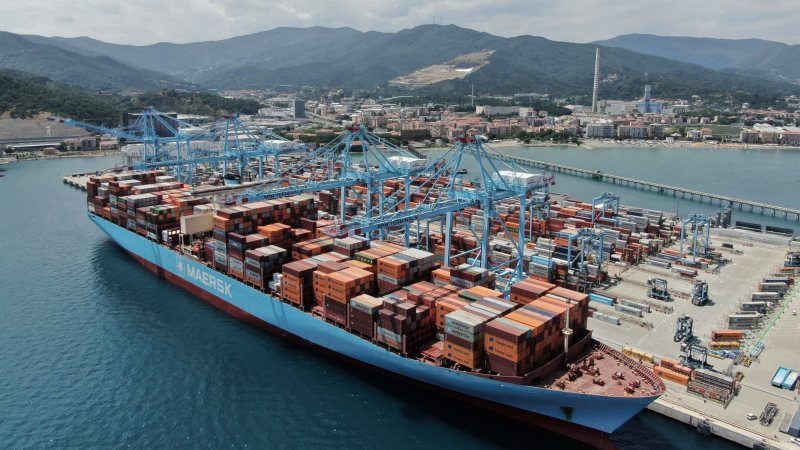
The suspension mainly concerns measures introduced by the United States under the Section 301 investigation into China’s maritime and shipbuilding sectors. These measures, which took effect on 14 October, had imposed entry duties on vessels built in China or owned by Chinese companies docking at US ports, but will now remain inactive for twelve months. In return, Beijing will suspend its own countermeasures on imports and adjust customs and port policies to ease trade flows.
At the same time, both sides have agreed to reduce industrial tariffs: US import duties will fall from 57% to 47%, while the additional 10% tax on products linked to fentanyl will be scrapped. President Trump described the agreement as “an excellent step forward” and announced that the US would suspend the so-called 50% penetration rule in export controls, a measure that would have restricted technology supplies to China. Xi Jinping said that China would likewise suspend its export control measures for one year and would consider longer-term structural solutions, signalling an intention to restore balance in the trade of strategic materials.
One of the most significant outcomes of the Busan agreement concerns rare earths – a key resource in semiconductor and advanced technology production. Beijing has agreed to suspend for twelve months the restrictions introduced on 9 October, which tightened controls on the export of five new critical elements. In exchange, the United States will temporarily ease some of its own limits on sensitive technology exports. China, which produces roughly 70–90% of the world’s refined rare earths, thus retains a crucial strategic lever but pledges to help stabilise the global supply chain. Trump said the issue was “resolved for at least a year”, pointing to a pragmatic balance rather than a final settlement.
On the agricultural front, China announced the immediate resumption of US soybean purchases. According to the US Department of Agriculture, Beijing accounted for about half of all US soybean exports in 2024, and the import ban imposed in May 2025 had heavily depressed prices. The Busan agreement therefore reactivates a strategically important trade channel for American farmers and for port logistics handling shipments to Asian markets.
Official statements reflected a tone of détente, though with differing emphases. Xi Jinping said that relations between the two countries “have maintained overall stability” and that China and the United States should be “partners and friends”, describing economic cooperation as both “the ballast and the engine” of bilateral ties. He reiterated that China does not seek to challenge or replace other nations, but to share development opportunities and uphold open and stable trade. Trump, in turn, adopted a more forthright tone, calling it “an extraordinary deal” and praising Xi as “a very tough negotiator and a great leader of a great country”. He also announced an official visit to China in April 2026, to be followed by Xi’s visit to the United States.
Analyses from Beijing portray the meeting as a step towards stabilising economic relations, with the Chinese press referring to a “one-year ceasefire consensus”. Some outlets, such as Hong Kong 01, note that it remains a limited and temporary deal that merely postpones structural issues. In the United States, assessments are similarly cautious. Reuters and the Center for Strategic and International Studies note that the agreement “returns relations to their pre-tariff escalation state” without tackling fundamental issues such as industrial overcapacity or China’s export-driven growth model. Other observers, including the Wall Street Journal, suggest that the truce could open a phase of direct diplomacy between the two leaders throughout 2026.