





Array ( [0] => 8 [1] => 41 )

Podcast K44

Cronaca

  • 17 camionisti arrestati a Savona per furto di gasolio

    17 camionisti arrestati a Savona per furto di gasolio

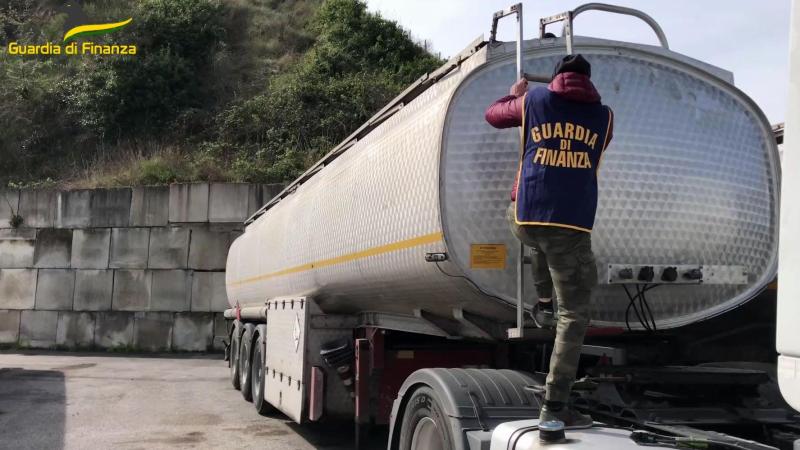
    Un’indagine della Guardia di Finanza nel deposito fiscale carburanti di Vado Ligure ha coinvolto diciassette autotrasportatori, col sequestro di oltre 3.700 litri di gasolio. Il prodotto veniva sottratto durante il carico e rivenduto fuori circuito a prezzi inferiori.

Normativa

Mare

  • Gnv potenzia la rotta ro-ro tra Italia e Marocco

    Gnv potenzia la rotta ro-ro tra Italia e Marocco

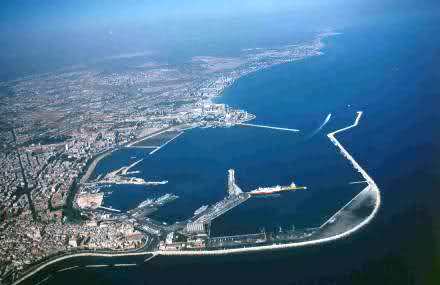
    Dal 1° giugno e 1° luglio 2026 entreranno in servizio i traghetti Gnv Aurora e Gnv Virgo sulla linea Genova-Tanger Med via Barcellona, con aumento di capacità e frequenze. Le due navi sono alimentate con gas naturale liquefatto.

Autotrasporto

  • Assotir lancia l’allarme rosso sull’autotrasporto

    Assotir lancia l’allarme rosso sull’autotrasporto

    Assotir prende spunto dal fermo siciliano dell'autotrasporto per riportare al centro del dibattito la fragilità strutturale delle imprese di trasporto merci italiane. L'associazione lancia l'allarme: senza interventi immediati, il settore rischia un blocco con conseguenze sull'intera economia nazionale.

    Container freight rates slow their decline in the third week of February 2026

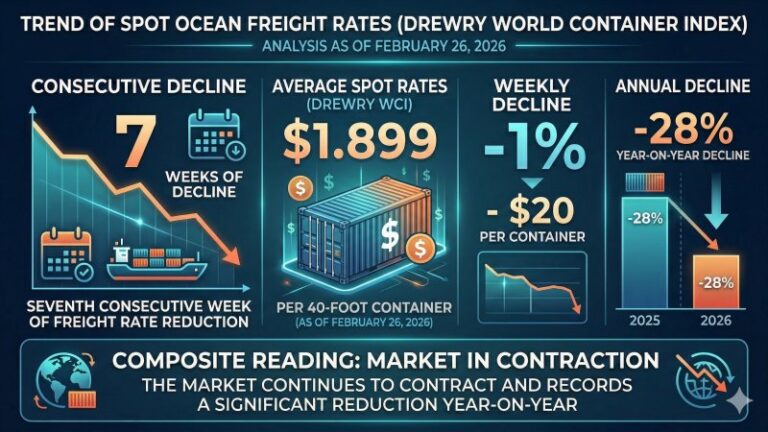
    Average spot container shipping rates, as measured by the Drewry World Container Index, continued their downward trend for the seventh consecutive week, reaching 1,899 dollars per 40ft container on 26 February 2026, down 1 per cent week on week, or 20 dollars. The composite reading points to a market that is still contracting and, on an annual basis, shows a 28 per cent reduction. The data confirm that the rebalancing between demand and vessel capacity remains incomplete, with rates well below levels seen twelve months ago.

    Downward pressure is most evident on the Asia–Europe corridor, where the seasonal recovery in volumes after Chinese New Year has not, for now, translated into higher rates. On the Shanghai–Rotterdam route, the average rate stands at 2,094 dollars per feu, down 1 per cent week on week and 19 per cent year on year. The correction is even more pronounced on Shanghai–Genoa, which has fallen to 2,826 dollars per feu, with a 2 per cent weekly decline and a 25 per cent annual drop.

    The key factor remains the imbalance between capacity and demand. Excess supply continues to weigh on prices and keeps the market “soft”, despite expectations of a rebound in volumes in March as Asian manufacturing returns to full capacity. Operationally, this combination suggests that seasonality alone is not sufficient to reverse the cycle if vessel capacity remains elevated. Rate dynamics therefore appear to be driven more by the structure of supply than by short-term fluctuations in cargo volumes.

    On the Transpacific, the picture is different. Structural weakness is accompanied by tactical capacity management aimed at limiting further declines. The Shanghai–Los Angeles rate stands at 2,191 dollars per feu, down 1 per cent week on week and 37 per cent year on year. Shanghai–New York is at 2,771 dollars per feu, stable week on week but down 40 per cent year on year, the steepest annual fall among the reported trades.

    Weekly stability on the East Coast, however, should not be interpreted as a recovery but rather as a possible effect of measures announced by carriers, including nine blank sailings scheduled for the following week on Transpacific routes to both the West and East Coast. The aim of these cancellations is to support prices during the post–Chinese New Year volume normalisation. In practical terms, short-term resilience depends on capacity discipline: if cancelled departures effectively reduce available supply, rates may stabilise even without demand growth. The impact, however, depends on the continuity of these measures and on market reaction.

    Adding further complexity to the Transpacific outlook is political risk. The Trump administration has imposed an immediate global tariff of 10 per cent, with projections rising to 15 per cent, after the Supreme Court declared last April’s tariffs illegal. As presented, this variable introduces regulatory uncertainty that could “drastically alter future flows”. From a logistics perspective, such uncertainty tends to affect planning, booking lead times and the potential bringing forward or postponement of shipments, with indirect consequences for vessel utilisation and spot rate volatility. The WCI figures and individual route data do not yet reflect a shock of this nature, but the explicit reference to political risk highlights that freight levels are shaped not only by maritime fundamentals but also by expectations around trade policy.

    On the Transatlantic, trends are more nuanced and include the only double-digit annual increase among the main corridors. Rotterdam–New York stands at 1,602 dollars per feu, down 1 per cent week on week and 33 per cent year on year. In the opposite direction, New York–Rotterdam is at 958 dollars per feu, stable week on week and up 15 per cent year on year. This divergence is interpreted as a sign of export demand from the United States to Europe that is more resilient than the global average. The coexistence of a sharp decline on the Europe–United States leg and an increase on the reverse route indicates that the market does not move symmetrically. Cargo flows and load factors can influence rate levels differently depending on direction, with practical implications for those managing bilateral supply chains and negotiating conditions for headhaul and backhaul movements.

    The ranking of variations in the data helps distinguish between underlying trends and short-term movements. The largest annual decline is on Shanghai–New York, down 40 per cent to 2,771 dollars per feu, while the steepest weekly fall is on Shanghai–Genoa, down 2 per cent to 2,826 dollars per feu. The strongest annual increase is on New York–Rotterdam, up 15 per cent to 958 dollars per feu.

    In terms of weekly stability, Shanghai–New York remains at 2,771 dollars per feu, Los Angeles–Shanghai at 726 dollars per feu and New York–Rotterdam at 958 dollars per feu. Taken together, these indicators suggest that the main correction remains structural rather than abrupt, with limited weekly fluctuations. The market appears to be moving down in steps rather than through sharp swings, and short-term volatility is more contained than the scale of annual variations might suggest.

    Drewry’s short-term outlook reinforces this interpretation. On Transpacific routes, prices are expected to hold up thanks to capacity management, while on China–European Union trades further weakening is forecast due to the imbalance between vessel supply and current demand. Operationally, and in line with the numerical data, capacity can temporarily support rates where it is visibly deployed. However, where supply remains abundant and demand does not accelerate, the downward trend persists. In this context, the distinction between “weekly stability” and “structural resilience” becomes crucial. The market may stabilise for several weeks without altering the fact that, on a year-on-year basis, many trades remain in marked decline.

    P.R.

    © TrasportoEuropa - Riproduzione riservata - Foto di repertorio
    Segnalazioni, informazioni, comunicati, nonché rettifiche o precisazioni sugli articoli pubblicati vanno inviate a: redazione@trasportoeuropa.it


      Puoi commentare questo articolo nella pagina Facebook di TrasportoEuropa

      bottone newsletter piccolo Vuoi rimanere aggiornato sulle ultime novità sul trasporto e la logistica e non perderti neanche una notizia di TrasportoEuropa? Iscriviti alla nostra Newsletter con l'elenco ed i link di tutti gli articoli pubblicati nei giorni precedenti l'invio. Gratuita e NO SPAM!



    CONTENUTI SPONSORIZZATI


Videocast K44

Aereo

  • Il cargo aereo scommette sulla tregua del Golfo

    Il cargo aereo scommette sulla tregua del Golfo

    La tregua tra Stati Uniti e Iran può ridurre la pressione sui noli del trasporto aereo delle merci, ma il ritorno alla normalità richiederà fino a due mesi. Intanto le rilevazioni di Xeneta mostrano aumenti fino al 105% sulle principali rotte tra Asia, Medio Oriente ed Europa.

Ferrovia

Persone

Volvo presenta il camion elettrico da 700 km

TECNICA

Volvo presenta il camion elettrico da 700 km
Yale aumenta la sicurezza dei pedoni nella logistica

TECNICA

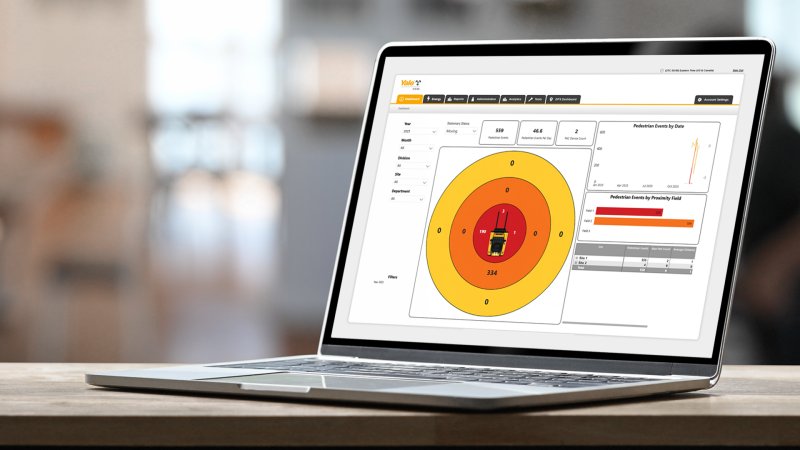
Yale aumenta la sicurezza dei pedoni nella logistica
Still automatizza carico e scarico dei camion

TECNICA

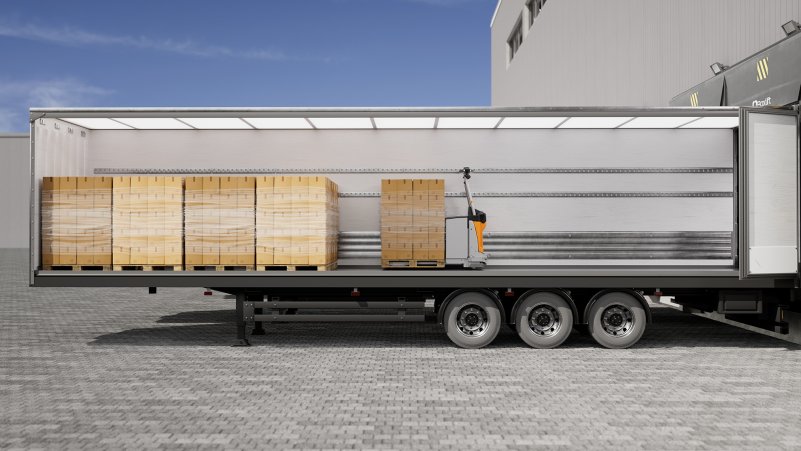
Still automatizza carico e scarico dei camion
Amazon vuole portare i robot dal magazzino alla porta di casa

TECNICA

Amazon vuole portare i robot dal magazzino alla porta di casa
Linde MH presenta i carrelli retrattili Ri al LogiMat

TECNICA

Linde MH presenta i carrelli retrattili Ri al LogiMat
previous arrow
next arrow
Master di logistica all’Università di Bari

LOGISTICA

Master di logistica all’Università di Bari
Cambio batteria sui camion elettrici per trasporto Europa-Marocco

LOGISTICA

Cambio batteria sui camion elettrici per trasporto Europa-Marocco
Joint-venture da un miliardo nell’immobiliare logistica europea

LOGISTICA

Joint-venture da un miliardo nell’immobiliare logistica europea
A Fiumicino 600 lavoratori irregolari nella logistica

LOGISTICA

A Fiumicino 600 lavoratori irregolari nella logistica
Il tribunale liquida filiale francese di Ziegler

LOGISTICA

Il tribunale liquida filiale francese di Ziegler
previous arrow
next arrow
Operazione Red Gold contro frode nei carburanti in Abruzzo

ENERGIE

Operazione Red Gold contro frode nei carburanti in Abruzzo
Quattro indagati per uso stradale di gasolio agricolo nel Salento

ENERGIE

Quattro indagati per uso stradale di gasolio agricolo nel Salento
Il taglio delle accise è prorogato fino al primo maggio

ENERGIE

Il taglio delle accise è prorogato fino al primo maggio
Petrolio sopra 110 dollari al barile dopo dichiarazioni di Trump

ENERGIE

Petrolio sopra 110 dollari al barile dopo dichiarazioni di Trump
Scoperti a Fiumicino i vampiri del carburante per aerei

ENERGIE

Scoperti a Fiumicino i vampiri del carburante per aerei
previous arrow
next arrow
Nasce Synlog Alliance consorzio dati per la logistica

SERVIZI

Nasce Synlog Alliance consorzio dati per la logistica
Sogedim potenzia le spedizioni per America Latina con Eagle Service

SERVIZI

Sogedim potenzia le spedizioni per America Latina con Eagle Service
Leviahub cresce in Spagna con due acquisizioni

SERVIZI

Leviahub cresce in Spagna con due acquisizioni
Trans.eu cresce in Italia con la borsa carichi relazionale

SERVIZI

Trans.eu cresce in Italia con la borsa carichi relazionale
L’evoluzione della borsa carichi autotrasporto è relazionale

SERVIZI

L’evoluzione della borsa carichi autotrasporto è relazionale
Padrosa realizzerà un parcheggio per camion ad Alessandria

SERVIZI

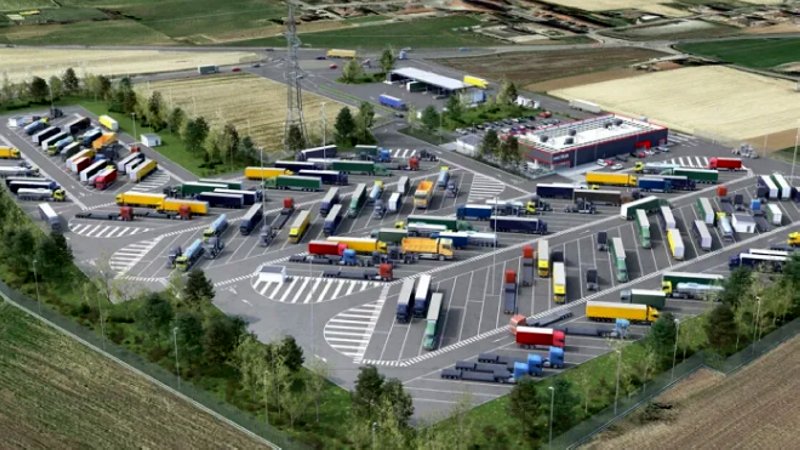
Padrosa realizzerà un parcheggio per camion ad Alessandria
Leviahub e Pionira accelerano sull’adozione dell’eCmr

SERVIZI

Leviahub e Pionira accelerano sull’adozione dell’eCmr
Trans.eu avvia il pagamento sicuro per l’autotrasporto europeo

SERVIZI

Trans.eu avvia il pagamento sicuro per l’autotrasporto europeo
Sanilog rinnova nel 2026 il piano sanitario per lavoratori della logistica

SERVIZI

Sanilog rinnova nel 2026 il piano sanitario per lavoratori della logistica
L’IA si sta sempre più integrando nel trasporto

SERVIZI

L’IA si sta sempre più integrando nel trasporto
Scania amplia la rete di assistenza nel Lazio

SERVIZI

Scania amplia la rete di assistenza nel Lazio
Nuovi contributi per cibersicurezza alle Pmi e autonomi

SERVIZI

Nuovi contributi per cibersicurezza alle Pmi e autonomi
Dkv Mobility presenta un nuovo software per gestione trasporti

SERVIZI

Dkv Mobility presenta un nuovo software per gestione trasporti
Forto nomina Matteo Caiti Country Manager Italia

SERVIZI

Forto nomina Matteo Caiti Country Manager Italia
Nuove tecnologie Geotab per il trasporto refrigerato

SERVIZI

Nuove tecnologie Geotab per il trasporto refrigerato
previous arrow
next arrow