








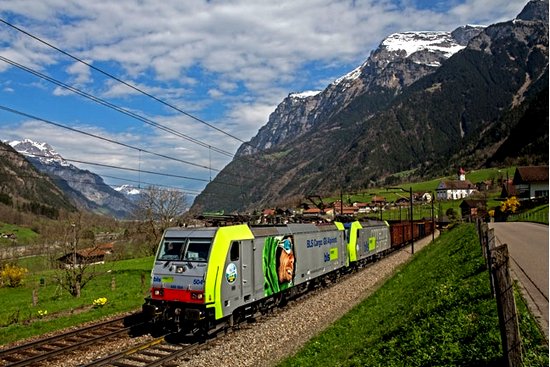
A stand-off is looming in Switzerland between Canton Ticino and the Federal Council: in other words, Bellinzona against Bern. At the centre of the dispute is the project known as "Transport '45", the document laying the foundations for the future of Swiss transport over the coming decades. Canton Ticino's demands are set out in a plan drawn up by the Department of the Territory, which proposes a series of measures to complete the rail network following the construction of the trans-Alpine routes under the AlpTransit project and to improve integration with European corridors. This is where the dispute arises, as the Federal Council, the executive body of the Swiss Confederation and therefore the country's highest governing authority, has so far excluded these proposals from the development of "Transport '45", giving a voice and priority only to the central and northern cantons.
By 2027, the Swiss Parliament will have to take a position on the project, which Canton Ticino, together with operators and business organisations in Regio Insubrica, is calling for to be amended and expanded with a broader perspective. Strong support for this approach has also come from the ProGottardo-Ferrovia d'Europa association, which held its general meeting on 12 September 2026 and backed the proposals contained in the plan drawn up by the Department of the Territory of Canton Ticino. According to ProGottardo, "Transport '45" lacks medium- and long-term planning, as it merely takes a short-term approach by confirming current policy. It also fails to consider completion of the trans-Alpine rail corridor, including the northern and southern access lines to the base tunnels built under AlpTransit, while overlooking connections to Milan and bypass links in Canton Ticino as alternatives around the main rail hubs.
"Transport '45" does not take the European perspective into account and therefore fails to identify the necessary connections with the core TEN-T corridor network, particularly disadvantaging Regio Insubrica and its close links with Italy. Operators also say the financial framework is limited and lacks ambition because, instead of reviewing and updating the Rail Infrastructure Fund, or FIF, in line with future investment needs, the plan merely extends a token levy on VAT collected by the Confederation. According to ProGottardo, if Parliament simply adopts the Federal Council's proposals in 2027, completion of the AlpTransit trans-Alpine network will also be pushed back towards the end of the century, affecting north-south links that also involve Italy.
Changing course will not be easy. But just hours after the ProGottardo meeting, an almost unexpected development emerged. The Swiss Federal Audit Office published a new report on "Transport '45" expressing serious reservations about the document. In summary, the Swiss Federal Audit Office says the federal plan is based on inadequate and incomplete foundations, fails to consider and therefore provide an analysis of alternative options, does not assess the cost-effectiveness of the proposed projects and, finally, presents a fragile financial framework without examining possible ways of securing additional funding. Although the observations made by the Swiss Federal Audit Office are based largely on technical and financial criteria, they call the overall structure of the federal plan into question, in line with the concerns raised by operators. The whole debate may now be reopened.
Piermario Curti Sacchi