






In May 2026, the Italian industrial vehicle market recorded 2,386 registrations, down 1.04% from the same month in 2025, according to data processed by Federauto (dealers’ association). It was the second consecutive month in negative territory, after April’s 3.28% decline, although the cumulative balance from January remains positive: up 2.56%, equal to 11,959 units overall. The slowdown is real, but to understand its scale it is necessary to look at the individual segments, because averages conceal very different market dynamics.
The most significant figure is the structural divergence between the two main categories. Tractor units reached 1,336 registrations in May, up 16.28%, and 6,616 in the January-May period, up 17.26%, confirming their role as the driving force in a market increasingly polarised around long-haul transport. Rigids moved in the opposite direction: 1,050 units during the month, down 16.80%, with the decline affecting all weight classes. The fall was sharpest in the light segment from 3.51 to 7.49 tonnes, down 27.15%, and more contained in the intermediate segment from 7.5 to 16 tonnes, down 3.78%. The divide is even clearer in rental registrations: for rigids, registrations under this model fell by 59.38% in the month, while for tractor units they rose by 25%, with the year-to-date figure reaching 109.52%.
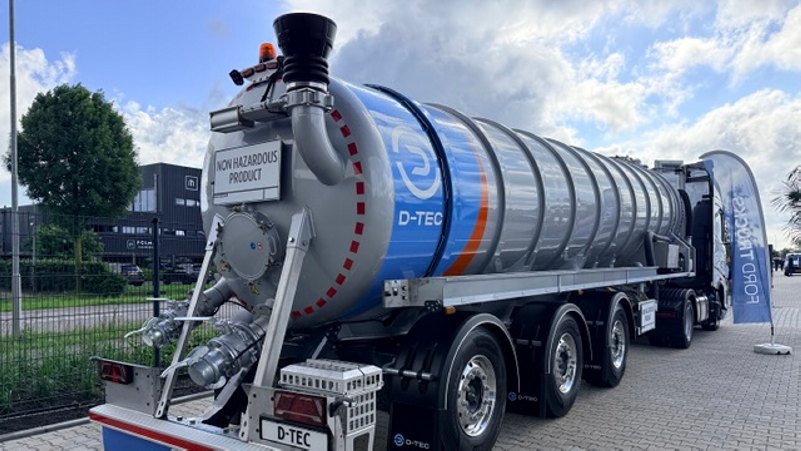
An analysis of rigid body types shows that the flatbed remains the dominant configuration, with a 46.10% share, although volumes fell by 9.87%. Box bodies declined more sharply, down 31.37%, as did platforms, down 54.10%, and isothermal vehicles, down 32.17%. Growth was seen only in some specialised categories: equipped vehicles rose by 25.58%, concrete mixers by 12.07% and tankers by 8.70%, niche areas that nevertheless failed to offset the overall contraction in the segment.
On powertrains, diesel remains firmly in first place. In May 2026, diesel registrations totalled 2,346 units, equal to 98.32% of the market, increasing its share from 97.88% in May 2025, while electric vehicles stopped at 18 units, down 37.93% year on year and representing a 0.75% share. The 1% threshold was not reached this month either, confirming a market that, at least in the short term, is not translating regulatory pressure into purchasing decisions. This trend sits within a regulatory context that remains open: the European Parliament rapporteur, Massimiliano Salini, has presented a text proposing the inclusion of renewable fuels of up to 10%, under the new Veef classification, for light vehicles, with possible similar effects on the rules for heavy vehicles. Operators therefore appear to be waiting for developments in this area before changing their purchasing strategies.
By weight class, vehicles with a gross vehicle weight above 16 tonnes recorded 2,047 registrations in May, accounting for 85.79% of the total, and posted a slight year-on-year increase of 1.24%. This was the only segment to grow, while the two lower categories fell by 27.15% and 3.78% respectively. The concentration in the heavy segment reflects the structure of demand: purchases geared towards long-haul transport, with choices favouring large diesel tractor units.
The brand analysis highlights the most important competitive tensions of the month. Iveco retained first place with 565 registrations, but recorded the steepest contraction in the entire market: down 23.96% compared with May 2025, with its monthly share falling from 30.82% to 23.68%, a net loss of more than seven percentage points. The cumulative figure for January-May 2026 confirms this trend: down 14.22%, with a share of 25.97%. The tractor unit segment weighed particularly heavily, with the brand losing 38.02% in May alone, again according to Federauto data.
The share lost by Iveco was distributed among its main European challengers. Volvo Trucks consolidated second place with 351 units, up 19.80%, and a monthly share of 14.71%, compared with 12.15% in May 2025; the cumulative figure is even stronger, up 28.88%, with a 15.08% share versus 12% in the same period of the previous year. Scania followed closely with 338 registrations, up 14.58%, and a 14.17% share. Although its year-to-date volumes were broadly flat, down 0.46%, in May the brand took the monthly lead in the tractor unit segment with 254 units and a 19.01% share in that specific category. Mercedes-Benz Trucks stood at 293 units for the month, down 7.28%, with a 12.28% share, but grew by 22.10% over the January-May period, reaching an overall share of 12.33%.
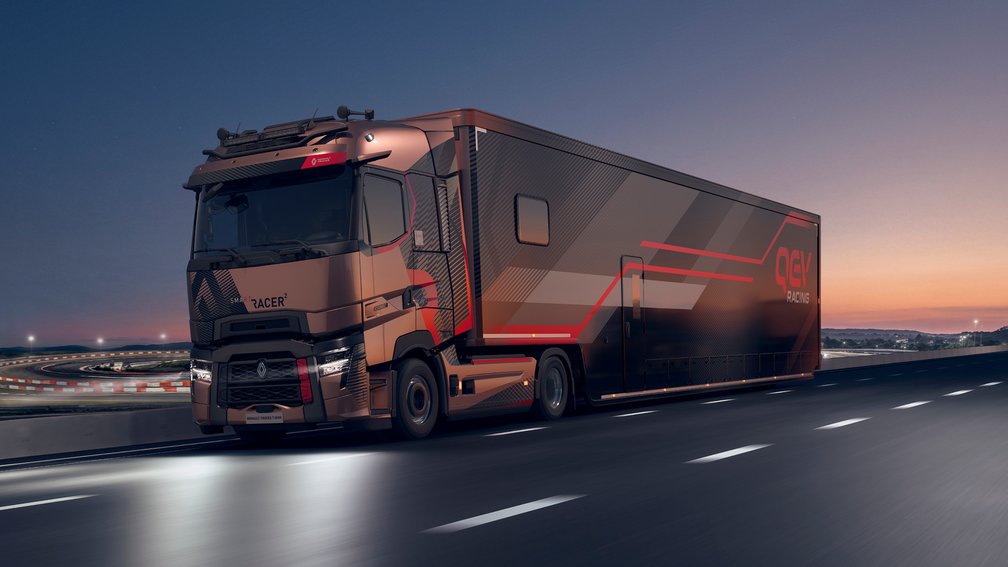
MAN was among the most dynamic brands in May: 279 registrations, up 29.17%, and an 11.69% share, a gain of 2.7 percentage points compared with the same month in 2025, confirmed by a 28.71% rise in the year-to-date figure and an 11.02% share. DAF registered 248 units, down 1.20%, with a 10.39% share, broadly unchanged from 10.41% in May 2025, but its January-May figure points to a 6.85% slowdown, with a 10.00% share. Renault Trucks recorded the best monthly performance among the major European brands: 181 units, up 32.12%, with its share rising from 5.68% to 7.59%, while the cumulative result was more moderate, up 4.05%, with a 6.87% share.
Among the other brands with models above 3.5 tonnes, Isuzu recorded 53 units in May, down 17.19%, with a 2.22% share, but grew by 77.02% in the January-May period, rising from 161 to 285 units and reaching a 2.38% share. Ford Trucks continued a prolonged contraction: 25 units for the month, down 35.90%, with a 1.05% share, and down 30.17% in January-May, with a 1.35% share. Astra Veicoli Industriali, which specialises in heavy construction vehicles, posted the highest percentage change in the entire market: 23 units in May compared with seven a year earlier, an increase of 228.57%, with a 0.96% share, and year-to-date growth of 259.26%, for a total of 97 units. Mitsubishi Fuso stopped at nine units for the month, down 43.75%, with a 0.38% share, while its year-to-date figure remained in line with 2025: 59 units in total, with a 0.49% share. Fiat completes the picture, with the sharpest structural decline in the segment: just four units in May, down 80.95%, with a 0.17% share, and down 86.35% year to date, with registrations collapsing from 271 to 37 units in the first five months of the year, a direct reflection of weakness in the lighter segments in which the brand operates.