







New proposal to acquire Zim
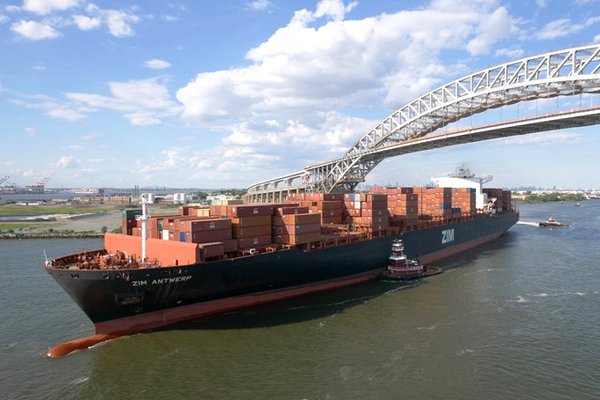
Hapag-Lloyd and Fimi have submitted a revised proposal to the Israeli government for the acquisition of Zim, without changing the financial terms already agreed. Instead, the new structure is intended to strengthen the autonomy and operational capacity of the future Israeli shipping company controlled by Fimi. The main change is the addition of a weekly service to the Far East, alongside services in the Mediterranean and Atlantic. The plan also provides for a dedicated fleet and greater availability of refrigerated capacity for the transport of essential goods. Technical management and shipowning expertise would remain in Israel, together with an independent IT system that would not be accessible to Hapag-Lloyd. The revised proposal also strengthens the powers attached to the special share held by the state, a key issue in the assessments being carried out by the Israeli authorities. On employment, the plan provides for a collective agreement, ten years of protection for workers and no redundancies until the end of 2027. The aim is to prevent the Israeli company from being reduced to a marginal operation after Zim’s international activities are integrated into the Hapag-Lloyd group. However, the full business plan, operating commitments and legal framework governing the guarantees requested by the government have yet to be defined.
Trieste expands logistics space
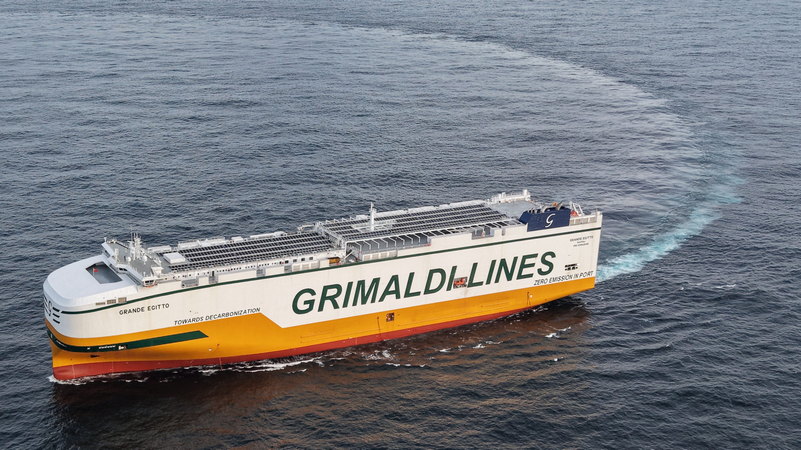
HHLA PLT Italy is expanding its operating space at the port of Trieste with around 37,000 sq m in the former Ferriera di Servola steelworks area. The new yards will initially be used to park semi-trailers, increasing the port’s capacity to manage freight flows. The expansion comes as ro-ro traffic grows and new ferries operated by Grimaldi enter service. The opening of the new space also marks the first integration into port operations of part of the former steelworks, following the closure of its hot-end facilities in 2020 and the demolition of the chimneys. The remediated areas will also provide the basis for the future development of Molo VIII. The first phase of the public-private project involves investment of more than €315 million and the construction of an intermodal terminal. The infrastructure will be designed to handle large container ships. The development also includes upgrades to rail and road connections, with the new Servola station and new access ramps to the main road network. The aim is to strengthen links between the port and markets in Central and Eastern Europe. The gradual reuse of the former steelworks site is ultimately intended to integrate the area permanently into Trieste’s port and logistics system, with a target of around 300 direct jobs.
DB Cargo increases steel capacity
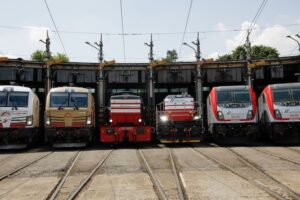
DB Cargo has introduced the Distributed Power System, DPS, on steel traffic between Linz and Germany, allowing each train to carry more weight through the use of one locomotive at the front and a second at the rear, remotely controlled by the driver through a radio-data link. Distributing traction and braking along the train reduces stress on couplings, wagons and cargo, while allowing heavier trains to operate particularly on routes with gradients and on alternative lines used during engineering works. DB Cargo says the system can increase capacity by up to 30%. On German diversionary routes used by Voestalpine and Logserv trains, the transportable weight rises from around 2,400 tonnes to more than 3,300 tonnes. The higher load per train makes it possible to move the same volume using fewer train paths: according to DB Cargo, three trains equipped with the system can carry as much as four conventional trains. DPS also allows both electric locomotives to contribute to regenerative braking, increasing energy recovery capacity. Authorised by ERA in May 2025 and brought into regular service in June of the same year, the system is now being commercially deployed on connections between Austria and Germany to maintain high transport capacity even on routes with more demanding gradients.
Port of Prahovo steps up intermodal development
Serbia is moving ahead with the expansion of the river port of Prahovo on the Danube, with €45.5 million in public investment aimed at increasing capacity and strengthening land connections. The programme, formally launched in 2025 and under implementation in 2026, is expected to increase nominal annual capacity from around 1.4 million to more than 3.2 million tonnes. The works include an eighth berth with a vertical quay, designed to allow vessels more than 100 metres long to berth even when river levels are low. The project also includes the restoration of the shelter basin for inland vessels, which has remained unused for decades. It includes a new administrative building and the concentration at the port of border police and customs functions. On the land side, the project aims to reactivate and upgrade the industrial rail connection linked to the public network. Prahovo will therefore be able to operate as a water-rail-road trimodal hub, serving primarily industrial flows in eastern Serbia. Fertiliser producer Elixir Prahovo operates in the port hinterland, although there are no publicly disclosed contracts guaranteeing future traffic volumes. The programme also includes a terminal for collecting and treating residues, onboard oils and hazardous materials from vessels. In August 2026, work was under way on the eighth berth and the administrative building, while the shelter basin was nearing completion.
Keti Bunder remains at preliminary stage
The proposal for a new deep-water port at Keti Bunder, in Sindh, is moving into a more detailed technical assessment phase but does not yet constitute an approved investment. China Harbour Engineering Company, CHEC, presented a conceptual plan on 24 August 2026 that envisages, in the first phase, a multipurpose terminal with 500 metres of quay. The preliminary engineering cost is estimated at $522.34 million; a conversion into euros is not included in the available sources. The project is expected to combine a terminal, warehousing, logistics activities and possible infrastructure for fisheries, the cold chain, industry and energy. However, technical feasibility, water depth, dredging requirements, road and rail access, the financial model and risk allocation have yet to be defined. The government of Sindh is also considering a broader public-private partnership framework for a maritime, industrial and energy corridor. An earlier study in 2021 identified issues at Keti Bunder relating to water depth and the lack of land connections. New technical and environmental studies will therefore be crucial, including assessments of the potential effects on the Indus delta, mangroves and fishing communities. At present, no Chinese financing has been formally secured and construction has not begun. The decisive next step will be to establish the project’s feasibility, approvals, environmental sustainability and financial structure.