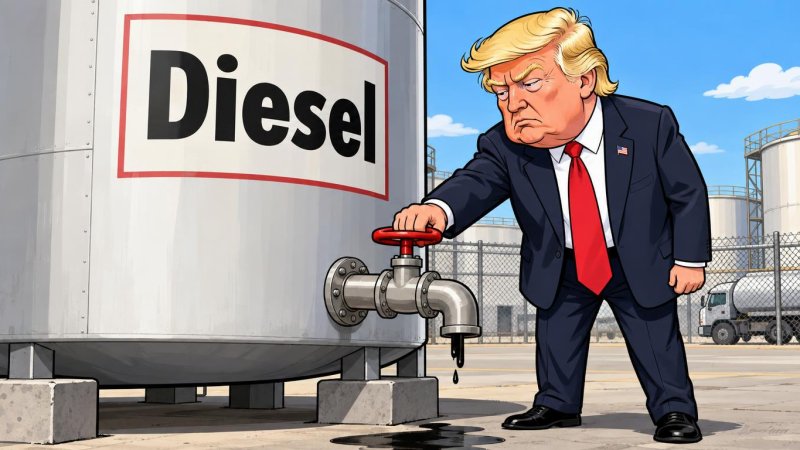







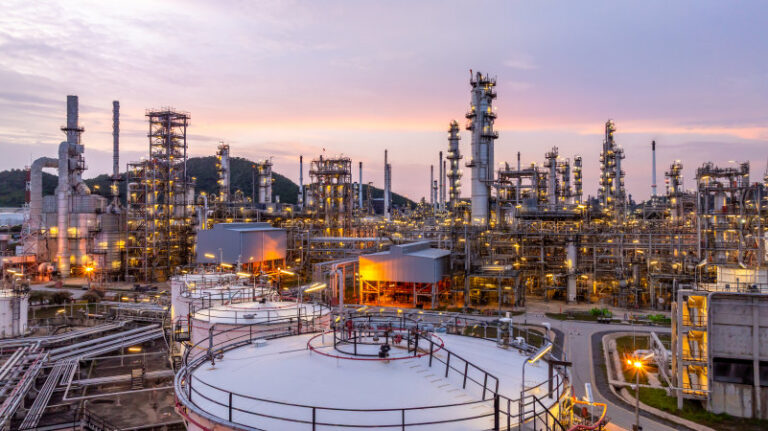
Anyone refuelling an industrial vehicle in 2026 pays more for diesel than for petrol, a reversal that would have seemed implausible until two years ago and which the crude oil price alone cannot explain. This is shown by price trends: a barrel of Brent crude has risen by about 9% compared with levels before the most recent geopolitical crises, while diesel, over the same period, has gained more than 60%. Many are asking why this gap has emerged. The answer lies in an indicator that operators call the crack spread: the difference between the cost of the crude oil entering the refinery and the sale price of the finished product. During 2026, this margin on middle distillates widened sharply. In December 2025, diesel in Europe earned refiners about 24 dollars a barrel more than the raw material; by the summer months, that figure had approached 70 dollars, about 60 euros, more than three times the long-term average. Diesel has also overtaken kerosene, the fuel used by aircraft, which remained at around 60 dollars, prompting refineries to adjust production cycles to favour diesel.
Europe is also suffering from another trend: the reduction in refining capacity, which has partly been relocated outside the EU over time. Simple hydroskimming plants in north-western Europe are operating with negative margins, as low as minus 10 or 20 dollars a barrel, because the market has a structural surplus of light products, such as petrol and naphtha, while crude remains expensive. The response has been to cut runs, but this also reduces the joint production of diesel and further tightens an already scarce supply. Only refineries equipped with deep conversion units, hydrocrackers and cokers can shift yields towards middle distillates, although not enough to meet domestic demand. In figures, this deindustrialisation has cost Europe about 20% of its refining capacity over the past fifteen years, reducing its share of the world total from 22% in 2000 to 14% today, with volumes down by 17%. Over the same period, Asia has moved from 26% to 36%, increasing volumes by 74%. The result is chronic dependence on imports: around 35% of Europe’s diesel requirement and more than 90% of its aviation fuel requirement come from abroad. When supply channels are interrupted, or international competition for available flows increases, domestic industry cannot replace them.
Since the start of the war in Ukraine, many channels have gradually been interrupted or reduced at global level. The historic supplier of the missing refined volumes was Russia, from which Europe imported almost half of its diesel before sanctions, about one million barrels a day. In 2026, Ukraine’s campaign of drone attacks against energy infrastructure worsened the situation, putting up to 40% of Russian refining capacity out of action at certain points. Russian seaborne diesel exports therefore collapsed from about 860,000 barrels a day in May to 260,000 in July. Then came the final blow: on 8 July 2026, Moscow completely banned diesel exports to protect its domestic market, extending the block until the end of the month and removing those volumes from the entire global market, not only from the European market already constrained by sanctions. Russia is now even importing diesel from India, moving from supplier to importer and creating further imbalances in the global market.
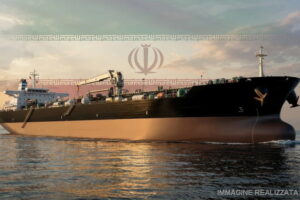
The second front is in the Middle East. On 28 February, the start of the war between the United States, Israel and Iran effectively led to the closure of the Strait of Hormuz, through which 15 million barrels of crude and 5 million barrels of refined products used to pass every day, around one fifth of global supply. International Energy Agency put the immediate shortfall on the global oil market at 12.8 million barrels a day. Damage was also inflicted on 17% of Qatar’s liquefied natural gas production capacity and 43% of Persian Gulf refining capacity. Global oil stocks fell by 129 million barrels in March and a further 117 million in April, reducing the room for manoeuvre to absorb subsequent shocks.
In the Red Sea, Houthi attacks on ships have made the route to Suez costly, forcing cargo vessels, including tankers, to sail around Africa. Distillate cargoes from India, China and South Korea bound for Europe are facing longer sailing times, a factor that is keeping around 53 million barrels immobilised at sea, alongside sharply higher chartering costs. The Atlantic hemisphere is therefore dependent on the US Gulf of Mexico, where refineries are operating at exceptionally high utilisation rates and already recorded the first unscheduled shutdowns due to wear between June and July. A severe hurricane season, an event that is possible in this era of climate change, would be enough to turn the current price crisis into a crisis of physical availability.
Finally, there is a structural component that will remain even if markets ease. European directives on renewable energy require distributors to include increasing shares of biofuels in road fuel blends: for diesel, the share of hydrotreated vegetable oil, or HVO, must rise from 21% in 2025 to 23% in 2027. HVO is a drop-in fuel, chemically similar to conventional diesel and usable up to 100% in modern engines, but its industrial cost is higher than that of fossil-based product and is exposed to volatility in agricultural and used-oil markets, which provide the feedstock. In February 2025, European Commission also imposed anti-dumping duties of between 10% and 35.6% on biodiesel imports from third countries, effectively setting a minimum price that suppliers pass on to pump prices.
M.L.