




Early checks on dangerous goods at sea
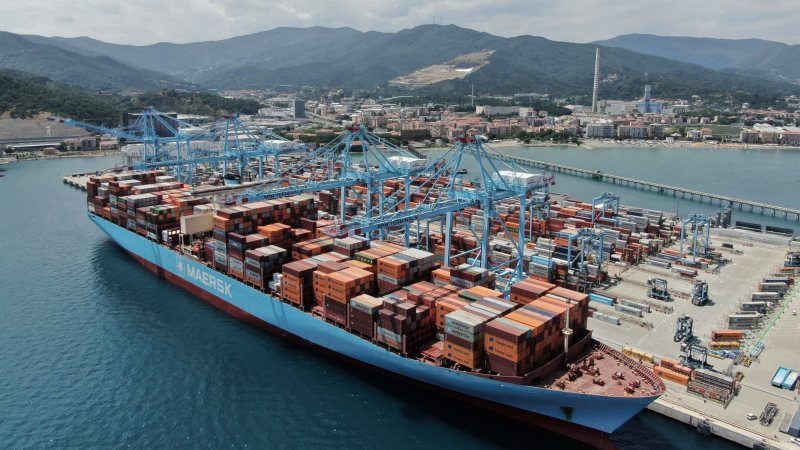
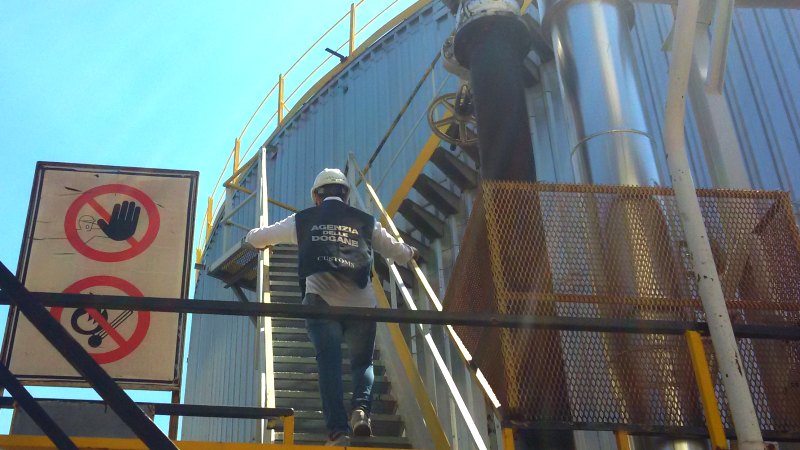
Checks on dangerous goods in maritime transport are moving towards the earliest booking stages, with the aim of identifying anomalies before a container enters the operational cycle. According to the report “Before the fire Dangerous goods safety and the visibility gap”, published by Thetius on 26 August 2026 and commissioned by Tigris Systems, one of the main critical issues is the fragmentation of information across declarations, documents, emails and management systems. The problem therefore concerns not only document digitisation, but also the availability of consistent data throughout the logistics chain. Information on dangerous characteristics should remain associated with the container and become accessible to freight forwarders, carriers, terminals, cargo planners, crews and parties involved in emergency response. According to the report, bringing checks forward to the booking stage makes it possible to verify the goods description, UN codes, IMDG classes, quantities, packaging and technical documentation. The system can also detect inconsistencies through keywords, trade names, the shipper’s profile, the itinerary and the carrier’s acceptance rules. Automated analysis does not certify cargo compliance; rather, it flags cases that require document checks, human review, inspections or the possible rejection of a booking. The issue is also significant in the light of data on maritime fires. In 2024, 250 fires and explosions were recorded across the global fleet, a 20% increase on the previous year, according to the Allianz Safety & Shipping Review 2025. Of these, 69 involved container ships, general cargo ships or ro-ro vessels. Amendment 42-24 of the International Maritime Dangerous Goods Code has been mandatory since 1 January 2026, establishing that responsibility for the correct classification, packaging, marking, labelling and declaration of goods remains with the shipper. Early checks therefore do not replace the obligations set out by the IMDG Code, but are intended to intercept possible omissions or incorrect declarations sooner. The same approach underpins the Cargo Safety Program launched by the World Shipping Council in September 2025. The programme uses a shared booking control tool, a database of verified shippers and a list of approved inspection companies. According to the World Shipping Council, the system stems from the evolution of Hazcheck Detect, a platform used to analyse more than 10 million bookings a month. Intervention at the booking stage is important because a correction made when the container has already reached the terminal reduces the scope to change its acceptance, positioning, segregation and operational handling. The industry therefore needs to move from late and fragmented document checks to prevention based on early data analysis, while keeping shipper responsibility, training and targeted physical checks at the centre.
Rail automation for Hamburg cranes
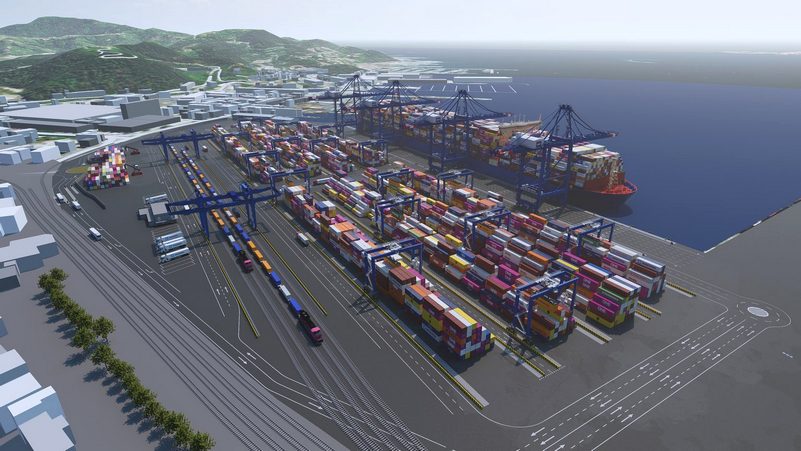
HHLA has started remote control of the first gantry cranes dedicated to rail handling at the Container Terminal Altenwerder in Hamburg, extending automation to the link between the yard and trains. The project includes a new Künz crane designed for remote operation and an upgraded existing crane, which can be operated both from the cabin and from a remote station. The new unit covers nine tracks, with a span of more than 41 metres and a total operating area of about 90 metres. Its introduction began gradually at the start of 2026, alongside operator training. The project involves a hub where rail plays a central role: in 2025, about 2.6 million TEU moved by rail through the port of Hamburg. In 2024, rail accounted for 50.2% of hinterland container traffic and handled 46.2 million tonnes, equal to a 55.6% modal share. Remote control is integrated with the terminal’s existing autonomous guided vehicles, rail-mounted yard cranes and optical recognition systems. A further three remote-controlled Liebherr quay cranes are expected to enter service gradually by the end of 2026.
Container ship punctuality falls
Global schedule reliability for container liner services fell to 56.4% in July 2026, according to Sea-Intelligence, down 6.1 percentage points from June and the lowest level since February 2025. According to the Global Liner Performance report, the average delay of vessels arriving behind schedule rose to 6.06 days, a month-on-month increase of 0.59 days. The deterioration was mainly due to congestion at major Asian ports: punctuality at Shanghai fell to 21.0%, while Yantian recorded 48.3% and Ningbo 34.6%. The figure relates to maritime transport and does not directly measure the reliability of the entire intermodal chain, but delays and concentrated arrivals can transfer pressure to terminals, inland transport and warehouses. The risk increases ahead of China’s Golden Week, scheduled from 1 to 7 October 2026, when reduced ancillary activities could intensify backlogs and rescheduling. For Asia-Europe flows, it is therefore becoming important to plan not only departures, but also receiving capacity between October and November. According to Seko Logistics, priority shipments should be booked 4-6 weeks in advance and safety stocks should be arranged at distribution centres.
Damen hybrid feeder container ships
Damen Shipyards Group has presented the CFe 1100, a container ship design of more than 1,100 TEU intended for feeder links, at a time when orders are growing for small and medium-capacity units. The vessel is 150 metres long and 24.5 metres wide, with a draught of 8 metres and a capacity of more than 800 TEU when carrying a homogeneous load of 14 tonnes per TEU. The design adopts a two-stroke diesel main engine paired as standard with a PTO/PTI electrical system, which can provide up to 1,250 kW to the shaft line, while in PTO mode it allows the main engine to generate electricity for onboard consumption, including refrigerated containers. The CFe 1100 offers 174 reefer sockets and shore power connection to limit the use of generators during calls at ports equipped with compatible infrastructure. Damen has also included space and preparations for a future conversion to methanol and for the installation of batteries. The container ship will be able to reach 15 knots at economic speed, 17 knots at maximum speed and 18 knots using support from the PTI system. Cell guides for 20, 40 and 45-foot containers, a 1,000 kW bow thruster and ice class 1A complete a configuration geared towards flexible regional services. The project comes as shipowners show growing interest in smaller vessel sizes: according to Alphaliner data, since July 2025, 74% of container ship orders by number of vessels have involved units below 6,500 TEU, compared with less than 30% in the previous comparable period.
Sunrui passes review on ship sails
Lloyd’s Register has independently reviewed the methodology and results of the CFD analysis of the suction sail developed by Sunrui for ships, although it has not commercially certified the system. The review covered aerodynamic performance, wind loads and the numerical model used to simulate air flows and thrust. The device analysed is 6 metres wide and 26 metres high. The simulation indicates a maximum thrust of 260 kN for a single sail and 700 kN with three units in the ship-sail configuration. The review therefore strengthens the technical basis for subsequent assessments of integration on merchant vessels and for shipowners’ decisions. However, the results remain linked to simulation and do not yet demonstrate net fuel savings during operation at sea. This also depends on the system’s electrical consumption, weather conditions, route, vessel speed and sail arrangement. The next step will therefore be to verify in operation the ability to convert the calculated thrust into a documented reduction in fuel consumption.