






Array ( [0] => 8 [1] => 40 )

Podcast K44

Cronaca

  • Controllo straordinario sui camion in Germania sull’A2

    Controllo straordinario sui camion in Germania sull’A2

    La Polizia autostradale tedesca di Bielefeld ha controllato circa 130 veicoli industriali sulle aree di servizio Lipperland Nord e Sud, tra Bielefeld e Herford. Contestate 87 infrazioni, di cui 35 su tempi di guida e riposo. La Dogana ha avviato ulteriori verifiche su lavoro irregolare e salario minimo.

Transpotalk

Normativa

Mare

  • Pesanti attacchi a navi cargo nel Mar Nero

    Pesanti attacchi a navi cargo nel Mar Nero

    Droni hanno colpito due navi cargo nel Mar Nero, il giorno dopo l'affondamento della Royad Mammadov, diretta a Ravenna, al largo della Romania. Una nave è affondata e il suo equipaggio risulta disperso, mentre i 18 marinai dell'altra sono stati salvati dopo un incendio a bordo.

Autotrasporto

  • Fusione miliardaria nell’autotrasporto Usa

    Fusione miliardaria nell’autotrasporto Usa

    L'accordo annunciato il 5 ottobre 2026 unisce due dei principali intermediari del trasporto stradale nordamericano, C.H. Robinson e Rxo. La chiusura è prevista nel primo semestre 2027, dopo il voto degli azionisti Rxo e le autorizzazioni regolatorie. L'obiettivo è attuare 300 milioni di dollari di sinergie annue entro due anni.

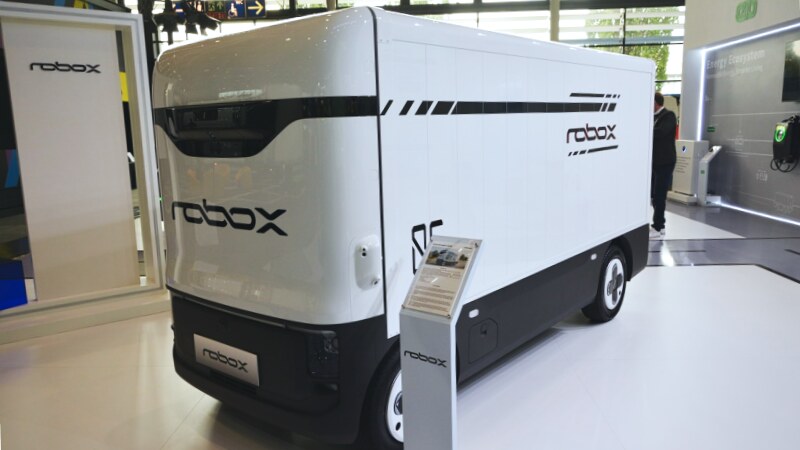
    The mobile robot market hits the brakes

    For the first time in five years, Interact Analysis has revised downward its estimates for the global market of autonomous mobile robots (AMR) and automated guided vehicles (AGV). The 2025 update of its report reduces projected revenues for the current year by 850 million dollars, bringing the total down to around 6.29 billion dollars. The correction becomes even more significant when viewed over the medium term: the cumulative gap compared to previous forecasts exceeds 6.6 billion dollars by 2030. Growth has not come to a halt, but it is slowing markedly.

    According to analysts, the slowdown should be seen as cyclical rather than structural. The fundamentals of the sector remain solid, but a combination of economic and geopolitical factors is pushing many companies to delay investments in mobile automation. The first element weighing on the market is the tightening of tariffs between the United States and China, which has affected imports of essential components such as drives, lidars and batteries, disrupting Asian supply chains. Adding to this is the persistence of high interest rates, particularly in North America and Europe, which are dampening capital spending plans. Completing the picture is growing caution among trade unions, especially in western countries, towards warehouse automation, particularly in the e-commerce sector.

    The chart published by Interact Analysis clearly illustrates the trajectory of the revision. The new 2025 forecast is 850 million dollars lower than the one released in october 2024. The gap widens progressively in the following years, exceeding 6.6 billion by 2030. Yet the overall trend remains upward: in the revised estimate, global revenues for the AMR and AGV segment rise from 2.75 billion dollars in 2021 to over 15.7 billion in 2030. Growth remains solid, though slightly delayed over time.

    A regional breakdown reveals that the downward revision is not uniform. The Emea area shows the sharpest cut, with a 16% reduction in the 2025 forecast, from 2.1 to 1.75 billion dollars. The rest of the Asia-Pacific region (excluding China) also sees a significant contraction of 14%, while the United States registers a 12% revision. In China, the cut is more limited, at 8%, thanks to state support for strategic sectors such as electric mobility and photovoltaics. The rest of the americas shows a similar decline but remains marginal in absolute terms.

    Despite the slowdown, Interact Analysis maintains an optimistic outlook for the medium-to-long term. Several technological and market trends suggest new opportunities. Mobile robots equipped with forks, for example, are gaining ground in more complex industrial settings. Subscription-based business models, which shift the investment from capital expenditure to operational expenditure, are lowering entry barriers for many companies. And three-dimensional vision technologies based on artificial intelligence are rapidly improving automated picking capabilities, paving the way for more versatile and flexible solutions.

    The year 2025 is therefore shaping up as a period of adjustment rather than a stop. The adoption cycle is lengthening, but not breaking. According to analysts, companies operating in the mobile robotics sector will need to read the signs, adapt their offering and seize the opportunities emerging from a market that, while slowing, continues to evolve rapidly. Those able to respond with agile, sustainable and accessible solutions will be ready to rebound decisively when the cycle becomes favourable again.


    © TrasportoEuropa - Riproduzione riservata - Foto di repertorio
    Segnalazioni, informazioni, comunicati, nonché rettifiche o precisazioni sugli articoli pubblicati vanno inviate a: redazione@trasportoeuropa.it


      Puoi commentare questo articolo nella pagina Facebook di TrasportoEuropa

      bottone newsletter piccolo Vuoi rimanere aggiornato sulle ultime novità sul trasporto e la logistica e non perderti neanche una notizia di TrasportoEuropa? Iscriviti alla nostra Newsletter con l'elenco ed i link di tutti gli articoli pubblicati nei giorni precedenti l'invio. Gratuita e NO SPAM!


    CONTENUTI SPONSORIZZATI


Videocast K44

Aereo

  • La domanda di cargo aereo supera la capacità ad agosto 2026

    La domanda di cargo aereo supera la capacità ad agosto 2026

    Le rilevazioni della Iata ad agosto 2026 mostrano che il trasporto merci aereo mondiale è cresciuto del 4,4% su base annua mentre la capacità è sostanzialmente stabile, portando il riempimento al 46%. Guidano Nord America e Asia-Pacifico, arretrano i corridoi mediorientali e il cherosene sale a 157 dollari al barile.

Ferrovia

  • Duisport potenzia i collegamenti ferroviari da Trieste

    Duisport potenzia i collegamenti ferroviari da Trieste

    Duisport porta a quattro le circolazioni settimanali sia sul servizio intermodale Cervignano-Duisburg sia sulla navetta tra il terminal Plt Hhla Italy e l'Interporto di Cervignano. Il servizio, gestito da +.intermodal si basa su un modello neutrale e prevede l'estensione a Wels, in Austria, dal prossimo anno.

Persone

  • L’autotrasporto veronese perde Francesco Corsi

    L’autotrasporto veronese perde Francesco Corsi

    Il 26 settembre 2026 è morto nella sua casa di Colognola ai Colli l’autotrasportare veneto Francesco Corsi. Cominciò nel 1960 con un Leoncino e l’omonima azienda Corsi, specializzata nel trasporto logistica a temperatura controllata e insediata nell'interporto Quadrante Europa di Verona.
L’elettrico Volta Zero torna allo Iaa 2026

TECNICA

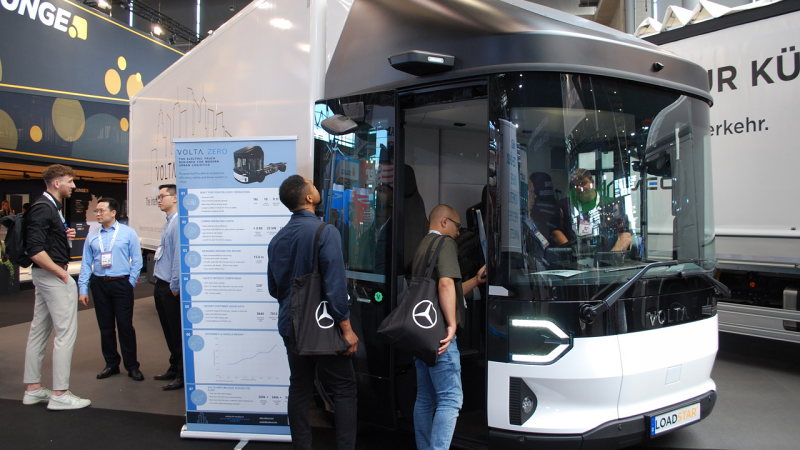
L’elettrico Volta Zero torna allo Iaa 2026
previous arrow
next arrow
Parte la riforma del Codice Doganale europeo

LOGISTICA

Parte la riforma del Codice Doganale europeo
previous arrow
next arrow
Scoperta a Venezia una frode sui carburanti

ENERGIE

Scoperta a Venezia una frode sui carburanti
previous arrow
next arrow
Sanilog avvia una nuova campagna oncologica

SERVIZI

Sanilog avvia una nuova campagna oncologica
previous arrow
next arrow