







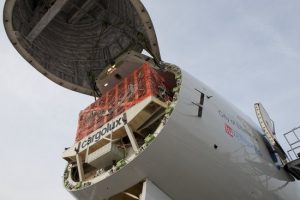
On 26 February 2026 the Court of Justice of the European Union issued thirteen judgments confirming the fines imposed by the European Commission on thirteen airlines for their participation in the air cargo surcharge cartel. The total penalty exceeds €776 million and concerns conduct that took place between 1999 and 2006. The ruling consolidates two key principles of European antitrust law: the Commission’s authority to sanction cartels that produce qualified effects within the European market, even when part of the conduct occurred outside the region, and a company’s liability for a single and continuous infringement, including market segments in which it does not operate directly.
On 26 February 2026 the Court of Justice of the European Union delivered thirteen judgments largely rejecting the appeals lodged by the airlines against earlier decisions of the General Court of the European Union and the European Commission concerning the air cargo cartel. The only partial exception concerns Sas Cargo Group, whose fine was reduced from around €70.2 million to €62.8 million due to errors in calculating certain revenue components. For all the other carriers, the fines remain unchanged.
The cartel began in December 1999 and continued until February 2006. Its structure centred on the coordination of two surcharges — one for fuel and one for security — as well as a collective refusal to grant commissions on these surcharges to freight forwarders. The European Commission classified these practices as a single and continuous infringement of Article 101 of the TFEU, Article 53 of the EEA Agreement and Article 8 of the EU–Switzerland Air Transport Agreement, with effects across the entire European Economic Area and Switzerland.
The Commission’s decision, initially adopted and later annulled for procedural defects, was readopted in 2017. At that stage, fines totalling €776 million were imposed on eleven carriers, rising to around €910 million when parallel proceedings are taken into account. Several airlines challenged the decision before the General Court of the European Union, disputing both the existence of a single and continuous infringement and the method used to calculate the fines. The General Court identified certain specific factual errors by the Commission, including Cargolux’s participation in a particular meeting, but ultimately found the airlines’ participation in the cartel proven and upheld the penalties. The carriers subsequently appealed to the Court of Justice.
One of the central legal issues concerned the Commission’s jurisdiction to sanction conduct relating to flights arriving from third countries into the EU and the EEA, the so-called inbound routes. The airlines argued that part of the conduct had taken place outside European territory and that the Commission should not have extended its jurisdiction to these routes. The Court rejected this argument, confirming the approach based on the “qualified effects” test.
Under this criterion, the Commission may sanction conduct implemented outside the EU when it produces foreseeable, immediate and substantial effects within the EEA. The Court clarified that this approach and the criterion based on implementation of the agreement within the EU are alternative, not cumulative: it is sufficient for only one of the two to be satisfied in order to establish European jurisdiction. The ruling therefore consolidates the Commission’s expansive approach in pursuing cartels operating on a global scale, with direct relevance for other sectors of international transport.
The airlines also challenged the classification of the cartel as a single and continuous infringement, arguing that contacts between the carriers were fragmented and not part of a unified anti-competitive plan. The Court confirmed that both the Commission and the General Court had correctly identified a common anti-competitive objective — namely coordination on surcharges and the refusal to grant commissions — together with a continuity of contacts that justified treating the conduct as a single infringement.
An important part of the judgment concerns the criteria for attributing liability. The Court clarified that a carrier may be held responsible for the entire infringement, including routes on which it does not operate directly, if its conduct contributed to the cartel’s common objectives and it was aware of the behaviour of the other participants. This principle reinforces the view that participation in a global cartel entails liability for the whole infringement unless the company can demonstrate that it genuinely distanced itself from the arrangement.
The judgment of 26 February 2026 brings to a close the main European litigation concerning one of the most significant cartels ever prosecuted in the air transport sector, in terms of duration, number of carriers involved and the scale of the penalties. For the airlines concerned, the decision removes the remaining uncertainty regarding their exposure to the European Commission, while at the same time strengthening the legal basis for damages claims before national courts by freight forwarders and other customers, the so-called follow-on actions.
From the perspective of European antitrust law, the ruling will have three lasting consequences. First, it consolidates the Commission’s power to target global cartels on the basis of their effects in the EEA, with direct implications for other intercontinental transport markets, from maritime shipping to integrated logistics services. Second, it reiterates that surcharges agreed between competitors fall within the category of restrictions by object, reducing the scope for defences based on alleged commercial benefits. Third, it clarifies the criteria for attributing liability in cases of single and continuous infringements, with potential implications for future investigations in sectors such as container shipping, ro-ro transport and other segments of international freight transport.
M.L.