




Array ( [0] => 8 [1] => 40 )

Podcast K44

Cronaca

  • Un evento per ricordare Lorenzo Bressan

    Un evento per ricordare Lorenzo Bressan

    A Pradipaldo-Zeggio, nell’Alto Vicentino, la Sfilata sulla Neve ha ricordato Lorenzo Bressan, detto "Caccia", cofondatore dell’associazione Highway Truck Team di Thiene, morto vent’anni fa. All’evento hanno partecipato anche rappresentanti legati alla Lega Autisti Autotrasportatori Indipendenti Siciliani Nazionali.

Transpotalk

Normativa

Mare

  • Portacontainer Msc colpita nel Golfo Persico

    Portacontainer Msc colpita nel Golfo Persico

    La portacontainer Msc Sariska V è stata danneggiata da un'esplosione nelle acque del Golfo il 31 maggio 2026 mentre l'Irgc rivendica un attacco con missile da crociera in risposta a un'azione statunitense contro una nave iraniana.

Autotrasporto

  • Scania investe 70 milioni in Francia per i camion elettrici

    Scania investe 70 milioni in Francia per i camion elettrici

    Scania potenzia il sito produttivo di Angers con 70 milioni di euro e lancia il primo CrewCab a batteria per i veicoli di soccorso: due mosse che segnalano un'accelerazione concreta nella strategia di elettrificazione del trasporto pesante in Europa.

    Early 2026 bad weather paralyses transport across half of Europe

    In the first days of January 2026, a spell of exceptionally severe weather swept across much of central and northern Europe, paralysing the freight transport system. An outbreak of Arctic air, bringing heavy snowfall, persistently sub-zero temperatures and widespread ice formation, simultaneously affected air, road, rail and maritime transport. It was the most severe winter event since February 2012, with an impact stretching from France to the Netherlands, from Belgium to Germany, from the United Kingdom to the Balkans, and also affecting northern Italy.

    The most immediate and visible impact was felt in air transport. Between 2 and 7 January, Dutch airline KLM cancelled a total of 2,400 flights, equivalent to around 50% of its overall operations during the period. The peak was reached on 7 January, with 600 flights cancelled in a single day, more than 90% of scheduled services. The progression of cancellations was steady: 202 flights on 2 January, 294 on 3 January, 398 on 4 January, 463 on 5 January and 417 on 6 January. At Amsterdam Schiphol Airport, the fifth-busiest airport in Europe by traffic volumes, more than a thousand passengers were forced to spend the night at the terminal on camp beds set up for the first time in the airport’s history.

    Difficulties were not limited to the Netherlands. Between 6 and 7 January, 140 flights were cancelled at Paris Charles de Gaulle and 40 at Orly, while around 40 services were scrapped at Brussels-Zaventem. Flights between Italy and the Netherlands also faced widespread cancellations, with direct repercussions for air cargo and for intercontinental flows using Amsterdam as a transit hub.

    A technical factor further exacerbated the air transport crisis: a shortage of anti-icing fluid required for de-icing operations. According to KLM, a combination of extreme weather conditions and supply delays from a German manufacturer progressively depleted available stocks at Schiphol. The issue proved widespread across many northern European airports, highlighting a structural vulnerability in the supply chain of a material that is critical for operational safety.

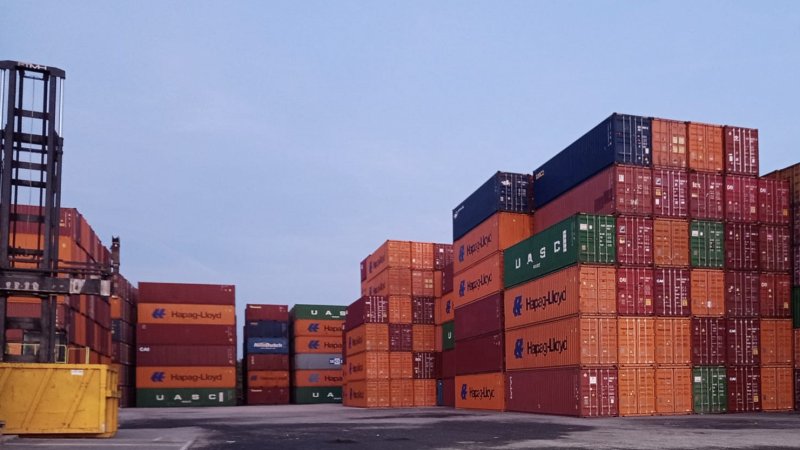
    Maritime and port transport was also heavily affected by the weather. Major northern European ports, notably Rotterdam, Hamburg and Antwerp, recorded a significant drop in terminal productivity. Low temperatures and ice on yards slowed loading and unloading operations, limited crane use and extended truck dwell times within port areas. Maersk and Hapag-Lloyd issued operational notices warning of longer waiting times and slower inbound and outbound flows, with direct consequences for intermodal transport planning.

    The simultaneous slowdown at the three main northern European ports had a systemic effect on continental logistics. Goods bound for or coming from Italy experienced cascading delays, with difficulties in meeting delivery windows and impacts on drivers’ shift organisation. Container terminals saw a growing number of units awaiting handling, generating congestion and further delays for road transport.

    On the road network, the situation was particularly critical in France. Authorities imposed widespread circulation bans for heavy goods vehicles over 7.5 tonnes in 15 departments, forcing trucks to stop in designated parking areas “until further notice”. In other northern departments, additional restrictions were introduced, including overtaking bans and a speed limit of 80 kilometres per hour for vehicles over 3.5 tonnes. On 6 January alone, more than 600 kilometres of queues were recorded on the roads of the Île-de-France region, rising to over 900 kilometres on the first day of winter sales.

    In Italy, the bad weather mainly affected the Centre-North. On 6 January, Autostrade per l’Italia activated its 2025–2026 Snow Plan, deploying around 400 operational vehicles and more than 600 staff for clearance and road treatment activities. The main critical points were along the Apennine and Tuscan stretches of the A1 Milan–Naples motorway, with lane reductions and vehicle filtering to allow snowplough operations. Rete Ferroviaria Italiana also activated its Snow and Ice Plan across the national rail network.

    Rail transport showed widespread technical fragilities. In the Netherlands, operator NS suspended the entire rail service until 9.00 GMT on 6 January due to points failures caused by cold and snow. In France, numerous lines were interrupted and the Ratp suspended all bus services in Paris for the whole morning of 6 January. In the United Kingdom, disruptions mainly affected northern Scotland, while Eurostar services between London and the Netherlands did not operate beyond Brussels.

    In the Balkans, the event took on the dimensions of a humanitarian emergency. In Bosnia-Herzegovina and Serbia, tens of thousands of households were left without electricity and heating due to exceptional snowfall, which reached almost 40 centimetres in some Serbian locations and around half a metre in Sarajevo. Transport infrastructure was paralysed, with trains stuck for hours and urban public transport suspended in several cities.

    From a meteorological perspective, the cold spell was triggered by a rare atmospheric configuration, characterised by a Greenland anticyclonic block that diverted Arctic air masses from Russia and Siberia towards western Europe. Temperatures fell to 12–15 degrees below seasonal averages, with minimums of -12.5 degrees recorded in the United Kingdom. According to several meteorological analysts, the intensity and duration of the event make it a case study for recent European climatology.

    The economic and operational impact on the entire logistics supply chain was significant. For road haulage, already burdened by structural cost increases that came into force on 1 January 2026, the bad weather meant longer cycle times, forced stops, shift reorganisation and the risk of penalties for late deliveries. Sectors particularly sensitive to punctuality, such as perishable food, pharmaceuticals and just-in-time industrial production, faced major operational challenges.

    According to various sector analyses cited in the dossier, the January 2026 event highlighted the systemic vulnerability of the European transport system to extreme weather events. The initial underestimation of the phenomenon by some national meteorological services, acknowledged by French transport minister Philippe Tabarot, affected the timeliness of responses. Conversely, where snow plans were activated preventively, as in Italy, the emergency was managed with greater operational continuity.

    Pietro Rossoni

    © TrasportoEuropa - Riproduzione riservata - Foto di repertorio
    Segnalazioni, informazioni, comunicati, nonché rettifiche o precisazioni sugli articoli pubblicati vanno inviate a: redazione@trasportoeuropa.it

      Puoi commentare questo articolo nella pagina Facebook di TrasportoEuropa

      bottone newsletter piccolo Vuoi rimanere aggiornato sulle ultime novità sul trasporto e la logistica e non perderti neanche una notizia di TrasportoEuropa? Iscriviti alla nostra Newsletter con l'elenco ed i link di tutti gli articoli pubblicati nei giorni precedenti l'invio. Gratuita e NO SPAM!




    CONTENUTI SPONSORIZZATI


Videocast K44

Aereo

  • Dhl semplifica lo sdoganamento con intelligenza artificiale

    Dhl semplifica lo sdoganamento con intelligenza artificiale

    Dhl Express introduce nei processi di prenotazione un sistema che riconosce gli articoli da una foto e genera descrizioni conformi ai requisiti doganali usando l’intelligenza artificiale. La funzione è già attiva in otto mercati e sarà estesa nel corso del 2026.

Ferrovia

  • I cantieri in Germania mettono a dura prova la rete Ten-T

    I cantieri in Germania mettono a dura prova la rete Ten-T

    Da un lato l’Unione Europea investe risorse importanti per lo sviluppo delle ferrovie nei corridoio Ten-T, dall’altro i lavori sulle infrastrutture rendono difficile il traffico. L’esempio più eclatante è quello tedesco.

Persone

  • Croce confermato presidente di Assagenti Genova

    Croce confermato presidente di Assagenti Genova

    Il nuovo consiglio direttivo di Assagenti rinnova il mandato di Gianluca Croce fino al 2028. Al centro della fase associativa ci sono nuova diga, rafforzamento dei traffici e costruzione di un sistema logistico più integrato attorno al porto di Genova.
Scania investe 70 milioni in Francia per i camion elettrici

TECNICA

Scania investe 70 milioni in Francia per i camion elettrici
Scania lancia il modulo batteria sotto cabina e la ricarica Mcs

TECNICA

Scania lancia il modulo batteria sotto cabina e la ricarica Mcs
Artemis per la sicurezza del Monte Bianco

TECNICA

Artemis per la sicurezza del Monte Bianco
Kia torna nel furgone italiano col PVB 5

TECNICA

Kia torna nel furgone italiano col PVB 5
Donfeng parte dal Transpotec per portare i furgoni in Italia

TECNICA

Donfeng parte dal Transpotec per portare i furgoni in Italia
previous arrow
next arrow
Dopo la Francia, Ziegler liquidata anche in Belgio

LOGISTICA

Dopo la Francia, Ziegler liquidata anche in Belgio
Scania lancia il modulo batteria sotto cabina e la ricarica Mcs

LOGISTICA

Scania lancia il modulo batteria sotto cabina e la ricarica Mcs
Scambi tra Italia e Regno Unito verso nuova normalità

LOGISTICA

Scambi tra Italia e Regno Unito verso nuova normalità
Garbe inaugura piattaforma logistica a Covo

LOGISTICA

Garbe inaugura piattaforma logistica a Covo
Frode fiscale nella logistica brianzola

LOGISTICA

Frode fiscale nella logistica brianzola
previous arrow
next arrow
Operazione Red Gold contro frode nei carburanti in Abruzzo

ENERGIE

Operazione Red Gold contro frode nei carburanti in Abruzzo
Quattro indagati per uso stradale di gasolio agricolo nel Salento

ENERGIE

Quattro indagati per uso stradale di gasolio agricolo nel Salento
Il taglio delle accise è prorogato fino al primo maggio

ENERGIE

Il taglio delle accise è prorogato fino al primo maggio
Petrolio sopra 110 dollari al barile dopo dichiarazioni di Trump

ENERGIE

Petrolio sopra 110 dollari al barile dopo dichiarazioni di Trump
Scoperti a Fiumicino i vampiri del carburante per aerei

ENERGIE

Scoperti a Fiumicino i vampiri del carburante per aerei
previous arrow
next arrow
Carta DKV per ricaricare il camion elettrico

SERVIZI

Carta DKV per ricaricare il camion elettrico
Video | Dkv al Transpotec oltre la carta carburante

SERVIZI

Video | Dkv al Transpotec oltre la carta carburante
Zucchetti presenta una logistica digitale integrata software e robot

SERVIZI

Zucchetti presenta una logistica digitale integrata software e robot
Golia360 punta sulla digitalizzazione per gli autisti

SERVIZI

Golia360 punta sulla digitalizzazione per gli autisti
Come la logistica può guadagnare dalle multe Antitrust

SERVIZI

Come la logistica può guadagnare dalle multe Antitrust
Tra Genova e Barcellona l’asse della formazione per la logistica

SERVIZI

Tra Genova e Barcellona l’asse della formazione per la logistica
Transporeon introduce la ricerca con l’intelligenza artificiale

SERVIZI

Transporeon introduce la ricerca con l’intelligenza artificiale
Nasce Synlog Alliance consorzio dati per la logistica

SERVIZI

Nasce Synlog Alliance consorzio dati per la logistica
Sogedim potenzia le spedizioni per America Latina con Eagle Service

SERVIZI

Sogedim potenzia le spedizioni per America Latina con Eagle Service
Leviahub cresce in Spagna con due acquisizioni

SERVIZI

Leviahub cresce in Spagna con due acquisizioni
Trans.eu cresce in Italia con la borsa carichi relazionale

SERVIZI

Trans.eu cresce in Italia con la borsa carichi relazionale
L’evoluzione della borsa carichi autotrasporto è relazionale

SERVIZI

L’evoluzione della borsa carichi autotrasporto è relazionale
Padrosa realizzerà un parcheggio per camion ad Alessandria

SERVIZI

Padrosa realizzerà un parcheggio per camion ad Alessandria
Leviahub e Pionira accelerano sull’adozione dell’eCmr

SERVIZI

Leviahub e Pionira accelerano sull’adozione dell’eCmr
Trans.eu avvia il pagamento sicuro per l’autotrasporto europeo

SERVIZI

Trans.eu avvia il pagamento sicuro per l’autotrasporto europeo
previous arrow
next arrow