





The European road haulage sector is undergoing profound transformation, caught between structural emergencies and technological opportunities. During the transport logistic event in Munich, the IRU hosted a session to address this ongoing evolution, focusing on the adoption of artificial intelligence and five interconnected trends that are reshaping the industry: capacity and demand, cost inflation, decarbonisation, driver shortages and technological innovation.
Vincent Erard, senior director for strategy and development at the IRU, highlighted that the chronic shortage of heavy goods vehicle drivers poses one of the most serious threats to the operational capacity of road transport. Across Europe, there is a shortfall of around 426,000 drivers, and the situation is expected to worsen. “Over one third of drivers are over the age of 55. By 2029, around 550,000 drivers will retire, but new entrants to the profession will not be enough to fill the gap,” Erard explained.
The figures speak for themselves: just 3.2 per cent of drivers are women, while those under 25 make up only 4 per cent of the workforce. According to the IRU, the causes include poor working conditions, an often difficult balance between professional and personal life, a lack of suitable rest areas, and in some cases, inadequate treatment at delivery points. Added to this is another source of pressure: freight demand is expected to grow by 9 per cent by 2030, a scenario that could further strain an already fragile sector.
The second major issue concerns operating costs. In Germany – the second-largest road transport market in Europe – the total cost of truck ownership has risen by 24 per cent between 2021 and 2024. This increase stems from several factors: soaring tolls (up 83 per cent in 2023 alone, largely due to new CO2 standards), higher fuel prices (up 19 per cent), post-pandemic wage rises, stronger bargaining power among drivers and vehicle prices that have nearly doubled over the past decade. All of these elements weigh directly on company budgets.
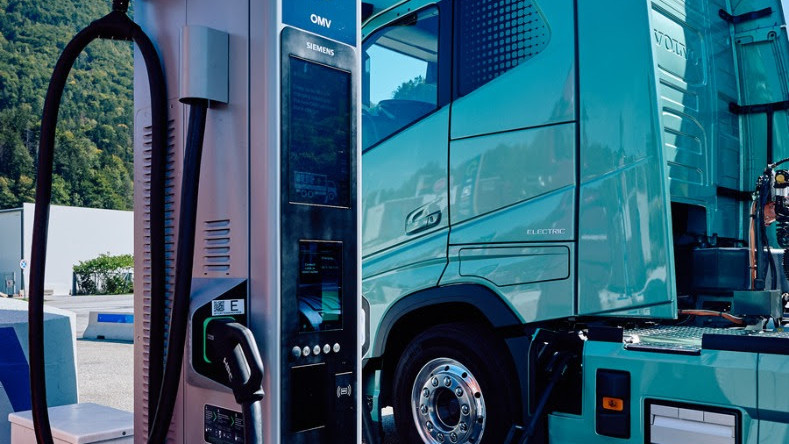
Environmental policies are also having a major impact, often penalising firms still reliant on diesel through instruments such as CO2 standards, the Eurovignette directive and the ETS2 system. Yet, as the IRU points out, the necessary conditions for a real transition are still lacking: electricity grids are underdeveloped, infrastructure for charging or fuelling with alternative energies remains limited and the supply of biofuels is insufficient. “Operators are not receiving the support they need to switch to low- or zero-emission vehicles,” said Erard.
In this complex context, the IRU sees the adoption of artificial intelligence as a strategic lever to boost efficiency, cut costs and improve service reliability. Yet its use remains marginal, especially among small businesses, which account for 98 per cent of the sector in Europe. According to an IRU survey of over 500 operators across 19 European countries, nearly 90 per cent of companies with fewer than 49 employees do not use artificial intelligence solutions. Among firms with over 50 employees, only 12 per cent have adopted the technology.
The main reason is that artificial intelligence is not yet viewed as a priority. The biggest concerns remain driver shortages, rising costs and regulatory complexity. The second most frequently cited obstacle is financial: the initial investment required – including technology, infrastructure and staff – is seen as too burdensome. Nonetheless, the IRU concludes, existing applications such as route optimisation and predictive maintenance are already showing tangible benefits in terms of efficiency, reliability and fuel savings. And the latest solutions are designed to integrate with existing systems, making adoption easier even for those starting from scratch.