


Array ( [0] => 8 [1] => 40 )

Podcast K44

Cronaca

  • Controllo straordinario sui camion in Germania sull’A2

    Controllo straordinario sui camion in Germania sull’A2

    La Polizia autostradale tedesca di Bielefeld ha controllato circa 130 veicoli industriali sulle aree di servizio Lipperland Nord e Sud, tra Bielefeld e Herford. Contestate 87 infrazioni, di cui 35 su tempi di guida e riposo. La Dogana ha avviato ulteriori verifiche su lavoro irregolare e salario minimo.

Transpotalk

Normativa

Mare

  • Pesanti attacchi a navi cargo nel Mar Nero

    Pesanti attacchi a navi cargo nel Mar Nero

    Droni hanno colpito due navi cargo nel Mar Nero, il giorno dopo l'affondamento della Royad Mammadov, diretta a Ravenna, al largo della Romania. Una nave è affondata e il suo equipaggio risulta disperso, mentre i 18 marinai dell'altra sono stati salvati dopo un incendio a bordo.

Autotrasporto

  • Fusione miliardaria nell’autotrasporto Usa

    Fusione miliardaria nell’autotrasporto Usa

    L'accordo annunciato il 5 ottobre 2026 unisce due dei principali intermediari del trasporto stradale nordamericano, C.H. Robinson e Rxo. La chiusura è prevista nel primo semestre 2027, dopo il voto degli azionisti Rxo e le autorizzazioni regolatorie. L'obiettivo è attuare 300 milioni di dollari di sinergie annue entro due anni.

    Amazon unveils seven new robots for logistics

    Foto: Amazon

    Amazon has made a new generational leap in logistics automation with the introduction of seven new warehouse robots. The announcement was made on 7 May 2025 at the company’s Last Mile Innovation Center in Dortmund, Germany, where it showcased a series of major technological innovations designed to improve the organisation and dispatch of parcels in its distribution centres. Among these, the spotlight was on Vulcan, a robotic arm equipped with a kind of synthetic sense of touch, allowing it to handle items more effectively. Alongside Vulcan, Amazon revealed six other machines designed to support human workers by easing repetitive tasks and reducing physical strain.

    Unlike traditional robots that are unaware of collisions or obstacles, Vulcan is fitted with special sensors that enable it to detect contact with an object and adjust the force needed to grip or move it. This allows it to handle fragile items without breaking them and to operate in tight or awkward spaces, such as high shelves or those close to the floor. Vulcan has already been introduced at two sites: in Spokane, United States, and in Hamburg, Germany. At these locations, the robot is capable of handling around 75 per cent of the items in the warehouse, and Amazon claims it does so at a speed comparable to that of human workers. When faced with an item it cannot manage alone, it requests assistance from a human operator.

    Amazon also presented a range of other significant technologies aimed at the final phase of distribution, where parcels are sorted and loaded onto delivery vehicles. In this context, the robots help to reduce unnecessary effort and make the process faster and more accurate. One example is Tipper, an automated system that transfers parcels from trolleys to conveyor belts without the need for manual lifting. There are also six-sided scanners that read barcodes on every side of a parcel, eliminating the need to rotate or excessively handle them.

    The Agility and Matrix systems manage the flow of parcels along the belts, determining the quickest and most efficient route for each item. ZancaSort brings parcels and shipping bags to the correct height, preventing workers from having to bend or stretch. Finally, there is Vass, which uses computer vision to project instructions directly onto workstations, indicating where each parcel should be placed, thus reducing errors and speeding up the process.

    Already today, more than 750,000 robots are operating in Amazon centres, and the e-commerce giant is keen to stress that the intention is not to replace humans. Nicola Fyfe, vice president of Amazon Logistics Europe, stated that the company aims to create ergonomic working environments and to increase opportunities for employees to grow professionally. The training courses offered through the Career Choice programme, which allow workers to learn how to use new technologies or move into specialised technical roles, are becoming increasingly popular. Moreover, the introduction of these new robots has led to the creation of new roles within the warehouses, such as maintenance engineers, developers and system technicians.


    © TrasportoEuropa - Riproduzione riservata - Foto di repertorio
    Segnalazioni, informazioni, comunicati, nonché rettifiche o precisazioni sugli articoli pubblicati vanno inviate a: redazione@trasportoeuropa.it


      Puoi commentare questo articolo nella pagina Facebook di TrasportoEuropa

      bottone newsletter piccolo Vuoi rimanere aggiornato sulle ultime novità sul trasporto e la logistica e non perderti neanche una notizia di TrasportoEuropa? Iscriviti alla nostra Newsletter con l'elenco ed i link di tutti gli articoli pubblicati nei giorni precedenti l'invio. Gratuita e NO SPAM!


    CONTENUTI SPONSORIZZATI


Videocast K44

Aereo

  • La domanda di cargo aereo supera la capacità ad agosto 2026

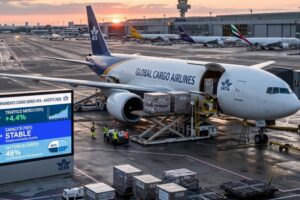
    La domanda di cargo aereo supera la capacità ad agosto 2026

    Le rilevazioni della Iata ad agosto 2026 mostrano che il trasporto merci aereo mondiale è cresciuto del 4,4% su base annua mentre la capacità è sostanzialmente stabile, portando il riempimento al 46%. Guidano Nord America e Asia-Pacifico, arretrano i corridoi mediorientali e il cherosene sale a 157 dollari al barile.

Ferrovia

  • Duisport potenzia i collegamenti ferroviari da Trieste

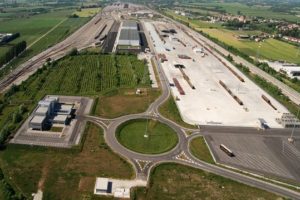
    Duisport potenzia i collegamenti ferroviari da Trieste

    Duisport porta a quattro le circolazioni settimanali sia sul servizio intermodale Cervignano-Duisburg sia sulla navetta tra il terminal Plt Hhla Italy e l'Interporto di Cervignano. Il servizio, gestito da +.intermodal si basa su un modello neutrale e prevede l'estensione a Wels, in Austria, dal prossimo anno.

Persone

  • L’autotrasporto veronese perde Francesco Corsi

    L’autotrasporto veronese perde Francesco Corsi

    Il 26 settembre 2026 è morto nella sua casa di Colognola ai Colli l’autotrasportare veneto Francesco Corsi. Cominciò nel 1960 con un Leoncino e l’omonima azienda Corsi, specializzata nel trasporto logistica a temperatura controllata e insediata nell'interporto Quadrante Europa di Verona.
L’elettrico Volta Zero torna allo Iaa 2026

TECNICA

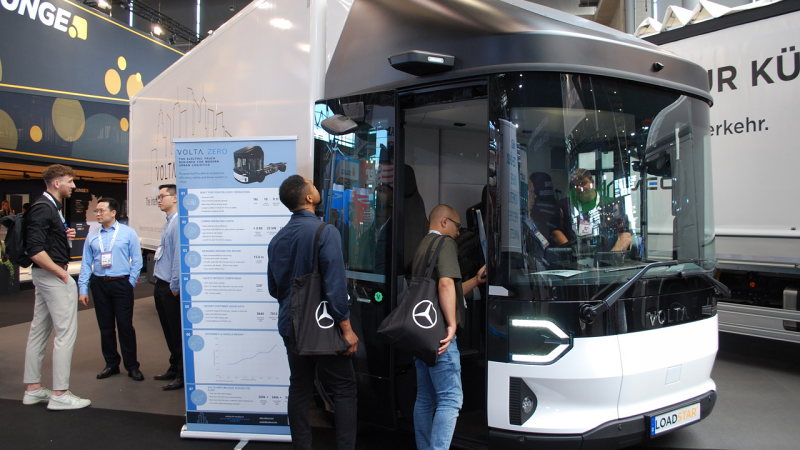
L’elettrico Volta Zero torna allo Iaa 2026
previous arrow
next arrow
Parte la riforma del Codice Doganale europeo

LOGISTICA

Parte la riforma del Codice Doganale europeo
previous arrow
next arrow
Scoperta a Venezia una frode sui carburanti

ENERGIE

Scoperta a Venezia una frode sui carburanti
previous arrow
next arrow
Sanilog avvia una nuova campagna oncologica

SERVIZI

Sanilog avvia una nuova campagna oncologica
previous arrow
next arrow