




Turkey is preparing to play an increasingly central role in connections between Europe and Asia, moving quickly into the new geopolitical scenarios that have opened up following the conflict between Russia and Ukraine, and beyond. Ankara, however, has a problem to solve: upgrading its infrastructure, especially rail, which is not yet fit for these new tasks.
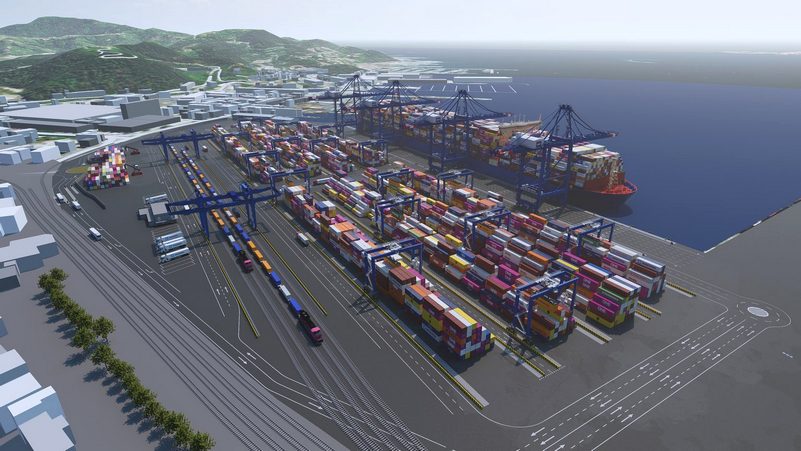
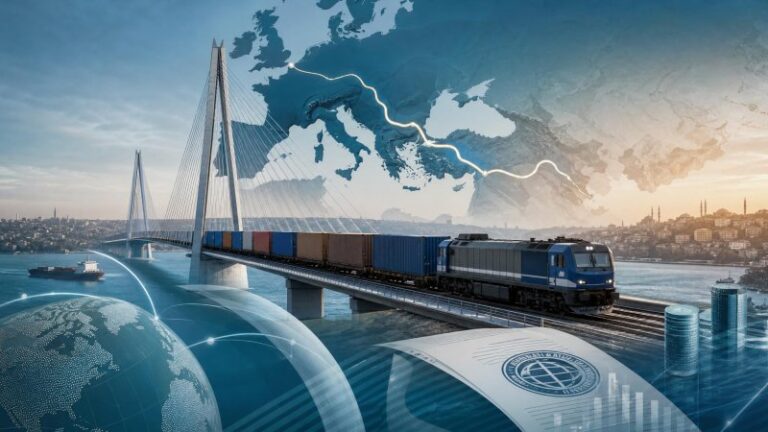
At the forefront is a project that can fairly be described as imposing: the Northern Istanbul rail crossing, referred to in official documents by the acronym Inrail (Istanbul north rail crossing project). The new rail corridor is designed to eliminate the main rail bottleneck across the Bosphorus and increase freight flows between Europe and Asia through a 127-kilometre route that will cross the Bosphorus on the existing Yavuz Sultan Selim bridge, which will have to be adapted. The significance of this new transcontinental link is underlined by the funding that Turkey has already partly secured on international markets, equivalent to around €7 billion. In particular, the funds are coming mainly through the Asian Infrastructure Investment Bank (Aiib), an international financial institution established in 2016, headquartered in Beijing and founded at China’s initiative to finance public works and development projects in Asia. The new railway will have an electrified double-track route between Çayırova, on the Asian side of Istanbul, and Çatalca, on the European side, creating a northern alternative to the current congested Marmaray corridor. The potential for Eurasian connections is considerable, as freight trains will be able to travel at speeds of between 80 and 120 km/h.
But Turkey’s extensive programme of works does not concern only new rail routes, such as the Istanbul bypass, but also the radical modernisation of existing border routes, which are often not electrified, follow winding alignments and include sections where trains run at very low speeds. These lines are a key gateway towards Europe and are themselves constrained by obsolete and inadequate cross-border connections.
This is the case with the Niš-Dimitrovgrad railway, an important line in Serbia linking the city of Niš with the Bulgarian border at Dimitrovgrad. It is also the only rail connection between the two countries and is an integral part of Pan-European Corridor X. The overall project to upgrade the 104-kilometre Niš-Dimitrovgrad line includes the reconstruction and modernisation of the existing non-electrified single-track line from Sićevo to Dimitrovgrad. It also covers the construction of the northern bypass around the city of Niš, as well as electrification and a new signalling system both for the existing railway from Sićevo to Dimitrovgrad and for the Niš bypass.
On paper, this can only be seen as a reasonable, indeed desirable, project. Yet there is no shortage of concern, raised by Uirr (International Union for Road-Rail Combined Transport), the association for intermodal road-rail transport, because of the risk of a full closure of the Niš-Dimitrovgrad line while modernisation works are carried out. Similar concerns also apply to the Ruse-Giurgiu railway, which connects Bulgaria (Ruse) with Romania (Giurgiu Nord) across the famous Danube Bridge, also known in the Soviet era as the Friendship Bridge.
Just over 2.2 kilometres long and opened in 1954, despite its relatively modest alignment it remains the obligatory route for connecting both the rail and road networks of the two countries. However, its state of deterioration and infrastructure characteristics mean it is no longer suitable for today’s connections. A major renovation is therefore expected, which may necessarily involve its temporary closure. Hence Uirr’s concerns over the risk of a simultaneous blockage of the two corridors that are essential for linking Europe and Asia through Turkey. The intermodal operators’ association has appealed to the European Commission, urging it to find a better sequencing of the works to ensure that at least one of the two rail corridors remains in operation at all times.
Piermario Curti Sacchi