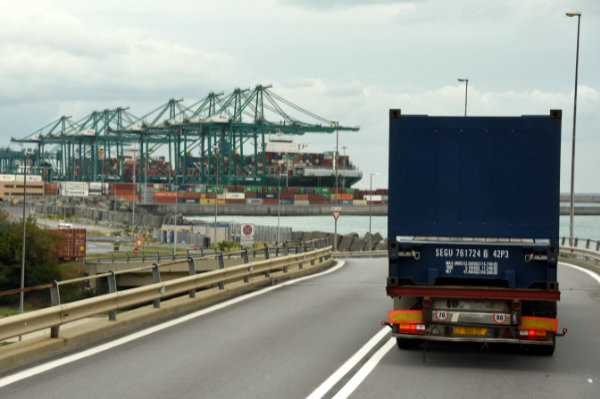
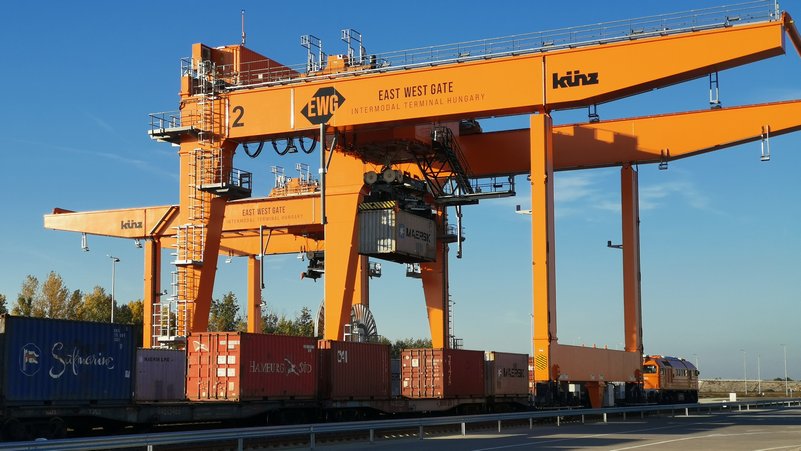





Grand Port Maritime de Dunkerque began work between late June and early July 2026 on the quay for the port’s second container terminal, in the Atlantique basin. The project is part of the Cap 2020 investment programme and is designed to double the port’s container capacity, increasing it from the current 850,000 TEU at the Terminal des Flandres to around 2 million TEU at full operation. The new deep-water quay will be about 1,150 metres long, rising to 1,320 metres including the connecting section, with a depth of around 17.5 metres. These dimensions will allow two Ultra Large Container Ships to berth simultaneously.
The works, awarded to a consortium led by Spie Batignolles through its subsidiaries Fondations, Nord, Travaux Publics and Etpo, together with Ramery TP and Fayat Fondations, will last about 32 months. The first phase of the site involved load tests and drilling to depths of up to 45 metres to assess the mechanical characteristics of the ground, ahead of the construction of diaphragm walls and the quay’s load-bearing structures. The project will require more than 100,000 cubic metres of reinforced concrete and more than one million cubic metres in total of excavation and backfilling.
The overall project, covering the quay and related infrastructure, has an estimated value of between €300 million and €303 million, of which €132 million is allocated to the civil engineering works for the quay alone. In 2024, the Cap 2020 programme received approval from the Commission Européenne (European Commission) for around €127 million in French state aid, a step that enabled the project’s financing to be consolidated and the main contracts to be launched in 2025-2026. Once work on the quay is completed, scheduled for 2029, the terminal will have to be finished with dredging and latest-generation lifting equipment. The construction site will also include carbon balance monitoring and measures to limit impacts on residents in the area, alongside environmental compensation measures integrated into the Cap 2020 programme.
The new terminal strengthens Dunkerque’s position among ports in the northern French range, in a competitive environment with the main North European ports for transhipment traffic. Gpmd also aims to consolidate its role as a low-emission logistics and industrial hub, integrating container flows with ro-ro traffic, bulk cargo and energy projects under development in the port area.
The doubling of capacity responds to traffic growth recorded in recent years. Terminal des Flandres, the port’s main container facility, handled about 750,000 TEU in 2025, while total Gpmd traffic reached around 48 million tonnes, up 5% on the previous year. Growth in the French port’s container cluster is being driven mainly by Cma Cgm, the main liner shipping company operating at the port, supported by short-sea and feeder operators such as Containerships and Dfds. These companies provide ro-ro and feeder links between Dunkerque, the United Kingdom and Ireland, including the route to Rosslare, which accounts for a significant share of the port’s total traffic.
Antonio Illariuzzi