







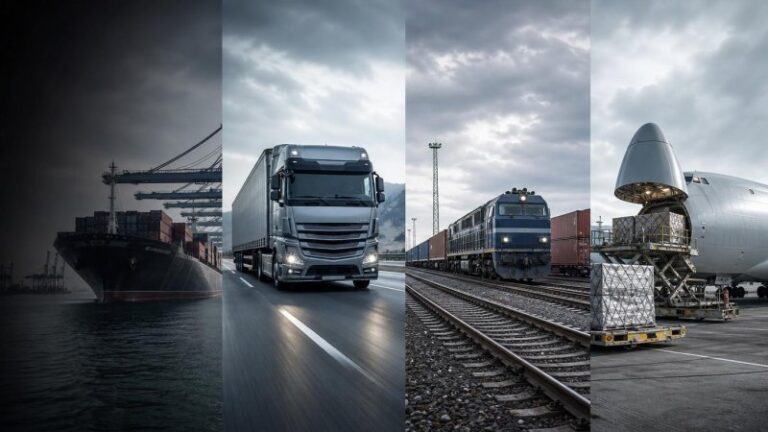
According to Banca d’Italia’s survey on international transport for 2025, the impact of transport costs on the value of goods traded by Italy with other countries remained broadly stable: 2.6% for exports and 4.1% for imports, slightly down from 4.2% in 2024. This aggregate figure, however, masks divergent trends by transport mode: on the one hand, a marked rise in road transport costs; on the other, a decompression of maritime container freight rates after the exceptional peaks recorded in 2024.
This is compounded by an asymmetry between imports and exports which, the report explains, reflects the commodity composition of trade flows. Italian imports have historically been characterised by large volumes of bulk raw materials and goods with a low unit value per tonne, for which freight has a greater impact than it does on the high value-added manufactured products that make up national exports. As a result, in 2025 the fall in container shipping costs and maritime bulk rates offset the rise in road transport costs and in tariffs for natural gas transported by pipeline.
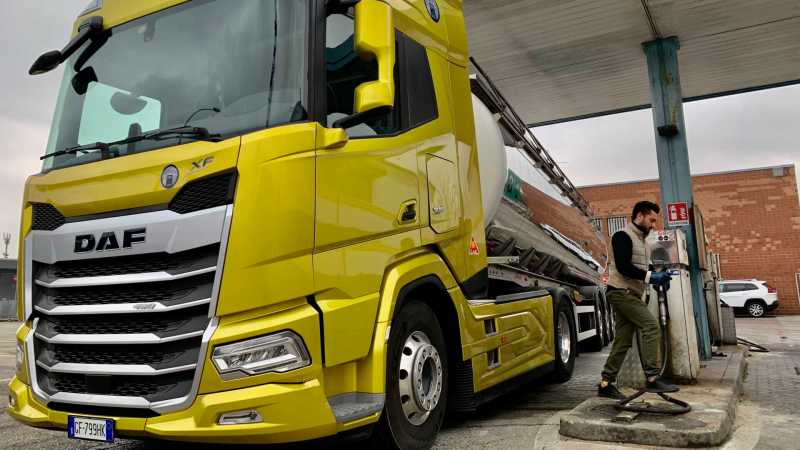
As noted, road haulage is the weakest link in the continental logistics chain. Average road costs per tonne rose by around 10% in both directions, an increase that brought freight rates back to the historic peaks recorded in 2022, wiping out the benefits for shippers gained over the previous two years. In detail, the weighted average shows an export cost of €150.1 per tonne, up 9.9%, and an import cost of €147.8 per tonne, up 8.9%, with an average rate of €1,870 per full truckload vehicle and €232.3 per tonne in the groupage segment. Excluding ancillary services, pure road freight rates rose by 6% for full loads and by 11% for part loads.
The sharpest changes were recorded on routes to the countries of the former Soviet Union, where export costs reached €329.8 per tonne, up 24.1% year on year, and the full truckload rate per vehicle rose to €3,955. They were followed by the Baltic countries, with an export cost of €227.4 per tonne, up 15.5%, and a vehicle rate of €3,047, and Scandinavia, where export costs stood at €215.7 per tonne, up 14.1%. The route to Spain and Portugal also recorded a significant increase, with an export cost of €178.3 per tonne, up 16.2%, while remaining lower in absolute terms than routes to Eastern Europe.
A recurring feature in almost all geographical areas is the stronger growth in part-load costs compared with full-load costs. On the Spain-Portugal route, against a 2.3% increase in the vehicle rate, the cost of part loads per tonne rose by 22.8% to €274.6. According to Banca d’Italia, the increase was driven by clearly structural factors: growth in volumes handled was accompanied by a contraction in the overall capacity of industrial vehicles in Europe, caused by a fall in new vehicle registrations, and a persistent shortage of drivers, which pushed driver wages higher.
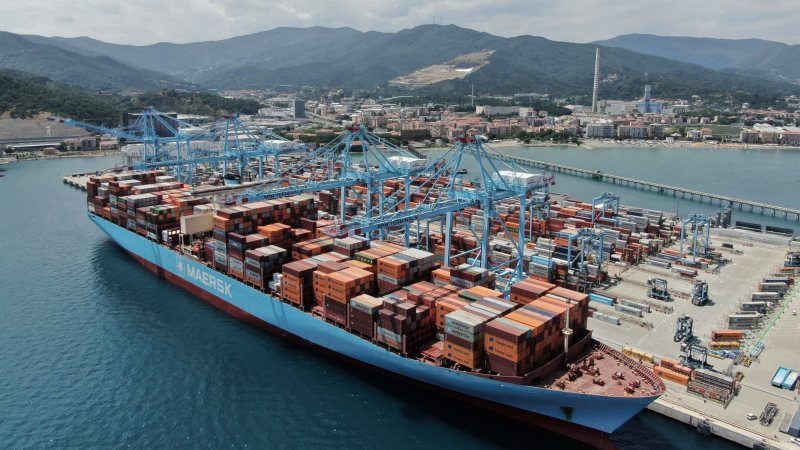
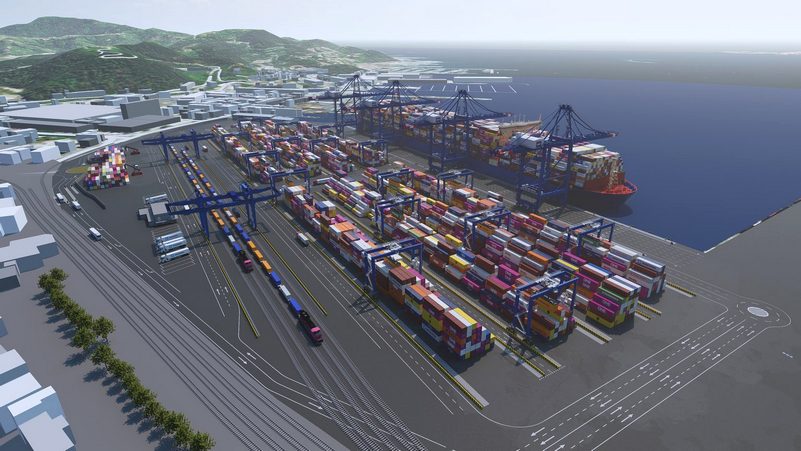
Maritime transport followed a different pattern from road transport. Container freight rates, in dollars and excluding ancillary services, fell in 2025 by 26% for imports and 13% for exports, after the exceptional increases recorded in 2024 following the diversion of routes around the Cape of Good Hope to avoid Houthi attacks in the Red Sea. In 2025, the expansion of slot capacity and a reduction in the bargaining power of major shipping alliances drove rates lower. For exports, the more limited decline was linked to front-loading, with purchases and shipments to the United States brought forward ahead of possible trade tariffs.
By contrast, ro-ro freight rates rose significantly, driven both by growth in demand, partly linked to modal shift from road to sea to avoid higher road costs, and by the entry into force of European decarbonisation rules for maritime transport, the FuelEU Maritime regulation. The compliance costs weigh more heavily on smaller vessels used on short-sea routes in the Mediterranean.
As regards rail transport, 2025 ended with broadly stable tariffs. Average costs per tonne, excluding road traction, remained almost unchanged from the previous year, with a weighted variation of -0.1% for exports, at €51.4 per tonne, and 0% for imports, at €44.3 per tonne. Behind this stability, however, there was a mixed internal dynamic. Container transport recorded a moderate increase in costs, with a 1.7% rise for exports, to €49.6 per tonne, and a 4.2% rise for imports, to €42.9 per tonne, offset by a fall in the bulk segment, which helped contain the overall average.
This balance was affected above all by the downsizing of the Chinese route. Rail volumes and related freight rates to and from China contracted, due to a partial modal shift back to sea following the fall in maritime freight rates. In 2024, the sharp rise in shipping tariffs caused by the Red Sea crisis temporarily pushed some traffic towards rail. In 2025, that movement reversed, reducing demand pressure on the Asian corridor. On the China route, container freight rates remained unchanged for exports, at €189.4 per tonne, and fell sharply for imports, to €370.4 per tonne, down 5.5%.
Air transport moved in the opposite direction, benefiting in 2025 from a fall in the sector’s operating costs, which fed through to the tariffs offered to shippers. The weighted average shows a 1.3% decline for exports, to €1,969 per tonne, and a sharper 3.6% contraction for imports, to €3,428 per tonne. The fall was driven mainly by long-haul routes: to the United States and Canada, freight rates fell by 6.9% for exports and 4.9% for imports, while for Oceania the decline was 6.8% for exports and 7.1% for imports. Europe moved against the trend, with rates rising by 8.9% outbound and 5.9% inbound, as did Russia, with a 9.6% increase for exports and an 8.9% rise for imports. In real terms, adjusted for producer price inflation in manufactured goods, export air freight rates continued a marked downward phase, moving close to particularly low levels by long-term historical comparison. For imports, after a period of stabilisation, rates resumed their decline, although less sharply than in the 2021-2023 period.
Banca d’Italia also reported a fall in the market shares of national carriers, which declined overall to 12.5%. This reflected a contraction in the road share, from 20.1% to 19.0%, and a marginal presence in maritime segments: 4.5% in containers, 7.9% in liquid bulk and just 0.7% in dry bulk. The only segment in which Italian carriers retain a significant position is ro-ro, with 61.6% of the market. The combination of falling national market shares and freight rate dynamics helped widen the transport deficit in Italy’s balance of payments, which rose from €10.7 billion to €12.6 billion.
Pietro Rossoni