







For Canton Ticino, and therefore indirectly for cross-border rail links with Italy, the consultation by the Federal Council on the “Trasporti 45” project has begun in the worst possible way. The project will form the basis for decisions in 2027 on the future of transport in Switzerland and its links with Europe. The deadline is therefore crucial, as the infrastructure choices for the coming decades are at stake. The outlook is far from positive, according to the association Pro Gottardo-Ferrovia d’Europa, which openly describes the Consiglio Federale, the highest authority in Switzerland, as short-sighted. According to these stakeholders, who are calling for far-reaching investment in the rail network, the projects under discussion extend only over a ten-year horizon, with no long-term perspective or strategy beyond 2050.
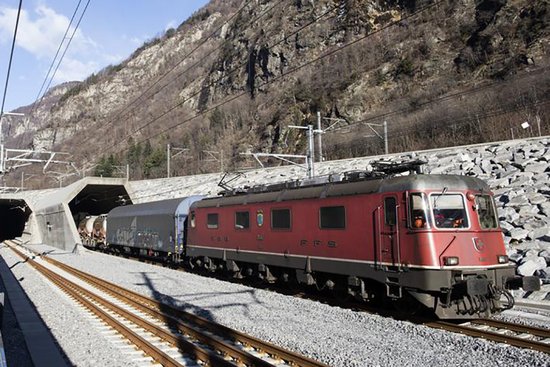
Once again, Pro Gottardo says, “although this was realistically foreseeable and expected, Ticino is left at a standstill and is suffering the overwhelming power of the strong regions north of the Alps”. At first sight, this might seem like a parochial reaction, or a dispute between cantons. But the stakes are high, because what is being penalised is not local demand but the completion of the transalpine railway axis through the access routes to AlpTransit, and therefore the strengthening of all links with the European network. In practice, the Gotthard and Ceneri base tunnels, which required total investment of around €20 billion, would remain highly useful works in their own right, but without being fully exploited through the upgrading of all access corridors. Freight traffic potential would also, and above all, pay the price.
The “Trasporti 45” project, developed with the involvement of the Swiss Federal Institute of Technology Zurich, is limited to assessing what should be done as a priority over the next 20 years compared with broader original planning. As a result, 68 projects worth more than €2.7 billion have been removed. The outcome is that no significant investment is currently envisaged south of the Swiss Alps.
According to Pro Gottardo, the document merely notes that “the major railway projects set out in the Transport Sectoral Plan and linked to AlpTransit were not reviewed by the PSwiss Federal Institute of Technology Zurich and were therefore not taken into account”. Nor is anything positive on the horizon. In the next planning phase, to be set out in the 2031 Dispatch, “the completion of the north-south transalpine axis through the construction of the access lines to the Ceneri and Gotthard is not mentioned, and of course there is no trace of the need for a long-term project and strategy”.
At this point, the only solution is to rethink transport policy. But to achieve this, and to overcome the limits of the Federal Council, all Swiss institutions need to move together towards the same goal, in particular Council of State and the delegation to the federal chambers. There are, however, some tentative signs of movement. In parliament, a cross-party group has recently been set up to address the issue of rail connections and their full integration into the European transport network. The delegation to the federal chambers, made up of the parliamentarians representing Canton Ticino at federal level, also has several parliamentary initiatives on its agenda calling for the completion of the north-south railway axis and therefore the construction of the access links to AlpTransit. At federal level, there is also growing awareness that the Infrastructure Fund now appears insufficient to finance the projects already planned, meaning that budget allocations for infrastructure must also be reviewed. The ball, therefore, is back in the Federal Council’s court.
Piermario Curti Sacchi