




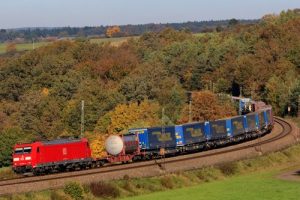
Europe is investing substantial resources in developing the TEN-T rail corridors, with the aim of creating a single, shared system of management and control rules. However, this objective remains a long way from being achieved. The national sections that make up the European network are still managed entirely by the railway authorities of individual countries, without effective coordination. Germany perhaps provides the clearest example. Despite having legitimate reasons for the work, it has imposed drastic closures of railway lines and entire routes for upgrading projects, while largely ignoring the concerns raised by European operators.
The refurbishment and modernisation works on the Rosenheim-Salzburg and Munich-Rosenheim lines are two notable examples. These are key routes for traffic through the Brenner Pass and essential sections of the Scandinavian-Mediterranean TEN-T Corridor. Complete closures lasting between five and eight months have serious repercussions for entire economic areas and add significantly to costs, while clearly exposing the lack of coordinated decision-making at European level. “The rehabilitation and modernisation of Germany’s railway infrastructure can no longer be postponed and is urgently needed, and operators are the first to support and call for it. There is no doubt about that, but complete and prolonged closures seem entirely unacceptable to us,” said Ruby van der Sluis, chief executive of Lokomotion, in an interview with Mobility Magazine.
The operators’ warnings have gone entirely unheeded. In October 2025, the leading rail freight companies and associations sent an open letter to Germany’s transport minister and the federal railway company DB, highlighting the risks associated with these enforced closures. In practice, they received no response. Three decades of underinvestment in the renewal of Germany’s infrastructure, including its main railway lines, have led to the network’s progressive decline. This has created the current need for a radical overhaul, not only of the tracks but above all of obsolete electrical, signalling, traffic management and safety systems. In effect, the network requires a comprehensive rebuild.
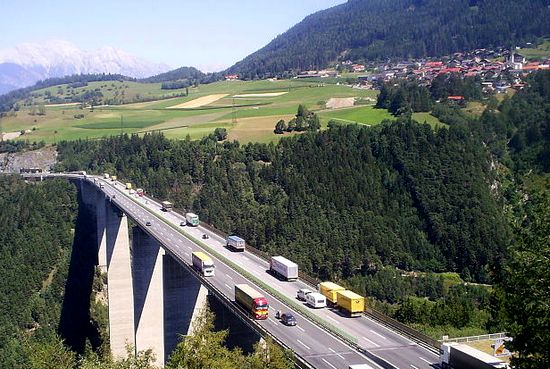
Construction work on the railway routes converging on Munich is having a major impact on Italy through the Brenner axis, the country’s main transalpine freight corridor alongside the crossings into Switzerland, and the only one leading directly towards Central Europe. Moreover, any alternative route, such as the Pontebbana railway through Tarvisio, involves additional costs and longer journey times, while placing further pressure on routes that are already heavily congested.
What solutions can be adopted? The proposals put forward by operators present a major challenge for rail infrastructure managers, as they call for at least 90% of capacity to be maintained while construction work is under way. This would require demanding coordination in the management of cross-border corridors by all railway companies, based on a common approach even though operations remain the responsibility of each individual country. It would provide the best possible test of efforts to achieve genuine integration of the European rail network within the TEN-T corridors.
Piermario Curti Sacchi