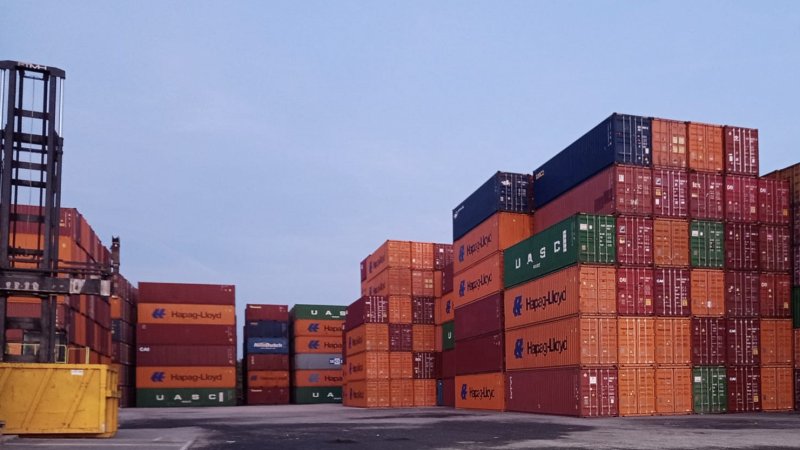







- Italian ports handled 510.8 million tonnes of goods in 2025, up 3.5% on the previous year. Container traffic increased by 7.1% to 12.8 million TEU.
- The Suez Canal lost almost half its transits compared with 2022, with a 48% decline in 2025. The rerouting of services via the Cape of Good Hope lengthened voyages by 29% for container ships and by 120% for oil tankers, adding up to 20 days at sea and a fuel surcharge of $48 per TEU.
- Gioia Tauro led the national ranking with 4.49 million TEU and growth of 14%. Savona-Vado was the fastest-growing port of the year, up 58.4% to 590,350 TEU. Genoa and La Spezia, by contrast, recorded slight declines of 1.6% and 1.7% respectively.
Italy’s port system ended 2025 with stronger results, against an international backdrop marked by geopolitical instability, tensions on maritime routes and slowing global trade. According to the Port Infographics 2026 report, produced by Assoporti (Italian Ports Association) and Srm (Research Centre for Southern Italy), total goods handled at national ports reached 510.8 million tonnes, up 3.5% compared with 2024. Within this context, container traffic showed the strongest growth, reaching 12.8 million TEU, an increase of 7.1%.
These results come in a macroeconomic scenario that the report describes as a "new normal", characterised by unprecedented operational flexibility. Global GDP growth forecast for 2026 stands at 3.1%, below the pre-conflict estimate of 3.3%, while inflation is expected to reach 4.4%, driven by energy and logistics costs. In this environment, international trade is growing by just 1.4%. Despite these pressures, Italian ports have shown an ability to adapt that is directly reflected in the volumes recorded.
The most disruptive factor of the past two years remains the crisis affecting maritime chokepoints. Transits through the Suez Canal fell to 12,313 ships in 2025, a 48% drop compared with 2022, while tensions in the Middle East have pushed shipowners to use the alternative route via the Cape of Good Hope, with significant consequences for voyage distances and operating costs. For container ships on the Shanghai-Rotterdam route, the distance increased by 29%; for oil tankers on the Basra-Fos route, the rise reached 120%. Transit times have lengthened by up to 20 days, with a fuel surcharge of $48 per TEU.
The ranking of Italian ports by TEU handled in 2025 places Gioia Tauro in first position with 4.49 million TEU, all in transhipment, including 3,490,930 full TEU, and strong growth of 14%, consolidating its role as Italy’s main transhipment hub. Genoa confirmed its position as the leading final-destination port, with 2,451,696 gateway TEU, up 1.4%, alongside 215,112 transhipment TEU, down 24%, bringing the overall change to -1.6%. La Spezia ranked third, with a total of 1,217,461 TEU, down 1.7%. The most striking figure in terms of momentum came from Savona-Vado, which recorded growth of 58.4% to 590,350 TEU, making it the port with the fastest expansion rate over the year. This result reflects infrastructure investment in the terminal and the consolidation of liner services operating at the Ligurian port.
Looking ahead, the report says that maintaining the competitiveness gained will require stronger intermodality, simpler operating processes and more diversified sources of raw material supply, reducing dependence on geopolitically vulnerable transit points. The security of maritime routes remains a critical variable and is set to influence operators’ choices throughout 2026.
Mara Gambetta