



Array ( [0] => 10156 [1] => 8 )

Podcast K44

Cronaca

  • Casello A14 di Riccione chiuso per autocisterna in fiamme

    Casello A14 di Riccione chiuso per autocisterna in fiamme

    Un'autocisterna carica di carburante si è ribaltata e ha preso fuoco nei pressi del casello A14 di Riccione nel primo pomeriggio del 18 giugno 2026, causando due feriti ma nessuna vittima accertata. Vigili del Fuoco da Rimini, Forlì e Pesaro sono intervenuti per spegnere l'incendio e gestire il traffico bloccato …

Transpotalk

Normativa

Mare

  • Noli container ai massimi da settembre 2024

    Noli container ai massimi da settembre 2024

    Il World Container Index di Drewry sui noli medi spot del trasporto marittimo di container sale del 5% nell’ultima settimana completa di giugno 2026, spinto dal transpacifico in piena tensione. Asia-Europa resta stabile ma con capacità limitata, mentre la tregua Usa-Iran allenta i rischi sullo Stretto di Hormuz senza eliminarli …

Autotrasporto

  • Caldo estremo, gli obblighi dell’azienda nell’autotrasporto

    Caldo estremo, gli obblighi dell’azienda nell’autotrasporto

    Le ondate di calore che colpiscono l'Europa riportano al centro il tema della sicurezza degli autisti in cabina: il quadro normativo UE sui riposi si intreccia con gli obblighi datoriali su valutazione dei rischi, dotazioni dei veicoli e organizzazione dei turni nelle condizioni climatiche estreme.

    European Court of Justice confirms penalties in air cargo cartel case

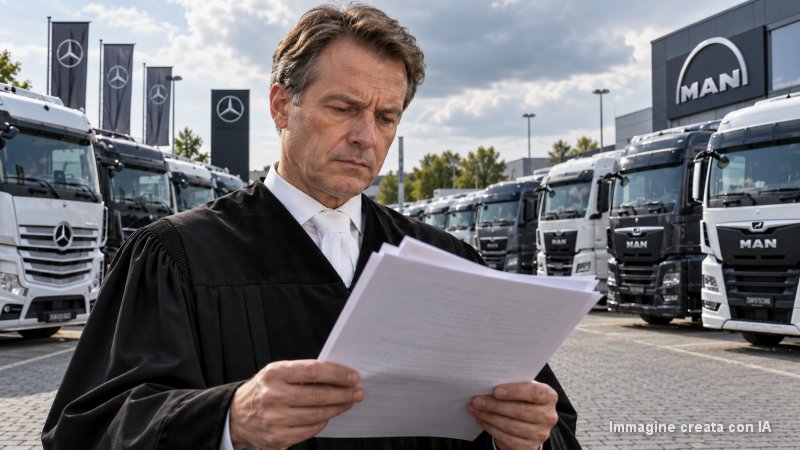
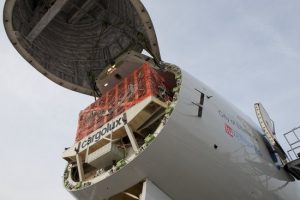
    On 26 February 2026 the Court of Justice of the European Union issued thirteen judgments confirming the fines imposed by the European Commission on thirteen airlines for their participation in the air cargo surcharge cartel. The total penalty exceeds €776 million and concerns conduct that took place between 1999 and 2006. The ruling consolidates two key principles of European antitrust law: the Commission’s authority to sanction cartels that produce qualified effects within the European market, even when part of the conduct occurred outside the region, and a company’s liability for a single and continuous infringement, including market segments in which it does not operate directly.

    On 26 February 2026 the Court of Justice of the European Union delivered thirteen judgments largely rejecting the appeals lodged by the airlines against earlier decisions of the General Court of the European Union and the European Commission concerning the air cargo cartel. The only partial exception concerns Sas Cargo Group, whose fine was reduced from around €70.2 million to €62.8 million due to errors in calculating certain revenue components. For all the other carriers, the fines remain unchanged.

    The cartel began in December 1999 and continued until February 2006. Its structure centred on the coordination of two surcharges — one for fuel and one for security — as well as a collective refusal to grant commissions on these surcharges to freight forwarders. The European Commission classified these practices as a single and continuous infringement of Article 101 of the TFEU, Article 53 of the EEA Agreement and Article 8 of the EU–Switzerland Air Transport Agreement, with effects across the entire European Economic Area and Switzerland.

    The Commission’s decision, initially adopted and later annulled for procedural defects, was readopted in 2017. At that stage, fines totalling €776 million were imposed on eleven carriers, rising to around €910 million when parallel proceedings are taken into account. Several airlines challenged the decision before the General Court of the European Union, disputing both the existence of a single and continuous infringement and the method used to calculate the fines. The General Court identified certain specific factual errors by the Commission, including Cargolux’s participation in a particular meeting, but ultimately found the airlines’ participation in the cartel proven and upheld the penalties. The carriers subsequently appealed to the Court of Justice.

    One of the central legal issues concerned the Commission’s jurisdiction to sanction conduct relating to flights arriving from third countries into the EU and the EEA, the so-called inbound routes. The airlines argued that part of the conduct had taken place outside European territory and that the Commission should not have extended its jurisdiction to these routes. The Court rejected this argument, confirming the approach based on the “qualified effects” test.

    Under this criterion, the Commission may sanction conduct implemented outside the EU when it produces foreseeable, immediate and substantial effects within the EEA. The Court clarified that this approach and the criterion based on implementation of the agreement within the EU are alternative, not cumulative: it is sufficient for only one of the two to be satisfied in order to establish European jurisdiction. The ruling therefore consolidates the Commission’s expansive approach in pursuing cartels operating on a global scale, with direct relevance for other sectors of international transport.

    The airlines also challenged the classification of the cartel as a single and continuous infringement, arguing that contacts between the carriers were fragmented and not part of a unified anti-competitive plan. The Court confirmed that both the Commission and the General Court had correctly identified a common anti-competitive objective — namely coordination on surcharges and the refusal to grant commissions — together with a continuity of contacts that justified treating the conduct as a single infringement.

    An important part of the judgment concerns the criteria for attributing liability. The Court clarified that a carrier may be held responsible for the entire infringement, including routes on which it does not operate directly, if its conduct contributed to the cartel’s common objectives and it was aware of the behaviour of the other participants. This principle reinforces the view that participation in a global cartel entails liability for the whole infringement unless the company can demonstrate that it genuinely distanced itself from the arrangement.

    The judgment of 26 February 2026 brings to a close the main European litigation concerning one of the most significant cartels ever prosecuted in the air transport sector, in terms of duration, number of carriers involved and the scale of the penalties. For the airlines concerned, the decision removes the remaining uncertainty regarding their exposure to the European Commission, while at the same time strengthening the legal basis for damages claims before national courts by freight forwarders and other customers, the so-called follow-on actions.

    From the perspective of European antitrust law, the ruling will have three lasting consequences. First, it consolidates the Commission’s power to target global cartels on the basis of their effects in the EEA, with direct implications for other intercontinental transport markets, from maritime shipping to integrated logistics services. Second, it reiterates that surcharges agreed between competitors fall within the category of restrictions by object, reducing the scope for defences based on alleged commercial benefits. Third, it clarifies the criteria for attributing liability in cases of single and continuous infringements, with potential implications for future investigations in sectors such as container shipping, ro-ro transport and other segments of international freight transport.

    M.L.

    © TrasportoEuropa - Riproduzione riservata - Foto di repertorio
    Segnalazioni, informazioni, comunicati, nonché rettifiche o precisazioni sugli articoli pubblicati vanno inviate a: redazione@trasportoeuropa.it


      Puoi commentare questo articolo nella pagina Facebook di TrasportoEuropa

      bottone newsletter piccolo Vuoi rimanere aggiornato sulle ultime novità sul trasporto e la logistica e non perderti neanche una notizia di TrasportoEuropa? Iscriviti alla nostra Newsletter con l'elenco ed i link di tutti gli articoli pubblicati nei giorni precedenti l'invio. Gratuita e NO SPAM!


    CONTENUTI SPONSORIZZATI


Videocast K44

Aereo

  • Lufthansa Cargo avvia il nuovo hub merci a Francoforte

    Lufthansa Cargo avvia il nuovo hub merci a Francoforte

    Lufthansa Cargo avvia la prima fase del progetto LCCevo nell’aeroporto di Francoforte da 600 milioni di euro, che entro il 2030 trasformerà il Lufthansa Cargo Center nello scalo aereo merci più moderno d'Europa. In parallelo la compagnia lancia nuovi servizi digitali su WeChat per il mercato cinese.

Ferrovia

  • Ciberattacco a Trenitalia sui dati dei clienti

    Ciberattacco a Trenitalia sui dati dei clienti

    Trenitalia ha inviato il 26 giugno 2026 ai clienti una comunicazione che segnala un incidente di sicurezza informatica con accesso non autorizzato a dati personali legati ai titoli di viaggio. Esclusi dati di pagamento e credenziali di accesso; coinvolti anagrafica, contatti e informazioni di viaggio.

Persone

Schmitz Cargobull aggiorna il semirimorchio per container

TECNICA

Schmitz Cargobull aggiorna il semirimorchio per container
Renault Trucks estende l’autonomia dei suoi camion elettrici

TECNICA

Renault Trucks estende l’autonomia dei suoi camion elettrici
Alleanza Octopus-Catl su scambio batterie per camion elettrici

TECNICA

Alleanza Octopus-Catl su scambio batterie per camion elettrici
Il camion europeo si prepara alla crescita della Difesa

TECNICA

Il camion europeo si prepara alla crescita della Difesa
Still aggiorna quattro gamme di sollevatori e transpallet

TECNICA

Still aggiorna quattro gamme di sollevatori e transpallet
previous arrow
next arrow
La crisi dei chip e delle memorie colpisce la logistica

LOGISTICA

La crisi dei chip e delle memorie colpisce la logistica
La Cassazione conferma la qualifica di spedizioniere-vettore

LOGISTICA

La Cassazione conferma la qualifica di spedizioniere-vettore
L’interporto di Trieste chiude il 2025 con utili record

LOGISTICA

L’interporto di Trieste chiude il 2025 con utili record
El Niño 2026 minaccia anche la logistica

LOGISTICA

El Niño 2026 minaccia anche la logistica
Liguria ospite d’onore al China International Supply Chain Expo 2026

LOGISTICA

Liguria ospite d’onore al China International Supply Chain Expo 2026
previous arrow
next arrow
Gasolio agricolo sui camion, cinque arresti in Puglia

ENERGIE

Gasolio agricolo sui camion, cinque arresti in Puglia
Il Gnl cresce in Italia ma rallenta nell’autotrasporto

ENERGIE

Il Gnl cresce in Italia ma rallenta nell’autotrasporto
Fiap avverte che una causa sul cartello carburante è prematura

ENERGIE

Fiap avverte che una causa sul cartello carburante è prematura
Bruxelles approva il regime italiano da 23 miliardi per le rinnovabili

ENERGIE

Bruxelles approva il regime italiano da 23 miliardi per le rinnovabili
Operazione Red Gold contro frode nei carburanti in Abruzzo

ENERGIE

Operazione Red Gold contro frode nei carburanti in Abruzzo
previous arrow
next arrow
La logistica è tra le attività più colpite dai ciberattacchi nel 2025

SERVIZI

La logistica è tra le attività più colpite dai ciberattacchi nel 2025
Il rischio Dogana non è più solo amministrativo

SERVIZI

Il rischio Dogana non è più solo amministrativo
Sicurezza certificata da Tapa nella borsa carichi Trans.eu

SERVIZI

Sicurezza certificata da Tapa nella borsa carichi Trans.eu
Due attentati a Sicily by Car con fuoco e kalashnikov

SERVIZI

Due attentati a Sicily by Car con fuoco e kalashnikov
L’innovazione di Geotab punta su sicurezza e Pmi

SERVIZI

L’innovazione di Geotab punta su sicurezza e Pmi
Gaston Schul cresce nelle spedizioni genovesi con Parodi Forwarding

SERVIZI

Gaston Schul cresce nelle spedizioni genovesi con Parodi Forwarding
L’Italia è molto esposta nel cibercrimine nel trasporto e logistica

SERVIZI

L’Italia è molto esposta nel cibercrimine nel trasporto e logistica
Carta DKV per ricaricare il camion elettrico

SERVIZI

Carta DKV per ricaricare il camion elettrico
Video | Dkv al Transpotec oltre la carta carburante

SERVIZI

Video | Dkv al Transpotec oltre la carta carburante
Zucchetti presenta una logistica digitale integrata software e robot

SERVIZI

Zucchetti presenta una logistica digitale integrata software e robot
Golia360 punta sulla digitalizzazione per gli autisti

SERVIZI

Golia360 punta sulla digitalizzazione per gli autisti
Come la logistica può guadagnare dalle multe Antitrust

SERVIZI

Come la logistica può guadagnare dalle multe Antitrust
Tra Genova e Barcellona l’asse della formazione per la logistica

SERVIZI

Tra Genova e Barcellona l’asse della formazione per la logistica
Transporeon introduce la ricerca con l’intelligenza artificiale

SERVIZI

Transporeon introduce la ricerca con l’intelligenza artificiale
Nasce Synlog Alliance consorzio dati per la logistica

SERVIZI

Nasce Synlog Alliance consorzio dati per la logistica
previous arrow
next arrow