









Array ( [0] => 8 [1] => 41 )

Podcast K44

Cronaca

  • Camionista spara a un collega con pistola scacciacani

    Camionista spara a un collega con pistola scacciacani

    Un camionista di 42 anni è stato denunciato dalla Polizia Stradale di Modena per minaccia aggravata dopo aver esploso un colpo con una pistola scacciacani contro un collega lungo l'A1, al culmine di una lite tra autotrasportatori nei pressi di Modena Nord.

Transpotalk

Normativa

Mare

  • Il tifone Dolphin ingolfa ancora il porto di Shanghai

    Il tifone Dolphin ingolfa ancora il porto di Shanghai

    Dieci giorni dopo il passaggio del ciclone Dolphin i terminal di Yangshan registrano attese fino a dieci giorni prima dell'ormeggio con oltre trenta navi in coda. Nel Nord Asia restano bloccati più di 2,4 milioni di teu di capacità.

Autotrasporto

  • Camion fermi allo Stretto di Messina sono un disagio cronico

    Camion fermi allo Stretto di Messina sono un disagio cronico

    La Lega Autisti Autotrasportatori Indipendenti Siciliani Nazionale denuncia attese fino a sei ore per l'imbarco a Tremestieri e al Porto Storico di Messina durante l'esodo estivo. Non è un caso isolato: il problema si trascina da anni, tra proteste, esposti e promesse rimaste in gran parte sulla carta.

    The container market is split: the illusion of a US rebound versus Europe’s solid footing

    The container shipping market has rarely appeared as polarised as it did at the end of November 2025. Xeneta’s update paints a two-speed scenario: on one side the transpacific trades, where carriers are struggling to halt a month-long fall in rates, and on the other the European trades, especially the Mediterranean, where strategic control of capacity is sustaining margins and driving significant increases.

    At first glance, last week’s numbers might suggest a rebound for exports from the Far East to the United States. Spot rates did post a positive week: up 7 per cent to the West Coast, reaching 2,051 dollars per feu, and up 8 per cent to the East Coast, at 2,843 dollars. Yet Peter Sand, Xeneta’s Chief Analyst, urges caution, describing a market still dominated by “excess supply relative to demand”. Monthly figures confirm it. Despite the slight weekly uptick, West Coast rates remain 32 per cent below early-November levels. The East Coast picture is similar, though less severe, with a 21 per cent monthly decline.

    This is what in finance would be called a “technical rebound” after a sharp collapse. “Shippers should reflect on this weak market the next time a carrier asks for a general rate increase,” Sand warns, adding that the move “does not appear to be justified by demand levels relative to available capacity”. In short, fundamentals do not support rate hikes.

    A completely different tune is playing on routes from Asia to the Old Continent, where carriers seem to have regained control of pricing. The Far East–North Europe corridor looks healthy. Rates rose 4 per cent last week to 2,418 dollars per feu, and the striking point is that this happened alongside a 5 per cent increase in capacity. This suggests real and robust demand, able to absorb additional slots without depressing prices.

    But the true standout is the Mediterranean. Here the market is delivering a textbook lesson in capacity management: spot rates soared 13 per cent in a single week to 3,314 dollars, and 15 per cent on a monthly basis. The reason is both strategic and mathematical: carriers cut capacity by 11 per cent, or around 18,000 teu, last week. The correlation is clear: fewer ships, higher prices. Blank sailings in the Mediterranean are working like clockwork for the shipping lines.

    Between the lines, the report highlights a geopolitical and operational signal of critical importance. Xeneta notes that some carriers have begun routing vessels through the Suez Canal again, abandoning the long detour around Africa imposed by the Red Sea crisis. Although the numbers remain small compared with pre-crisis levels, this shift indicates renewed momentum. If the return to Suez becomes widespread, the market impact would be significant: shorter transit times mean an immediate increase in effective capacity. In today’s market, a sudden inflow of “recovered” capacity could swiftly reverse the upward trend currently supporting European trades.

    Xeneta’s conclusions outline two different realities for shippers. Those importing into the United States hold the stronger position: the surplus of capacity is structural, and carriers’ attempts to push through increases rest on shaky ground. Those importing into Europe, especially via the Mediterranean, should brace for a heated December: carriers have shown they can shut capacity off to uphold prices. Paradoxically, hopes for rate relief now lie in the normalisation of the Red Sea situation.

    Antonio Illariuzzi

    © TrasportoEuropa - Riproduzione riservata - Foto di repertorio

    Segnalazioni, informazioni, comunicati, nonché rettifiche o precisazioni sugli articoli pubblicati vanno inviate a: redazione@trasportoeuropa.it


      Puoi commentare questo articolo nella pagina Facebook di TrasportoEuropa

      bottone newsletter piccolo Vuoi rimanere aggiornato sulle ultime novità sul trasporto e la logistica e non perderti neanche una notizia di TrasportoEuropa? Iscriviti alla nostra Newsletter con l'elenco ed i link di tutti gli articoli pubblicati nei giorni precedenti l'invio. Gratuita e NO SPAM!


    CONTENUTI SPONSORIZZATI


Videocast K44

Aereo

  • Rallenta la crescita a luglio 2026 dei noli aerei

    Rallenta la crescita a luglio 2026 dei noli aerei

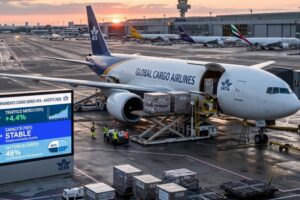
    I noli spot del trasporto aereo delle merci sono saliti del 28% su base annua a luglio, a 3,12 dollari per kg, ma il ritmo di crescita rallenta per il secondo mese consecutivo. Secondo Xeneta il mercato affronta una seconda metà del 2026 più debole, con pochi segnali di stagione …

Ferrovia

  • FS Logistix avvia la sperimentazione dell’Hvo

    FS Logistix avvia la sperimentazione dell’Hvo

    Il biocarburante Hvo alimenta due locomotive in prova in Mercitalia Rail, i locomotori di manovra di Santo Stefano Magra e Valdellora e ventuno veicoli industriali Euro VI. Nel 2025 ne sono stati consumati 19mila litri, con circa 40 tonnellate di anidride carbonica evitate rispetto al gasolio fossile.

Persone

  • L’autotrasporto perde Maurizio Longo

    L’autotrasporto perde Maurizio Longo

    Dopo una lunga malattia, il 11 agosto 2026 è morto Maurizio Longo, segretario generale di Trasportounito, associazione dell’autotrasporto di cui è stato anche tra i fondatori dopo anni di lavoro nella Fita Cna.
Un Volvo FH speciale per i cent’anni della Casa svedese

TECNICA

Un Volvo FH speciale per i cent’anni della Casa svedese
previous arrow
next arrow
Si allarga il perimetro del ciberattacco a Ceva Logistics

LOGISTICA

Si allarga il perimetro del ciberattacco a Ceva Logistics
previous arrow
next arrow
Perché il gasolio corre mentre il greggio frena

ENERGIE

Perché il gasolio corre mentre il greggio frena
previous arrow
next arrow
Un agente IA di Trimble dedicato alla logistica

SERVIZI

Un agente IA di Trimble dedicato alla logistica
previous arrow
next arrow