






Array ( [0] => 8 [1] => 39 )

Podcast K44

Cronaca

  • Camionista spara a un collega con pistola scacciacani

    Camionista spara a un collega con pistola scacciacani

    Un camionista di 42 anni è stato denunciato dalla Polizia Stradale di Modena per minaccia aggravata dopo aver esploso un colpo con una pistola scacciacani contro un collega lungo l'A1, al culmine di una lite tra autotrasportatori nei pressi di Modena Nord.

Transpotalk

Normativa

Mare

  • Il tifone Dolphin ingolfa ancora il porto di Shanghai

    Il tifone Dolphin ingolfa ancora il porto di Shanghai

    Dieci giorni dopo il passaggio del ciclone Dolphin i terminal di Yangshan registrano attese fino a dieci giorni prima dell'ormeggio con oltre trenta navi in coda. Nel Nord Asia restano bloccati più di 2,4 milioni di teu di capacità.

Autotrasporto

  • Camion fermi allo Stretto di Messina sono un disagio cronico

    Camion fermi allo Stretto di Messina sono un disagio cronico

    La Lega Autisti Autotrasportatori Indipendenti Siciliani Nazionale denuncia attese fino a sei ore per l'imbarco a Tremestieri e al Porto Storico di Messina durante l'esodo estivo. Non è un caso isolato: il problema si trascina da anni, tra proteste, esposti e promesse rimaste in gran parte sulla carta.

    Europe pushes ahead with the Turin–Lyon line but funding remains a puzzle

    On 30 July 2025 the European Commission adopted a document referred to as an “implementing decision”, defining the deadlines and milestones for the construction of the new Turin–Lyon railway and setting out a strict timetable for every individual project that makes up the new high-capacity cross-border route between Italy and France. The document’s meaning, at least on paper, was clear: both countries must adhere rigorously to the schedule, a mandatory condition to secure the EU’s financial contributions to this major project included in the TEN-T network. EU resources would cover up to 55% of the cost of the base tunnel and up to 50% of the costs for the connecting lines in both countries.

    But are these funds truly available and therefore spendable, or are they merely indicative commitments appearing in EU documents? The question is legitimate, particularly in light of a detailed analysis carried out by the Turin–Lyon technical commission set up by the Valle Susa Mountain Union. Although this analysis reflects a critical stance towards the project, it nonetheless deserves closer examination.

    Beyond any consideration of the progress of the works and delays in implementation, the first issue is cost. Considering only the sections theoretically due for completion by 2033, the total cost of the Turin–Lyon project approaches €27 billion, including €14.7 billion for the base tunnel, the upgrading of existing lines in Italy and France, and the new national approach routes from Turin and Lyon. Costs are expected to rise further if the construction of the new rail bypass between Orbassano and Settimo Torinese is included—an infrastructure for which there is not even a preliminary design at present.

    Is the European Union ready to open its wallet to guarantee its share of funding? A closer look at EU budgets is revealing. Since 2000, the Union has allocated €1.9 billion through TEN-T programmes up to 2013 and through CEF-Transport up to 2027. Overall, notes the Valle Susa Mountain Union commission, this represents around 12% of the current estimated cost of the base tunnel and less than 7% of all the interventions planned along the corridor up to 2033.

    The underlying issue is the EU’s limited flexibility in releasing funds, as its financial programming is rigid and bound to budget cycles. The next cycle, covering the forthcoming CEF-T 2028–2034 programme, is to be defined over the next two years, with a financial allocation that already appears insufficient. It will likely require recourse to future funding under the 2042 programming cycle—or even the 2050 one.

    In the previous funding round, Brussels allocated just €700 million for the construction of the Turin–Lyon base tunnel, suggesting that under CEF 2034 the project could receive at most around €2.3 billion—against a total requirement of €6.6 billion—and virtually nothing for the access lines on the Italian and French sides.

    The European Commission’s “implementing decision” delivers another cold shower by stating that all additional financial burdens must be borne entirely by the national budgets of Italy and France, which have committed to covering all costs not financed by the EU or recouped through transit tolls. So far, Italy has pledged €5.6 billion, equivalent to 35% of the estimated cost of the base tunnel, while France’s share stands at a modest 12%. As for the national approach routes to the new Mont Cenis tunnel, the resources are even more limited—€900 million from Rome and €700 million from Paris. Given these premises, the game is still very much open.

    Piermario Curti Sacchi

    © TrasportoEuropa - Riproduzione riservata - Foto di repertorio
    Segnalazioni, informazioni, comunicati, nonché rettifiche o precisazioni sugli articoli pubblicati vanno inviate a: redazione@trasportoeuropa.it


      Puoi commentare questo articolo nella pagina Facebook di TrasportoEuropa

      bottone newsletter piccolo Vuoi rimanere aggiornato sulle ultime novità sul trasporto e la logistica e non perderti neanche una notizia di TrasportoEuropa? Iscriviti alla nostra Newsletter con l'elenco ed i link di tutti gli articoli pubblicati nei giorni precedenti l'invio. Gratuita e NO SPAM!


    CONTENUTI SPONSORIZZATI


Videocast K44

Aereo

  • Rallenta la crescita a luglio 2026 dei noli aerei

    Rallenta la crescita a luglio 2026 dei noli aerei

    I noli spot del trasporto aereo delle merci sono saliti del 28% su base annua a luglio, a 3,12 dollari per kg, ma il ritmo di crescita rallenta per il secondo mese consecutivo. Secondo Xeneta il mercato affronta una seconda metà del 2026 più debole, con pochi segnali di stagione …
Ferrovia

  • FS Logistix avvia la sperimentazione dell’Hvo

    FS Logistix avvia la sperimentazione dell’Hvo

    Il biocarburante Hvo alimenta due locomotive in prova in Mercitalia Rail, i locomotori di manovra di Santo Stefano Magra e Valdellora e ventuno veicoli industriali Euro VI. Nel 2025 ne sono stati consumati 19mila litri, con circa 40 tonnellate di anidride carbonica evitate rispetto al gasolio fossile.

Persone

  • L’autotrasporto perde Maurizio Longo

    L’autotrasporto perde Maurizio Longo

    Dopo una lunga malattia, il 11 agosto 2026 è morto Maurizio Longo, segretario generale di Trasportounito, associazione dell’autotrasporto di cui è stato anche tra i fondatori dopo anni di lavoro nella Fita Cna.
Un Volvo FH speciale per i cent’anni della Casa svedese

TECNICA

Un Volvo FH speciale per i cent’anni della Casa svedese
previous arrow
next arrow
Si allarga il perimetro del ciberattacco a Ceva Logistics

LOGISTICA

Si allarga il perimetro del ciberattacco a Ceva Logistics
previous arrow
next arrow
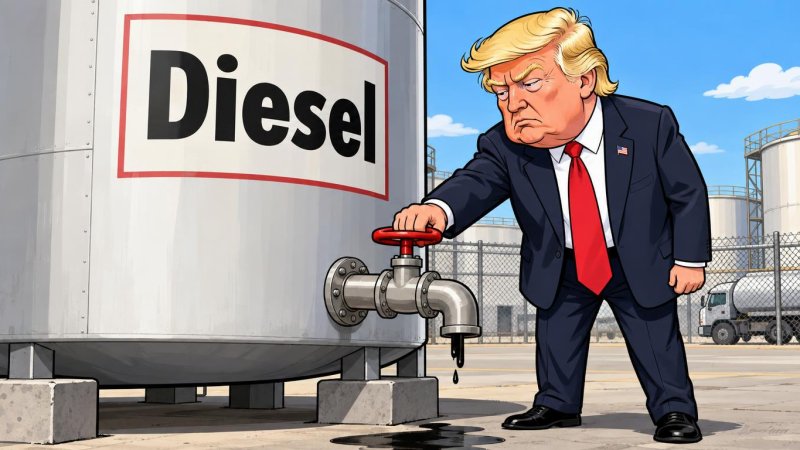
Perché il gasolio corre mentre il greggio frena

ENERGIE

Perché il gasolio corre mentre il greggio frena
previous arrow
next arrow
Un agente IA di Trimble dedicato alla logistica

SERVIZI

Un agente IA di Trimble dedicato alla logistica
previous arrow
next arrow