








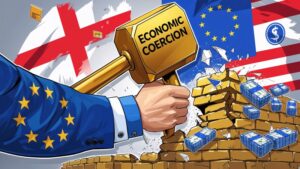
Since 27 December 2023, the European Union has had at its disposal a new instrument to defend its decision-making autonomy and the economic interests of its member states. On that date, Regulation (EU) 2023/2675, known as the Anti-Coercion Instrument, entered into force. It represents a concrete response to growing global trade tensions and the mounting pressure exerted by third countries. This mechanism was conceived not only as a means of defence, but also as a deterrent, aimed at discouraging any attempt to interfere with the EU’s political choices through economic leverage.
Economic coercion refers to any measure, whether actual or threatened, adopted by a third country with the aim of influencing or altering the decisions of the Union or of a member state. These are practices that affect trade or investment, intended to condition, halt or provoke legislative or political changes, thus infringing upon European sovereignty. In an international landscape increasingly marked by strategic rivalries and economic warfare, the European Commission has described the Anti-Coercion Instrument as “first and foremost” a preventive tool, while equipping it with effective means for intervention if necessary.
The regulation functions through several phases, beginning with a preliminary examination of any coercive measures enacted by third countries. This assessment may be initiated either by the Commission or at the request of a member state. If there is sufficient evidence to consider the situation as coercion, a diplomatic dialogue is launched with the country concerned, demanding the immediate cessation of such measures and reparation for the harm caused. Should diplomacy fail, the Commission may propose a response proportional to the damage suffered. The final decision lies with the Council of the European Union, which approves countermeasures by qualified majority, without allowing individual states to exercise a veto.
The range of measures foreseen is extensive. It spans from the imposition of customs duties to restrictions on imports and exports, and includes exclusion from public procurement tenders. There are also provisions for limitations on services, foreign direct investment, intellectual property protection, and financial activities such as banking and insurance. The strength of the instrument lies precisely in its flexibility and in the possibility to extend the response to strategic sectors, including digital, which until now had remained on the fringes of commercial retaliation.
One of the most significant features of the Anti-Coercion Instrument is its operational speed. Sanctions can be adopted in as little as eight weeks, a remarkably short timeframe by EU standards. Although under normal conditions the entire procedure may take up to a year, the possibility of a swift reaction greatly enhances the Union’s negotiating power.
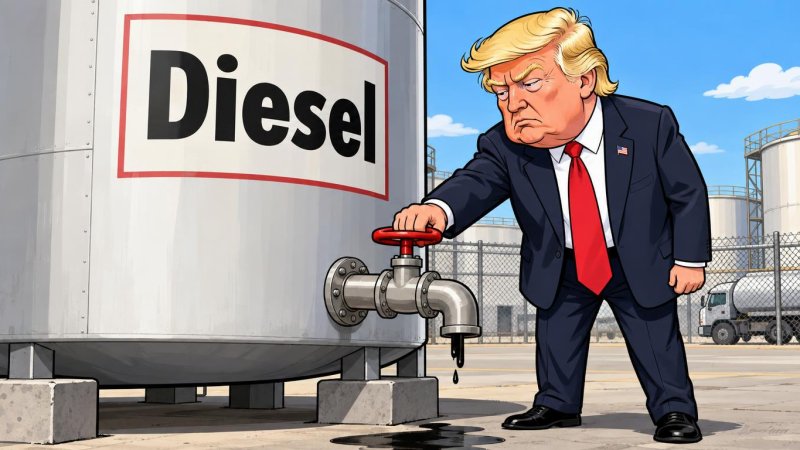
Today, the Anti-Coercion Instrument may be used for the first time, following the tariffs announced by Trump on 2 April 2025. The Commission is considering invoking the new regulation to protect the internal market, potentially excluding American companies from European public tenders or projects funded by the EU budget. Among the measures under consideration is the selective closure of the European market to US goods and services, including those linked to digital giants. This broadening of scope, beyond tangible goods to include services, makes the instrument particularly impactful.
For the transport and logistics sector, the introduction of this instrument is a development that warrants close attention. Potential restrictive measures against strategic trade partners such as the United States could alter the balance of trade, disrupt established goods flows and affect access to transnational public tenders. The risk of reciprocal retaliation is real, and supply chain operators will need to be prepared to respond to rapidly evolving scenarios.