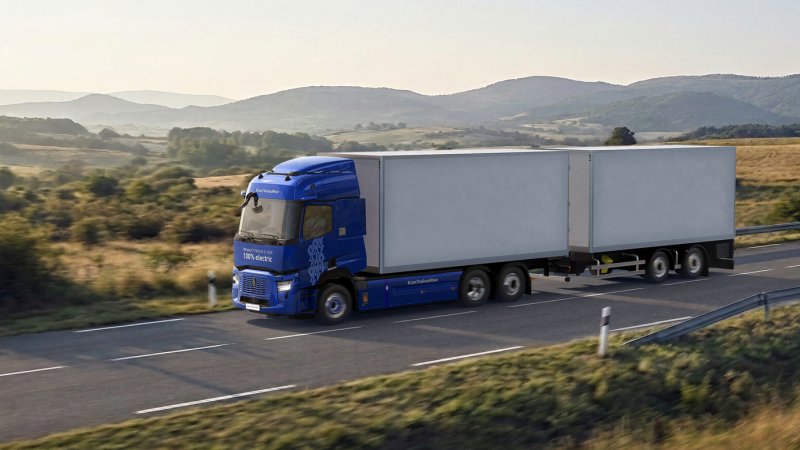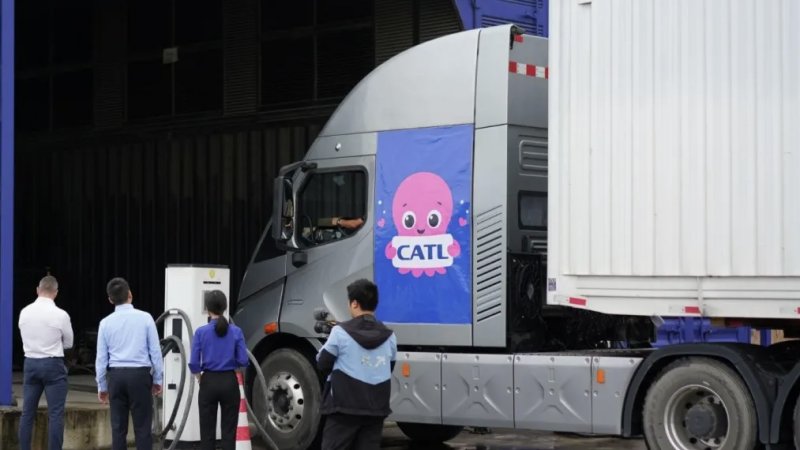






British energy company Octopus Energy and Chinese automotive battery maker Catl announced on 22 June 2026 the creation of a joint venture to accelerate the electrification of road freight transport in Europe through rapid battery-swapping technology for heavy goods vehicles. The initiative was presented at the Energy Tech Summit, the annual event organised by Octopus in London. The new company, called Swaptopus, will develop a network of centres where electric trucks will be able to replace depleted batteries in just a few minutes, removing the charging times that are currently one of the main barriers to decarbonising heavy road transport.
The first mega-hubs in the UK are expected as early as 2027. The industrial plan provides for the construction of more than 30 centres across Europe by 2035, each designed to serve thousands of vehicles a day. Once fully operational, according to estimates by the two companies, the network could support more than 300,000 electric trucks and unlock more than £30 billion, about €35 billion, in private investment. Swaptopus brings together the complementary expertise of its two shareholders. Catl, the world’s largest battery manufacturer, brings to the joint venture battery-swapping technology already deployed on a large scale in China, as well as expertise in energy storage and B2G, or Battery-to-Grid, systems. Octopus contributes its expertise in pan-European energy supply, energy trading and AI-based customer management. No consideration for the establishment of the company has been disclosed, nor has the ownership split between the two partners been indicated.
William Rowe, chief executive and founder of Swaptopus, described battery swapping as a key component of the infrastructure for electric and autonomous land transport, noting that batteries at swapping stations can be charged and discharged according to the needs of the electricity grid, operating as a virtual power plant and thereby helping to reduce costs for consumers. Greg Jackson, founder and chief executive of Octopus Energy Group, said electric heavy goods vehicles are already cheaper to operate than diesel vehicles, but that the real challenge remains keeping them in service without long charging stops.
Catl chairman and chief executive Robin Zeng struck a similar note, recalling the tests already carried out successfully in China and the goal of extending the technology to the UK and Europe through the joint venture with Octopus. Beyond electric road freight transport, the two companies are assessing the extension of Vehicle-to-Grid, or V2G, technology to Catl’s global network of automotive partners, with the aim of turning millions of future electric vehicles into virtual power plants capable of feeding low-cost energy into the grid at times of peak demand.