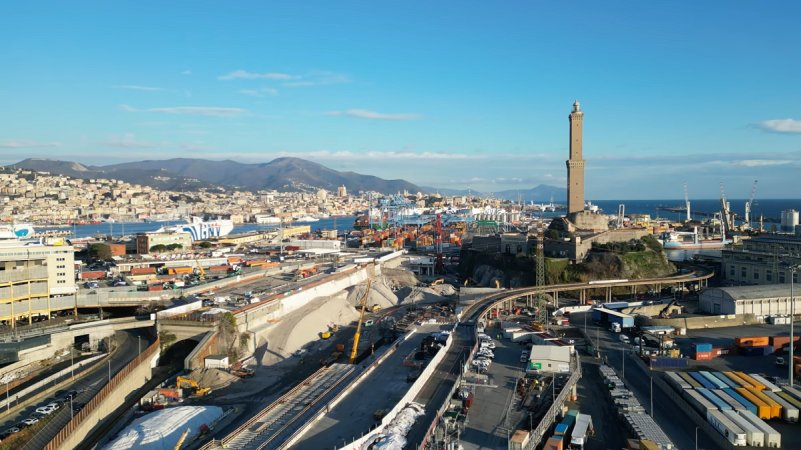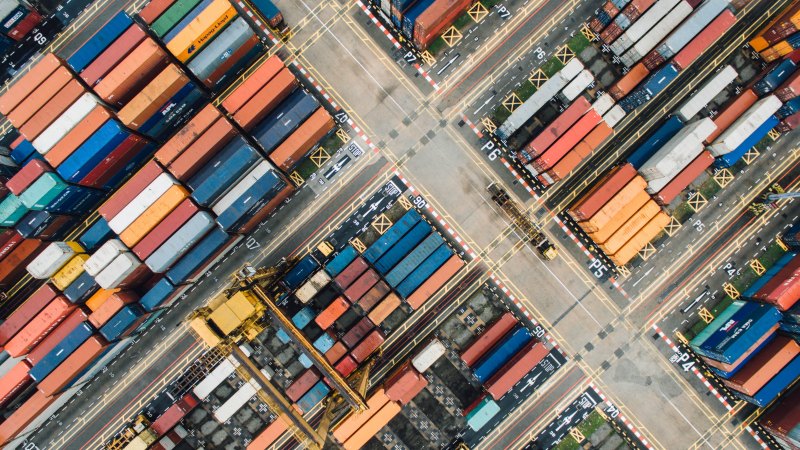





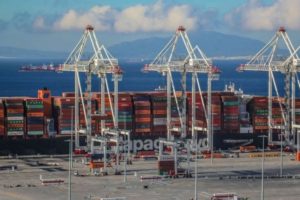


In the first quarter of 2026, container handling at Italian ports fell by 4.6% compared with the same period the previous year. The figure, compiled by Centro Studi Fedespedi (Fedespedi Research Centre) and presented at the federation’s 80th anniversary assembly in Genoa, highlights a structural trend that Italy’s port sector has long been familiar with: the gradual marginalisation of the eastern Mediterranean from the main ocean routes.
Fedespedi identifies the main cause of the decline as growing instability in the Middle East, particularly in the Iran-Red Sea area, which has prompted a large number of shipping services to avoid the Suez Canal in favour of the alternative route via the Cape of Good Hope. This rerouting means longer transit times, higher operating costs and, above all, a redistribution of key port calls across the Mediterranean basin. Ports closer to Gibraltar, including Tanger Med and the main Spanish ports, have benefited compared with Italian ports, which are geographically disadvantaged by the new configuration of ocean routes.
The impact, however, has not been evenly distributed across the country. The Adriatic side has been hit hardest: Trieste, the leading container port on the Adriatic, recorded a 23.6% decline in the first quarter of 2026, a fall that strongly reflects the repositioning of major ocean carriers towards the Tyrrhenian Sea and ports in the western Mediterranean. Trieste’s traffic profile, historically geared towards central and eastern European markets through connections with Asia-Europe routes, makes it particularly exposed to itinerary changes caused by the crisis in the Bab el-Mandeb Strait. Against this backdrop, Ravenna stands out as a relative exception. The Romagna port performed better than the national average, which Centro Studi Fedespedi partly attributes to a different mix of traffic and routes served, less dependent on the major ocean loops passing through Suez and more focused on short- and medium-haul links within the Mediterranean basin.
The first-quarter 2026 figure should be read in relation to trends in previous years to fully understand its significance. In the first quarter of 2024, Italian ports had already recorded a 3.2% contraction, which at that stage was linked to the initial effects of the Red Sea crisis and the first rerouting of ocean services. 2025 then marked a reversal: in the first quarter of that year, Fedespedi reported a 4.2% increase, with an overall recovery in volumes and rising profits for shipping companies. The 4.6% fall in 2026 therefore interrupts this recovery phase and appears not simply as a negative cyclical figure, but as the result of a deterioration in the geopolitical environment which, contrary to expectations of normalisation, has worsened further.
The 2024-2025-2026 sequence points to a situation in which the decisive variable is not transport demand, which remains strong globally, but the geography of routes, which is changing in response to external political and military pressures. For Italian ports, and particularly Adriatic ports, the challenge is therefore not one of capacity or operational efficiency, but of positioning within a route network that is structurally tending to favour the western Mediterranean until the current crisis reaches a stable resolution.
Mara Gambetta