




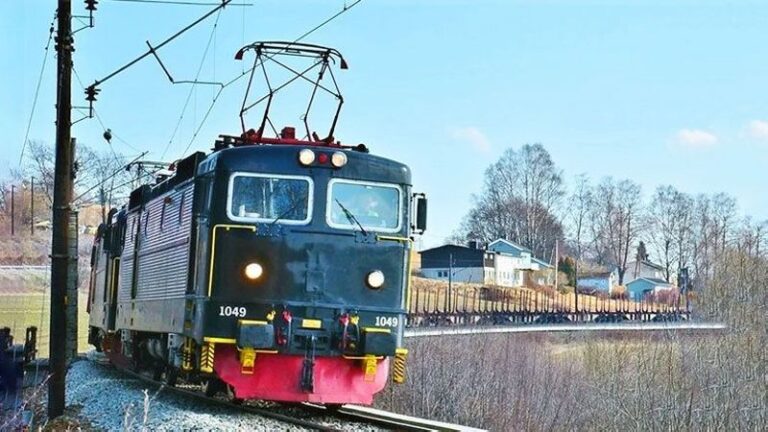
The bankruptcy of Swedish railway company Bls Rail, declared on 28 April 2026 by the court in Alingsås, according to Konkurslistan (Bankruptcy List), brings to an end an industrial crisis caused by a combination of economic and operational factors. The company, which was active in rail freight and locomotive leasing, entered corporate restructuring on 22 August 2025, but the process was not enough to restore its financial balance. The case also involves its Norwegian subsidiary, Bls Rail, which was caught up in a collapse affecting around 60 workers. The crisis was not triggered by a single event: years of losses, an insufficient traffic base, high operating costs and infrastructure disruptions all weighed on the business, particularly along the Dovrebanen, a key route for freight connections in Norway. Among the reasons for the liquidation, the company also cited compensation not received from infrastructure managers, although analysts regard this as a factor that worsened an already weak position.
Over time, Bls Rail accumulated significant losses in rail freight and locomotive-related activities. The corporate restructuring launched in August 2025 was intended to reorganise the business and identify a more sustainable model. The critical issue, however, was profitability: freight rail requires stable volumes, high utilisation of assets, reliable network access and a cost structure compatible with contracts whose margins are often under pressure.
The problem was the lack of critical transport mass. Norwegian sources point to services operating with only a small number of loaded wagons, uncovered fixed costs and operations that were difficult to maintain over time. For a rail freight operator, scale is not a secondary issue: staff, train paths, rolling stock, maintenance and operational organisation generate costs that remain high even when volumes fall. When trains run below threshold levels, every disruption increases pressure on liquidity.
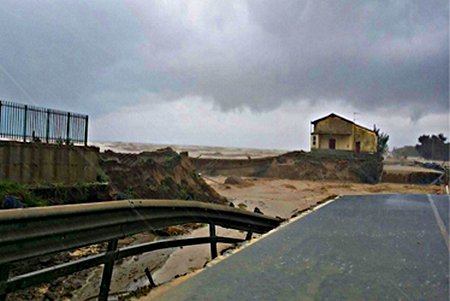
The case of the Norwegian subsidiary clearly illustrates this imbalance. It was a company that failed to build enough traffic to support its operations. One factor was the closure of the Dovrebanen railway line, although it is unclear to what extent this contributed to the company’s collapse. What is certain, however, is that the closure of a railway section has an immediate impact on revenue, because it reduces or interrupts the services that can be sold. It also creates additional costs, as it may require diversions, rescheduling, immobilisation of equipment, staff management and a loss of reliability with customers.
In Sweden, the sequence of events points to a gradual deterioration. After the start of the corporate restructuring process, Bls Rail decided to withdraw from freight traffic and not to renew its safety certificate, allowing its operating authorisation to expire at the end of January 2026. The cessation of services therefore marked the end of the company’s industrial role even before the court’s formal decision. Without operating authorisation, a railway undertaking can no longer generate traffic revenue, while costs, contracts, exposures and obligations linked to the corporate structure remain.
CarUp adds a significant balance-sheet element: Bls Rail did not directly own the trains, which were registered to another company in the Bli group. This structure reduced the room for manoeuvre in the liquidation procedure, because the rolling stock could not be used as a direct lever to support business continuity or generate liquidity during the insolvency process. This came on top of a context marked by investments that proved more expensive than expected and unfavourable market conditions.
Antonio Illariuzzi