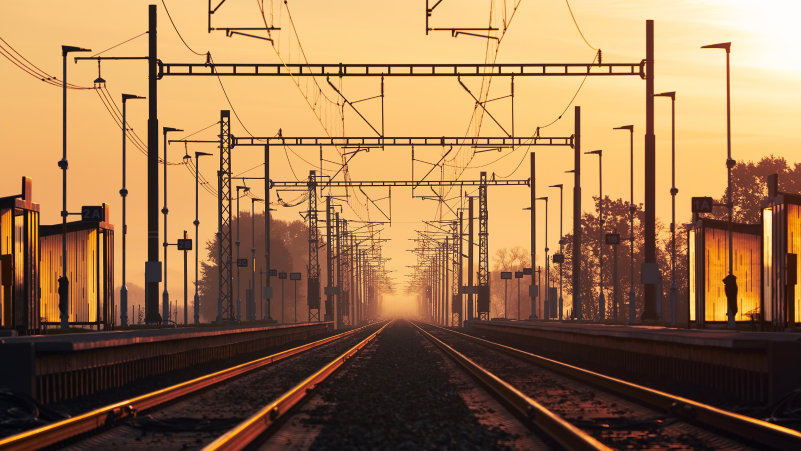




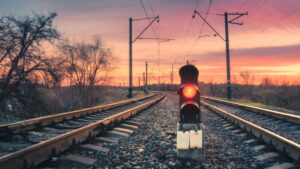
Rail freight transport in Germany is facing heavy financial losses. Line failures, closures and ongoing works are having a worrying impact on rail transport companies, as highlighted by the industry association Die Güterbahnen. It may seem paradoxical, but the loss of power to the contact line for just one day, on 31 March 2026, at the same time as alternative routes were closed, brought all traffic to a halt. This was because the overhead line failure occurred at a particularly critical point on the network: the Hamburg-Hanover route, which is currently the main alternative to the Hamburg-Berlin line, now closed to traffic.
According to Die Güterbahnen, a single day of line closure can cause losses running into six figures for one company. Operators had long warned the infrastructure manager DB InfraGo that, following the closure of the Hamburg-Berlin line, even the most basic temporary disruption would have serious consequences. And so it proved, not least because the incident on 31 March was not isolated: further infrastructure failures later occurred at the Peine junction in Lower Saxony and on the overhead contact line between Hanover and Lehrte.
According to Die Güterbahnen, all these alternative routes are essential and vital to guarantee at least a sufficiently adequate level of freight transport. The infrastructure is suffering from a lack of upgrading in previous years and, as a result, freight traffic is now highly vulnerable. It is not only rail companies that are paying the price, but also other players such as the Port of Hamburg, which is being hit particularly hard by the closure of the main rail route.
On the railway line closure front, linked to upgrading works, it is almost like reading a war bulletin. From June 2026 until December, the Nuremberg-Passau-Wels corridor will be completely closed on the Bavarian section from Passau to Obertraubling. This is a main freight axis between north-western and south-eastern Germany towards the Balkan countries. That traffic is being routed via the Munich-Rosenheim-Wels axis, a line that is already saturated, meaning that all trains, including the fastest Intercity passenger services, will have to run at the same speed, in a “platoon-style” sequence to make maximum use of line capacity. And from 2028, the Munich-Rosenheim line will be passable on only one track at a time for five months.
Piermario Curti Sacchi