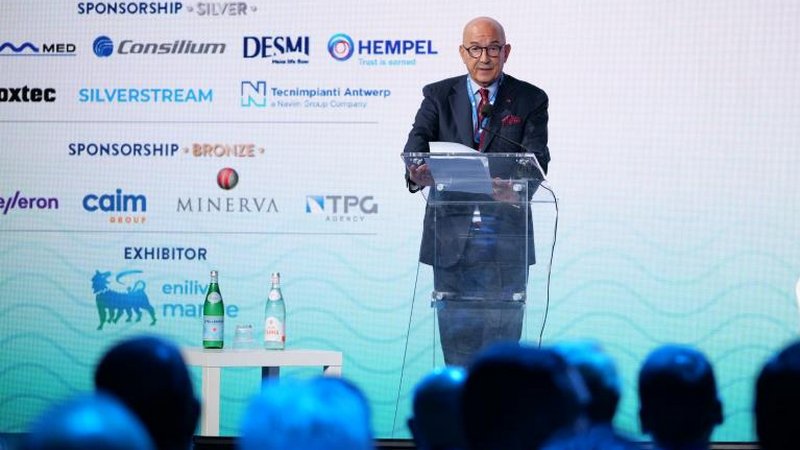







FS Logistix has announced a new phase of investment in its European terminal network, worth a total of €2 billion and focused on terminals and digitalisation. The announcement was made on 23 September 2026, during the second day of InnoTrans in Berlin, by chief executive and general manager Sabrina De Filippis. The FS Group company has identified two new European countries for expansion, one east and one west of Belgium, but has not disclosed either the countries or the specific terminals involved. Further details are due to be provided with the 2027-2030 business plan, which is expected to be published in the coming months. Over the past 18 months, the group has already invested more than €500 million in assets and digitalisation, while FS Logistix now operates around 23 terminals in 22 European countries. The new investment programme is intended to add strategic control points along the TEN-T corridors, capable of capturing the major freight flows entering Europe by sea, which De Filippis estimates account for around 80% of total volumes.
The main precedent is the investment in the Antwerp Mainhub rail terminal, announced on 2 September 2025. FS Logistix acquired 30% of Modalink, the new company established with Lineas, Europe's largest private rail freight operator, with an option to increase its stake to 49%. The terminal covers 200,000 square metres and has eight 700-metre tracks, three gantry cranes and six straddle carriers. It handles 1.5 million tonnes of freight and 2,500 trains a year. The joint venture was officially inaugurated on 5 December 2025, after container volumes had already doubled during its first three months of operation. The Antwerp-Milan service currently operates five pairs of trains a week, arriving at Segrate before continuing to the terminals in Pomezia, Marcianise and Catania. According to FS Logistix estimates, the service removes more than 13,000 trucks a year from the roads and avoids over 46,000 tonnes of CO2 emissions compared with road transport.
The investment drive comes against a challenging backdrop for European rail freight, which declined by 1.8% in 2025, mainly as a result of reduced capacity in Germany. De Filippis said the reduction had pushed system costs up by more than €200 million. Meanwhile, the logistics sector is worth around €1.75 trillion in Europe and is expected to grow by 4% by 2029, while combined road-rail transport could expand by 9% by 2030.
The new corporate structure outlined by FS Logistix also includes the creation of a Rosco, a company dedicated to managing and maintaining locomotives and wagons, with the aim of reducing asset downtime and related costs. A similar project for a publicly owned, state-backed Rosco had been included in Italy's Piano Nazionale di Ripresa e Resilienza (National Recovery and Resilience Plan), before being removed during one of the plan's latest technical revisions.
De Filippis also recalled that FS Logistix has launched two technological innovation projects. The DAC system, developed with Dellner and Europe's Rail, was presented on a demonstration wagon at Expo Ferroviaria in Milan in October 2025 and is intended to automate the coupling of freight wagons. Since 15 April 2026, the so-called smart train has been undergoing operational trials on the Milan-Catania Bicocca route, using onboard sensors and a wireless communication system to monitor braking, load stability and train composition in real time. The fleet digitalisation programme is also continuing. During 2025, a further 180 wagons were equipped with the WaggonTracker system supplied by PJM, bringing the number of connected Mercitalia Intermodal units to around 700.
Antonio Illariuzzi