






In May 2025, Hamburg hosted two real-world trials under the European Modi project, an initiative aimed at developing autonomous driving solutions for industrial vehicles along the continent’s main logistics corridors. The trials, conducted by a consortium of companies and research institutions led by Gruber Logistics, tested the lorries in real-life conditions on both city streets and stretches of motorway.
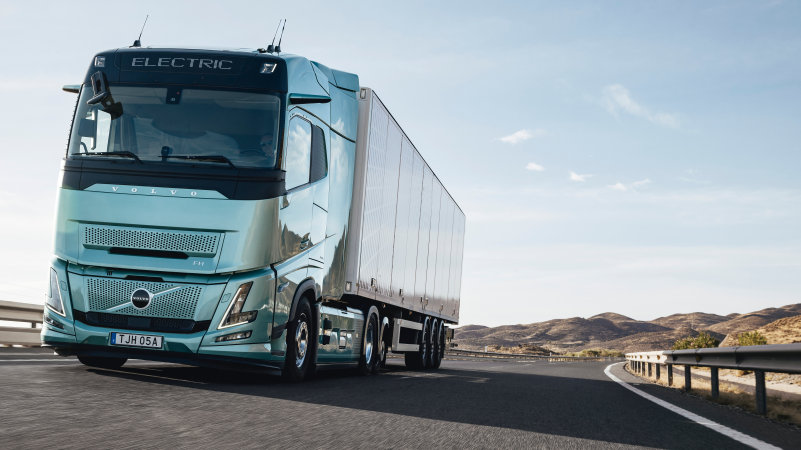
Two key scenarios were explored in the German city. The first focused on the integration of autonomous lorries into motorway traffic, with particular attention to the management of complex manoeuvres in the presence of roadworks. In these conditions, vehicles equipped with Cooperative Merging technology, developed by Volvo Trucks, communicated with one another and with the infrastructure via digital interfaces, enabling them to change lanes safely and smoothly, even in the presence of obstacles. The tests were carried out on a public motorway in live traffic, making the results all the more significant.
The second scenario was set in an urban environment, where the presence of vulnerable road users and unpredictable situations poses a greater challenge to automated driving. Thanks to collaboration with the City of Hamburg and New Mobility Solutions, a detection system was tested that can identify pedestrians and cyclists up to 300 metres away. Data on their movements, captured by sensors installed along the streets, were transmitted in real time to approaching lorries, extending their perception beyond the limits of onboard sensors. To simulate particularly critical situations, crash test dummies representing children were also used to assess how the vehicles would react to blind spots or sudden crossings.
Another key element of the trials was the exchange of data with traffic light infrastructure. Using information on signal change timings (time-to-green), the lorries were able to adjust their speed in advance, avoiding unnecessary stops at intersections. At the same time, the traffic light system dynamically adapted its phases based on traffic volumes and the estimated arrival times of vehicles. This continuous dialogue between vehicles and infrastructure helped to improve traffic flow, reduce fuel consumption and cut emissions.
The lorries used in the Modi project were fitted with advanced sensors mounted on the roof and sides of the cab, essential tools for detecting the surrounding environment. Integration with so-called “smart roads” and the ability to communicate in real time with infrastructure and traffic management systems represent a step forward towards a form of logistics that combines automation, safety and sustainability. As Tobias Brzoskowski, director of New Mobility Solutions, explained, the two-way exchange of data between vehicles and infrastructure had a tangible impact on traffic improvement, preventing unnecessary braking and contributing meaningfully to lower fuel consumption.
According to Martin Gruber, CEO of Gruber Logistics, the growing shortage of professional drivers demands serious reflection on the future of the sector. It is necessary, he explains, to deploy human personnel in tasks where their contribution is truly strategic, while for simpler and repetitive operations, technology is already capable of offering reliable alternatives. From this perspective, autonomous driving functionalities are not only an operational advancement but also a key factor in ensuring the safety of all road users.
The Modi project involves 36 entities from industry and academia, has a total budget of around 28 million euros, and aims to demonstrate the full operability of autonomous heavy transport along a cross-border corridor that spans five European countries. This is not merely a technological showcase, but a practical trial addressing some of the sector’s most urgent challenges: the driver shortage, the need for improved road safety, and the push for more sustainable and efficient logistics.